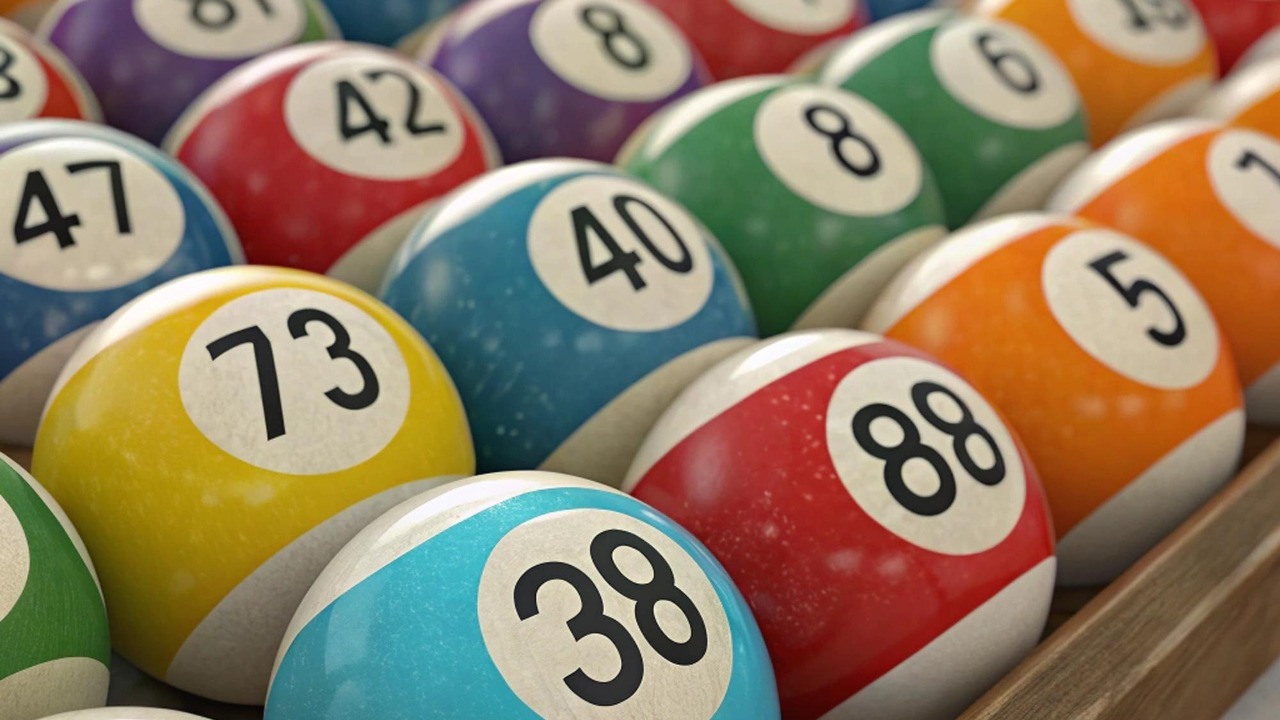
The Powerball jackpot has surged to an estimated $1.1 billion, turning a routine drawing into one of the biggest lottery moments of the year and keeping players glued to their tickets. With no grand prize winner yet, the pot continues to swell, fueled by rollovers and a wave of last-minute buyers chasing a life-changing payout. I see a familiar pattern taking shape: a massive top prize, long odds, and a national audience that keeps growing with every drawing that passes without a winner.
How the jackpot climbed to $1.1 billion
The current run did not start from nowhere, it is the product of a long stretch of drawings where nobody matched all six numbers. Each rollover has added tens of millions of dollars to the top prize, pushing it into the rarefied territory of ten-figure jackpots. Earlier in the cycle, the advertised prize crossed the billion-dollar mark, and as tickets kept selling without a jackpot hit, the estimate climbed to about $1.1 billion, with the cash value sitting hundreds of millions lower for anyone who opts for a lump sum instead of an annuity. That steady escalation is exactly what lottery officials count on when they design a game that can build to headline-grabbing amounts.
At this stage, the jackpot is still growing because nobody has managed to crack the combination, so the money that would have gone to a winner instead rolls into the next drawing and attracts even more players. One report framed it bluntly: $1.1 billion is now on the line after earlier drawings came and went without a jackpot hit, even as smaller prizes were paid out. I see that dynamic as the engine behind the current frenzy, a feedback loop where each missed jackpot feeds the next surge of ticket sales.
The last time Powerball hit: a $1.787 billion benchmark
To understand why this run feels so intense, I look back to the last time the game produced a record-shaping payout. The Powerball jackpot was last won on Sept. 6, when two tickets in Missouri and Texas split a staggering $1.787 billion prize. That win reset the jackpot to its base level, but it also set a benchmark that still looms over every big run that has followed. When a pot climbs back into the billion-dollar range, players remember that earlier payout and start to imagine themselves in the shoes of those two lucky ticket holders.
That $1.787 billion figure is not just a curiosity, it is a reminder of how quickly the game can move from a routine drawing to a historic event. Another account of the current climb notes that the jackpot was last captured when two lottery players from Missouri and Texas shared that same $1.787 billion haul, underscoring how rare it is for multiple tickets to hit the exact combination at such astronomical stakes. I see the current $1.1 billion run as living in the shadow of that earlier jackpot, big enough to command attention but still chasing the upper tier of Powerball history.
Where $1.1 billion ranks in Powerball history
Once a jackpot crosses the billion-dollar line, the natural question is where it sits in the record books. The list of the Largest Powerball jackpots in U.S. history is short, and each entry represents a moment when the game captured the national spotlight. At the top of that list is a $2.04 billion prize, a reminder that the current run, while enormous, still has room to grow before it challenges the all-time record. The $1.787 billion win by the Missouri and Texas tickets sits just behind that peak, anchoring the upper end of the chart.
In that context, a $1.1 billion jackpot ranks as one of the biggest prizes the game has ever offered, but not the largest. Another breakdown of historic payouts highlights the $2.04 billion top prize as a benchmark for how high Powerball can climb when rollovers keep stacking up. I see the current pot as part of that same story, a reminder that the game is structurally designed to produce a handful of mega-jackpots that tower over the rest of the field and keep players engaged even when the odds are stacked against them.
Next drawing, odds, and how the game works
For anyone eyeing the current prize, the immediate concern is timing. The next Powerball drawing is scheduled for Wednesday, Dec. 17, with the numbers pulled just after 11 p.m. ET, giving players a clear deadline to buy in. That midweek drawing follows the standard Monday, Wednesday, and Saturday cadence that has helped the game maintain a steady rhythm of anticipation. I find that schedule crucial to the way the jackpot narrative builds, because every drawing becomes a cliffhanger that either crowns a winner or pushes the prize even higher.
Behind the spectacle, the mechanics of the game remain brutally simple. Players pick five white balls and one red Powerball, hoping to beat odds that sit at roughly 1 in 292.2 million for the jackpot, a figure highlighted in official Powerball drawings information. Those odds are what allow the top prize to roll over again and again, since the vast majority of combinations will never be drawn. I see that statistical reality as the quiet counterweight to the billion-dollar hype, a reminder that the game is designed so the jackpot usually survives each drawing and keeps the financial momentum behind it growing.
Why billion-dollar jackpots keep getting bigger
The rise of ten-figure jackpots is not an accident, it is the result of structural choices that make it harder to win the top prize while expanding the pool of players. Powerball is sold in multiple states, which means every drawing pulls in ticket sales from across the country and channels a portion of that money into the jackpot. One analysis of the current run points out that Powerball lottery games have potentially huge jackpots precisely because of that multi-state structure, which spreads the risk and amplifies the reward. I see that networked model as the backbone of every modern mega-jackpot.
As rollovers continue, the financial pressure behind the prize only intensifies. One report describes how, Until someone finally matches all the numbers, the top prize remains untouched and the momentum behind the jackpot continues to build. I read that as a concise description of the modern lottery economy: long odds, repeated rollovers, and a growing pot that feeds on its own publicity. The current $1.1 billion run fits that pattern perfectly, a product of design choices that favor fewer winners and bigger headlines.
What a billion-dollar run means for everyday players
For most people, the appeal of a jackpot this large is less about the exact figure and more about the fantasy it unlocks. A $1.1 billion prize invites daydreams about paying off a mortgage, quitting a job, or buying a 2025 Tesla Model X outright, even though the actual cash value and tax hit would shrink the take-home amount considerably. I see that gap between the advertised number and the realistic payout as one of the least understood parts of the game, especially when the jackpot crosses into territory that feels almost abstract. The difference between a $500 million and a $1.1 billion prize is enormous on paper, but for an individual winner, both would be transformative beyond anything most people will ever experience.
At the same time, the current run is creating smaller but still meaningful wins for players who fall short of the jackpot. One example surfaced in California, where a South Land Park ticket netted a $1.98 million prize even as Nobody hit the full combination and the jackpot rose to an estimated $1.1 billion. I see stories like that as a reminder that the game is not purely all or nothing, there is a wide ladder of prizes that can change a household budget even if they do not make national news. For most players, the rational approach is to treat a ticket as a low-cost entertainment purchase rather than a financial plan, especially when the odds of joining the billion-dollar club are so remote.
How to follow the next drawing
With the jackpot at this level, the drawing itself becomes a kind of live event, and the logistics of how to watch it matter more than usual. The numbers are pulled in a televised drawing that is carried on local stations in many markets and streamed through official channels, giving players multiple ways to see the results in real time. Guidance on how to tune in notes that viewers can check listings or use online streams to follow the Powerball drawing in their own market. I see that multi-platform approach as part of why these jackpots feel like shared national moments rather than isolated local events.
Once the numbers are drawn, the first wave of information usually focuses on whether anyone matched all six and where any big secondary prizes landed. Coverage of recent drawings has followed that pattern, listing the winning numbers, checking if the jackpot was hit, and then detailing any million-dollar or multi-million-dollar wins that emerged from the lower tiers. I expect the next drawing to follow the same script: a few tense minutes as the balls drop, a quick confirmation of whether the $1.1 billion prize has a winner, and then a fresh round of analysis about what comes next if the jackpot survives yet again.
More From TheDailyOverview

Cole Whitaker focuses on the fundamentals of money management, helping readers make smarter decisions around income, spending, saving, and long-term financial stability. His writing emphasizes clarity, discipline, and practical systems that work in real life. At The Daily Overview, Cole breaks down personal finance topics into straightforward guidance readers can apply immediately.

