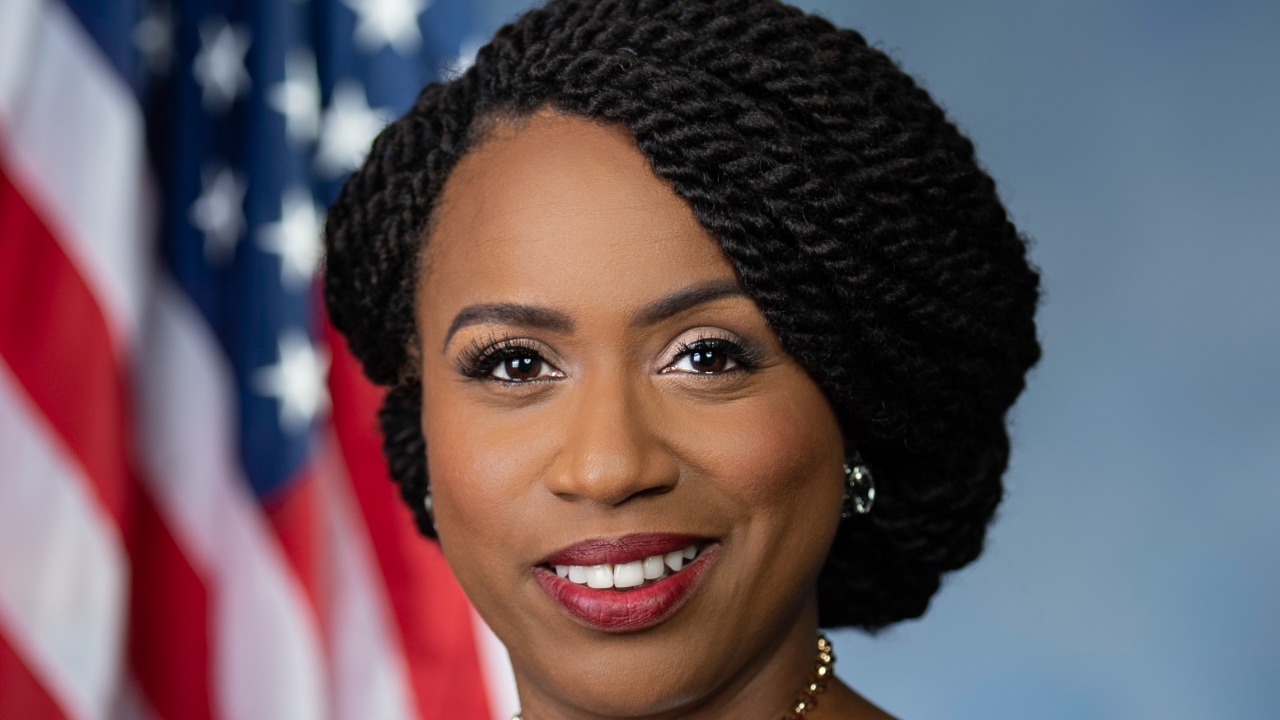
As rents and home prices climb out of reach for millions of families, the federal agency charged with keeping housing affordable is under fire for shrinking its own capacity. In a tense House hearing, Rep. Ayanna Pressley accused the Department of Housing and Urban Development of being hollowed out just as the crisis deepens, telling Secretary Scott Turner that his leadership is failing the people who depend on HUD. Her critique goes beyond a viral soundbite, raising a deeper question about what it means to run a housing department in an era of record need and deliberate budget cutting.
Pressley’s blunt warning to a shrinking HUD
Rep. Ayanna Pressley used her time in the hearing to deliver a pointed assessment of HUD’s trajectory, telling Secretary Scott Turner, “You are failing,” and framing the exchange as a judgment on his stewardship of an agency she argues has been systematically weakened. In the clip circulated by her office, she presses Turner on how a department that is supposed to expand access to housing can justify staff reductions and program retrenchment while costs soar, casting the current approach as a choice to “gut” capacity rather than meet demand. Her confrontation with the HUD chief, captured in a video shared by Rep. Ayanna Pressley, crystallized a broader frustration among lawmakers who see the department drifting away from its core mission.
In a longer exchange, available in full on a public hearing feed, Pressley drills into the human stakes of that drift, highlighting what she calls a “gray wave” of older adults who have worked for decades yet now face homelessness because HUD is not scaling its response. She describes elders who have “given so much to this country” and are now sleeping in cars or couch surfing, arguing that an agency ignoring this trend is not simply underperforming but abandoning a generation. Her questioning, preserved in a Jan hearing video, frames the hollowing out of HUD as a structural failure that shows up in the lives of seniors, tenants and families rather than in abstract budget tables.
A housing crisis collides with a weakened safety net
Pressley’s fury lands in a context where housing costs are rising faster than wages and vacancy rates remain tight in many metro areas, leaving renters with few options when prices jump. She argues that HUD should be the counterweight to that market pressure, expanding vouchers, preserving public housing and enforcing fair housing laws, not trimming its own reach. In a message shared with her supporters, she insists that America “deserves a HUD Secretary who will tackle the fair & affordable housing crisis,” and says plainly that “But Secretary Turner is failing the people” who rely on the department’s programs, a critique she pairs with a call for more aggressive federal intervention in the rental market through America-wide action.
Her concerns echo the broader focus of the House oversight session, where members pressed Turner about whether HUD’s existing tools are being used effectively to address affordability. Much of the questioning centered on long-standing HUD programs that have not undergone meaningful review in years, even as housing costs and homelessness have surged, raising doubts about whether the department is updating its strategies to match current conditions. Lawmakers also scrutinized how HUD is handling statutory requirements, including whether certain funds are being kept well above the statutory minimum instead of being deployed more aggressively to ease rent burdens, a line of inquiry detailed in coverage of how Much of the unfolded.
Bipartisan scrutiny of Turner’s stewardship
While Pressley’s exchange drew the sharpest headlines, Secretary Turner faced skepticism from both sides of the aisle about whether HUD is being managed for long-term effectiveness. Democrats on the committee pressed him on Departmental programs that have not been meaningfully evaluated, questioning whether the agency is clinging to outdated approaches while newer crises, from climate-driven displacement to pandemic-era arrears, reshape the housing landscape. Their questions underscored a concern that HUD’s internal reviews and performance metrics are not keeping pace with the scale of today’s affordability challenges, a theme that ran through the Democrats’ oversight agenda.
Outside observers have framed the hearing as a kind of public performance review for Turner, with particular attention to how he responded to Pressley’s structural critique. One detailed account describes her as “not just annoyed” but focused on what it calls the “Long, Slow Death of Accountability,” arguing that her line of questioning exposed a culture at HUD that is more comfortable with talking points than with measurable outcomes for tenants and voucher holders. That analysis, which labels her exchange “Exhibit B” in a broader indictment of the department’s leadership, suggests that the clash revealed a gap between the urgency lawmakers feel and the incrementalism they perceive from the secretary, a tension captured in a Exhibit of accountability.
Accountability, performance and the “gutting” debate
For Turner, the hearing functioned as more than a routine appearance, it was, as one commentator put it, a Performance Review conducted in public view. Critics argue that his testimony revealed a leader more focused on defending existing decisions than on acknowledging the consequences of staff cuts, program slowdowns and budget choices that collectively amount to a “gutting” of HUD’s capacity. The same analysis contends that Turner’s responses showed a tendency to drift toward generic optimism rather than concrete benchmarks, reinforcing Pressley’s charge that the department is not treating the affordability crisis with the seriousness it demands, a judgment sharpened in the Performance Review framing.
Pressley’s argument is rooted in a long-standing view of housing as a basic guarantee rather than a discretionary benefit, and she has been explicit that safe, stable shelter should be treated as a right. In her policy platform, she describes “Safe, affordable housing” as a “fundamental human right” and a determinant of health, economic opportunity and stability for families across the Massachusetts 7th, a district that includes some of the country’s starkest income and racial disparities. That lens helps explain why she sees cuts to HUD’s workforce and programs not as technocratic adjustments but as moral choices that deepen inequality, a perspective laid out in her Safe housing agenda.
Budget cuts, EHV strain and what comes next
The clash over HUD’s direction is also inseparable from the Trump administration’s budget priorities, which have targeted rental assistance for significant reductions even as demand spikes. The administration’s fiscal plans include cuts that would shrink the reach of key rental programs and put additional pressure on local housing authorities already struggling with long waitlists and rising landlord costs. One analysis of the federal request notes that The EHV program mandates that public housing authorities work with service providers to help households use Emergency Housing Vouchers, but warns that the funding that keeps those vouchers viable is likely to be depleted in 2026 if current trends continue, a risk detailed in a review of how The EHV program is being squeezed.
That looming shortfall illustrates the stakes of what Pressley describes as “gutting” HUD at the very moment when its tools are most needed. If Emergency Housing Vouchers run dry while rents remain high, families leaving shelters, survivors of domestic violence and others prioritized for EHV support will find themselves with nowhere to go, even though the infrastructure to help them technically exists. In that scenario, the department’s internal choices about staffing, oversight and program design become inseparable from the human stories Pressley invoked in the hearing, from elders in the “gray wave” to parents juggling multiple jobs to keep a roof over their children’s heads. Her confrontation with Turner, captured in both the clipped “you are failing” moment and the longer Jan exchange, is ultimately a demand that HUD match the scale of the crisis instead of shrinking from it, a standard that will define how I judge the department’s actions in the months ahead.
More From The Daily Overview
*This article was researched with the help of AI, with human editors creating the final content.

Elias Broderick specializes in residential and commercial real estate, with a focus on market cycles, property fundamentals, and investment strategy. His writing translates complex housing and development trends into clear insights for both new and experienced investors. At The Daily Overview, Elias explores how real estate fits into long-term wealth planning.