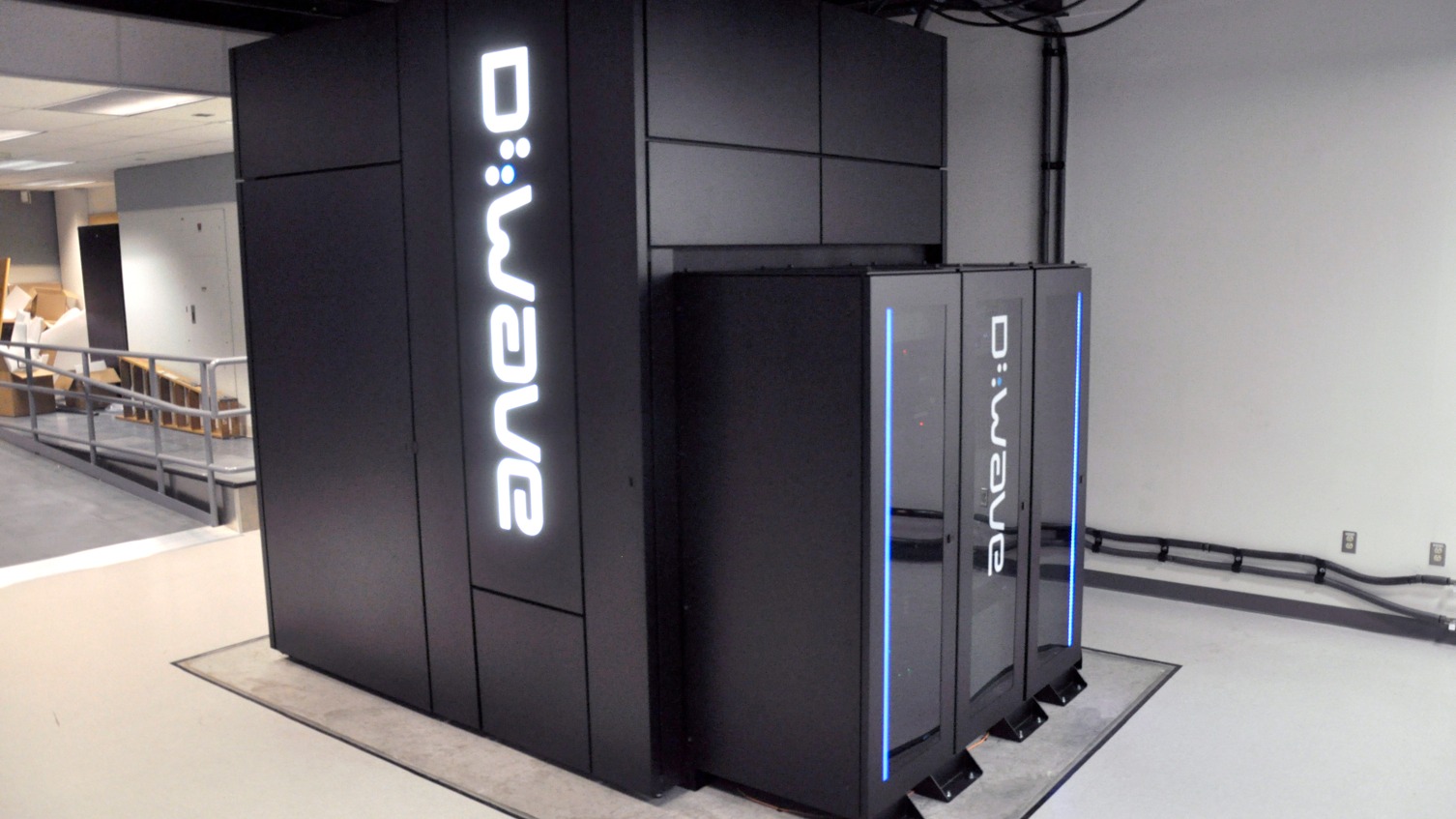
D-Wave Quantum Inc. is abandoning its Palo Alto, California headquarters and relocating to Boca Raton, Florida before the end of 2026, a move that pairs the company’s corporate and research operations with a $20 million quantum computer sale to a nearby university. The decision signals that South Florida is building a concentrated quantum technology corridor, one anchored not by tax incentives alone but by a deliberate coupling of private R&D capacity with public research infrastructure. Whether that bet pays off depends on whether proximity to academic talent can offset the loss of Silicon Valley’s deep bench of specialized engineers.
D-Wave Files to Leave Silicon Valley
D-Wave disclosed the headquarters transition in a regulatory filing with the U.S. Securities and Exchange Commission on January 27, 2026. The document describes the Boca Raton site as a key U.S. R&D facility, meaning the move is not merely an address change for legal or tax purposes. D-Wave intends to consolidate meaningful research activity in Florida alongside its corporate functions, a step that goes further than the mailbox relocations some companies have used when shifting domicile to lower-tax states. By explicitly positioning the new location as a research hub, the company is signaling to investors, employees, and partners that Florida will be central to its long-term technology roadmap.
The same filing notes that the company plans to complete the transition before the end of 2026, giving it roughly eleven months to stand up operations in a region that has not historically been associated with quantum hardware development. That timeline is aggressive for any company moving core R&D, and it suggests that groundwork in Boca Raton is already well underway, from facility build-outs to local hiring. While the document does not spell out specific incentives from Florida or local governments, the commitment to a full headquarters shift, rather than a satellite lab, implies a calculated bet that operating costs, talent partnerships, and regional support will outweigh the benefits of remaining in Silicon Valley’s established ecosystem.
FAU’s $20 Million Quantum Purchase
The relocation gains strategic depth when paired with a separate but closely timed announcement. Florida Atlantic University signed a $20 million agreement to purchase an Advantage2 quantum computer from D-Wave. The system will be hosted on campus at FAU, placing a commercial-grade quantum machine within short driving distance of D-Wave’s incoming headquarters and research center. That geographic overlap is not accidental. It creates a feedback loop in which university researchers can stress-test D-Wave hardware under real workloads while the company’s engineers iterate on the next generation of systems nearby, shortening the cycle between academic experimentation and product refinement.
Because the Advantage2 platform is designed for quantum annealing, FAU researchers will gain direct exposure to the specific architecture that underpins D-Wave’s commercial offerings. That alignment means the university’s computer science, engineering, and physics programs can build curricula and research agendas around a live system rather than simulations or remote cloud access alone. For D-Wave, embedding its technology on a campus that can host visitors, workshops, and industry collaborations turns a single hardware sale into a regional anchor for its ecosystem, potentially attracting companies that want to explore quantum optimization problems in logistics, finance, and materials science without leaving South Florida.
Florida Atlantic’s Research Credentials
FAU is not a minor regional school hoping to punch above its weight. The university holds an R1 research designation under the Carnegie Classifications, placing it among the top tier of American research universities in terms of spending and doctoral output. It has also been recognized as an opportunity-focused institution by the same framework, highlighting its role in expanding access to higher education. Those credentials matter because they indicate the university already has the doctoral pipeline, lab infrastructure, and student diversity to absorb a major quantum installation and convert it into both publishable research and trained graduates.
FAU further carries a community engagement classification, underscoring formal ties with local schools, nonprofits, and regional employers. That network gives the university a platform to translate quantum research into outreach programs, internships, and public-private partnerships that extend beyond campus. Combined with its established academic offerings in engineering and computing, those designations position FAU as a credible anchor for a regional quantum hub rather than a passive recipient of a high-profile machine.
Building a Workforce Pipeline in South Florida
Most coverage of corporate relocations focuses on tax savings, and Florida’s lack of a state income tax is certainly part of the appeal. But the more interesting question is whether Boca Raton can produce the specialized workforce that quantum computing demands. D-Wave’s hardware relies on quantum annealing, a technique that requires expertise in condensed-matter physics, cryogenics, and optimization mathematics. Those skills are scarce everywhere, including in the San Francisco Bay Area. By planting its R&D operation next to a university that will run its own Advantage2 system, D-Wave is essentially co-locating with a training ground for the exact talent it needs, from low-temperature hardware specialists to algorithm developers familiar with quantum optimization.
FAU’s College of Engineering has framed the on-campus quantum computer as carrying significant research and workforce implications, emphasizing plans to integrate the system into graduate education, interdisciplinary projects, and collaborations with regional employers. Students who gain hands-on experience configuring, programming, and maintaining the Advantage2 platform will graduate with skills that map directly onto D-Wave’s technology stack, narrowing the training gap that often slows adoption of emerging hardware. For South Florida more broadly, that pipeline could seed a cluster of startups and applied research labs that treat quantum computing not as a distant specialty but as a practical tool for solving industry problems.
Can a Quantum Corridor Take Root?
Whether these moves add up to a durable quantum corridor in South Florida will depend on more than one company and one university. D-Wave’s relocation and FAU’s purchase create a nucleus of activity, but sustaining momentum will require additional corporate partners, federal and state research grants, and a steady flow of students who choose to stay in the region after graduation. The presence of an on-site quantum system and a nearby commercial R&D center gives the area an asset that many larger tech hubs lack, yet it also raises expectations: stakeholders will look for measurable outcomes such as patents, spinout companies, and industrial pilot projects that justify the scale of investment.
For now, the combination of D-Wave’s headquarters move and FAU’s Advantage2 deployment marks a clear shift in the geography of quantum computing. Instead of clustering exclusively around traditional tech centers, some of the field’s most advanced hardware and research capacity is being planted in a region better known for tourism and real estate. If Boca Raton and FAU can translate this moment into a self-reinforcing ecosystem—one where students, researchers, and companies see South Florida as a viable home for cutting-edge quantum work—the relocation may come to be viewed not just as a corporate cost decision, but as a turning point in how and where quantum technology is built.
More From The Daily Overview
*This article was researched with the help of AI, with human editors creating the final content.

Grant Mercer covers market dynamics, business trends, and the economic forces driving growth across industries. His analysis connects macro movements with real-world implications for investors, entrepreneurs, and professionals. Through his work at The Daily Overview, Grant helps readers understand how markets function and where opportunities may emerge.

