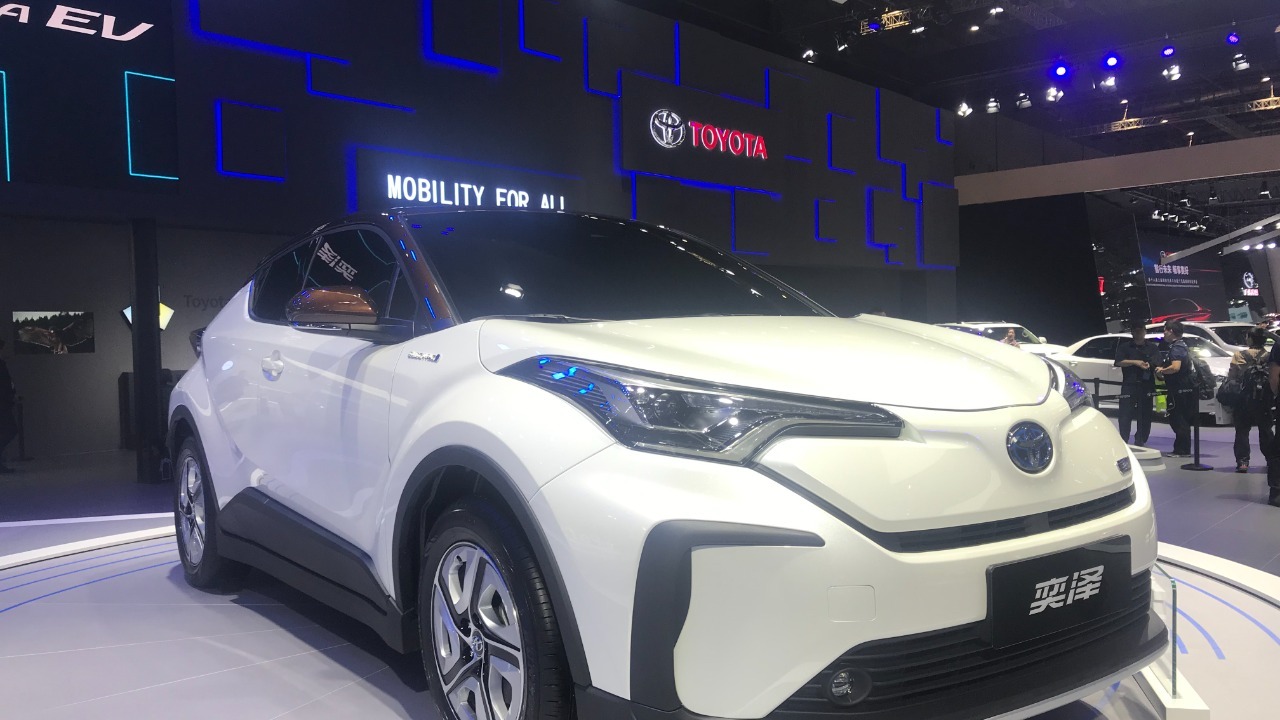
Toyota has signaled a bigger push into battery-electric vehicles, after years of emphasizing hybrids and other alternatives. The shift comes as the automaker has said it plans to introduce 10 new battery EV models by 2026, expanding beyond its limited BEV lineup to date. Whether that rollout is enough to close the gap with earlier-moving rivals is the central question facing Toyota’s next chapter.
From Hybrid Pioneer to EV Holdout
For more than two decades, Toyota built its environmental reputation on the back of the Prius, which became synonymous with fuel-efficient driving. That hybrid-first philosophy served the company well for years, generating strong sales and positioning Toyota as a leader in green transportation. But as competitors like Tesla, Hyundai, and even legacy rivals such as General Motors and Volkswagen poured billions into battery electric platforms, Toyota’s leadership publicly questioned the pace of the EV transition. Former CEO Akio Toyoda has publicly questioned the pace of the EV transition.
That resistance carried real consequences. While rivals expanded their EV lineups, Toyota offered the bZ4X as its main purpose-built battery electric model in many markets. The bZ4X launch drew scrutiny, and the model faced an early recall. For a company known for reliability and engineering precision, the stumble reinforced a perception that Toyota was not treating EVs with the same seriousness it brought to hybrids. The gap between Toyota’s stated ambitions and its actual EV output became one of the auto industry’s most discussed contradictions.
A Rapid Ramp-Up in Battery Models
Toyota’s strategy has shifted considerably. The automaker announced plans to introduce 10 new EV models by 2026, a target that signals the company is no longer treating electric cars as a niche offering for select markets. The commitment spans multiple vehicle segments and regions, suggesting Toyota intends to compete across the full spectrum of the EV market rather than testing the waters with a single model line. Executives have framed the plan as part of a broader portfolio that still includes hybrids and hydrogen fuel cell vehicles, but the sheer number of new battery models marks a notable pivot toward full electrification.
The scale of this rollout matters because Toyota’s manufacturing network is among the most extensive in the world. The company operates factories on nearly every continent and has deep relationships with suppliers that could, in theory, allow it to ramp EV production faster than smaller competitors once the engineering and platform decisions are locked in. Yet speed of execution is the variable that separates a press announcement from a market reality. Building 10 distinct EV models in a compressed timeline requires not just new platforms but also secure battery supply chains, software development capabilities, and retail strategies that differ significantly from selling conventional cars. Toyota’s ability to deliver on this promise will be tested by the same supply constraints that have slowed EV production across the industry, from lithium and nickel availability to semiconductor shortages that have lingered since the pandemic era.
Regulatory Pressure as a Possible Driver
The timing of Toyota’s EV push comes as emissions rules and EV policies continue to evolve in major markets, adding pressure on automakers to expand low- and zero-emission offerings.
This regulatory backdrop suggests Toyota’s EV acceleration is less about a sudden conversion to electric enthusiasm and more about compliance math. A company selling millions of vehicles globally cannot afford to fall short of emissions standards in Europe or lose market access in China. Falling short of key emissions requirements can carry significant financial and market-access consequences for global automakers. Viewed through this lens, Toyota’s 10-model target could be seen as a move to protect its market position as regulations and competition evolve, rather than a bid to lead the EV revolution. That distinction matters for consumers and investors alike, because a compliance-driven strategy tends to produce vehicles designed to meet minimum thresholds rather than to redefine a category.
Can Toyota Close the Gap With EV Leaders?
The competitive distance Toyota needs to cover is significant. Some EV leaders have scaled battery-electric sales far faster than Toyota to date, while Toyota’s overall vehicle output remains much larger than its BEV volume. Closing that gap requires more than just putting new models on dealer lots. It demands competitive battery technology, attractive pricing, reliable software systems, and a charging experience that matches or exceeds what Tesla offers through its Supercharger network.
Toyota has invested in solid-state battery research, which could eventually deliver higher energy density, faster charging, and longer range than current lithium-ion cells. If the company can bring solid-state technology to production vehicles before competitors, it would represent a genuine technical advantage. But solid-state batteries have been perpetually “a few years away” for the better part of a decade, and no automaker has yet achieved mass production at an affordable cost. Toyota’s credibility on this front will depend on whether it can move from laboratory prototypes to factory floors within the timeline its EV rollout demands. At the same time, software has emerged as a critical differentiator in EVs, from over-the-air updates to advanced driver assistance systems, and Toyota will need to demonstrate that it can match software-centric rivals in user experience as well as mechanical reliability.
There is also the question of brand perception. Toyota’s core customer base values dependability, resale value, and low ownership costs. Those qualities translate well to EVs in theory, since electric drivetrains have fewer moving parts and lower maintenance requirements than gasoline engines. But Toyota has spent years telling its customers that hybrids were the smarter choice, and reversing that message without appearing inconsistent will require careful communication. The company’s dealers, many of whom have limited EV training and infrastructure, will need to adapt quickly if Toyota expects to sell battery cars at scale. Dealer readiness will influence everything from how well sales staff can explain charging and range to whether service departments can handle high-voltage systems safely and efficiently.
What This Means for Everyday Buyers
For consumers who have been waiting for a wider selection of electric vehicles from a brand known for long-term reliability, Toyota’s shift could be meaningful. A lineup that extends beyond a single crossover into sedans, compact cars, and larger family vehicles would give buyers more options at different price points, potentially lowering the barrier to entry for first-time EV owners. If Toyota can bring its manufacturing discipline to bear, the company may be able to offer competitive pricing without sacrificing quality, especially in segments where many current EVs still carry a premium over comparable gasoline models.
Yet shoppers should also be realistic about timelines and trade-offs. The promised wave of new Toyota EVs will not arrive all at once, and early models may prioritize regulatory compliance and fleet-average emissions over groundbreaking design or performance. Charging infrastructure, while improving, remains uneven across regions, and Toyota does not control that piece of the puzzle. Prospective buyers will need to weigh the convenience of home charging, the availability of public fast chargers along their typical routes, and the total cost of ownership compared with hybrids and efficient gasoline cars. In the end, Toyota’s late but growing commitment to battery vehicles is likely to expand choices and put additional pressure on prices, but whether the company becomes an EV leader or simply a fast follower will depend on how convincingly these new models deliver on the expectations that its own reputation has created.
More From The Daily Overview
*This article was researched with the help of AI, with human editors creating the final content.

Grant Mercer covers market dynamics, business trends, and the economic forces driving growth across industries. His analysis connects macro movements with real-world implications for investors, entrepreneurs, and professionals. Through his work at The Daily Overview, Grant helps readers understand how markets function and where opportunities may emerge.