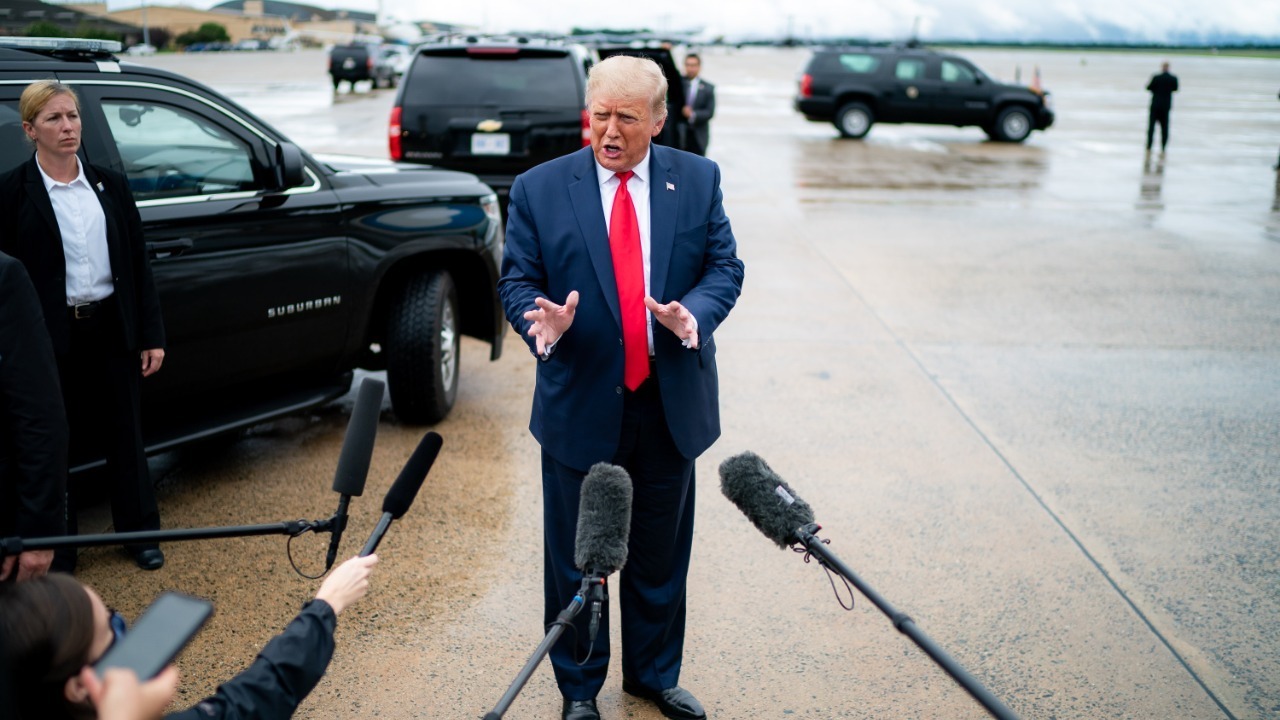
Rare earth miners and processors are suddenly back in favor after President Donald Trump pulled the trigger on a $12 billion federal stockpile of critical minerals. The announcement has ignited a sharp rally in names tied to the sector, reversing a brutal sell-off just days earlier and reframing how investors think about Washington’s role in the supply chain for the metals that power electric vehicles, wind turbines, smartphones, and advanced weapons.
The new cache, built around a program the administration has dubbed Project Vault, is designed to guarantee that American manufacturers can access key inputs even if global trade is disrupted or rival producers try to squeeze supply. I see the market reaction as less about short-term trading and more about a structural shift, as investors start to price in a government-backed floor under a once‑niche corner of the commodities world.
The Project Vault shock and a new U.S. minerals arsenal
At the center of the surge is Project Vault, a $12 billion plan to build a national reserve of rare earths and other critical minerals that sit inside everything from F-35 jets to Tesla Model Y motors. President Donald Trump has framed the initiative as a way to “ensure that American businesses and workers are never harmed by any shortage,” tying the stockpile directly to industrial jobs and national resilience, and the structure of the program reflects that ambition. According to administration details, the package is anchored by a $10 billion loan from the U.S. Export-Import Bank, supplemented by $2 billion in direct federal funding, giving the government both the firepower and the flexibility to buy and store strategic materials at scale through the Project Vault framework.
The stockpile is not just about hoarding metals in underground caverns, it is a deliberate attempt to reshape the global map of supply. The United States has long relied heavily on Chinese producers for rare earth oxides and processed materials, a vulnerability that has worried defense planners and chipmakers alike. By using federal balance sheet muscle, including the record Ex-Im backing described in the Billion Mineral Reserve package, the administration is signaling that it is prepared to underwrite a domestic ecosystem from mine to magnet. In that context, the president’s pledge that American companies will not be “harmed by any shortage” is more than rhetoric, it is a policy commitment backed by the Export-Import Bank and a long-term federal buying program.
From slump to spike: how rare earth stocks flipped in a week
The violence of the market’s mood swing is easier to grasp when you look at where these stocks were trading just before the announcement. In late Jan, the floor effectively fell out from under the sector as Washington signaled it was cooling on direct price supports for producers outside China, and investors rushed for the exits. Reporting on that rout described how Floor level declines hit rare earth miners, with Shares in companies across Australia and other producing nations outside of China tumbling as traders questioned whether the U.S. would keep writing checks to support marginal projects. That backdrop of capitulation is precisely what made the Project Vault news such a jolt.
Instead of vague talk about “supporting domestic mining,” the administration has now put a concrete dollar figure on long-term demand, and the market is repricing accordingly. Earlier in Jan, the sector had already seen a hint of what targeted federal action could do when USA Rare Earth stock jumped 20% on a Monday after the Commerce Department agreed to take a stake in the company, extending a rally that began the previous Friday’s close and underscoring how sensitive valuations are to policy signals. That move, which involved USA Rare Earth issuing equity and millions of warrants to the government, was framed as a step toward making the United States less dependent on foreign producers, and it set the stage for the broader surge that followed the USA Rare Earth deal.
MP Materials and the new bellwethers of Project Vault
Among individual names, MP Materials Corporation has quickly become a proxy for investor confidence in Project Vault and the broader U.S. strategy. The company, which operates a major rare earths mine in California, saw its shares jump as traders digested the administration’s plan and the prospect of a government-backed buyer for its output. One report noted that MP Materials Corp, listed on the NYSE under the ticker MP, was “moving higher” as the White House unveiled its strategic vault initiative, with the rally framed as part of a broader tech and industrial supply chain trade that also pulled in names like Corning, GE Vernova, and Google, according to coverage By Evette Mitkov.
The enthusiasm around MP is not just about a one-day pop. Forecast data show that The MP Materials Corp stock price recently ended at $64.61 on a Tuesday after rising 9.3%, and analysts tracking the name have highlighted how its trading range in 2026 could swing between deep value territory and far richer multiples depending on policy follow-through. In Feb 2026, projections for MP Materials included scenarios where the stock could test both low and high price bands, with one model citing a potential span between roughly $15 and the mid-$40s, underscoring just how leveraged the company is to sentiment around U.S. industrial policy. For investors, that volatility is both a warning and an opportunity, and it is why I see MP as the bellwether for how Wall Street ultimately judges the credibility of $64.61 policy support.
Trump’s broader critical minerals playbook
Project Vault is not a one-off, it is the latest in a string of moves that show how deeply the Trump administration is now embedded in the rare earth value chain. Earlier this year, officials announced plans for a critical minerals stockpile, with Trump aides briefing that the goal was to secure supplies for defense and high tech manufacturing and to give domestic miners a predictable buyer of last resort. That plan, outlined in a short statement attributed to Trump and summarized by J.D. Capelouto, signaled that the White House was prepared to use federal purchasing power to shape the market, a stance that has now been formalized in the Trump administration stockpile blueprint.
On the equity side, the government has already shown it is willing to go beyond loans and offtake agreements. In Jan, rare earth stocks jumped after the Trump administration agreed to take a direct stake in a miner in a $1.6 billion deal, a transaction that also included $277 million in federal funding and was widely read as a vote of confidence in the sector’s long-term prospects. Coverage of that move, which highlighted the reaction of Rare earth stocks and quoted Senior Business Reporter Ines Ferré, underscored how quickly capital can flood into the space when Washington signals it is all-in. Taken together with the new stockpile, these steps amount to a coherent playbook in which Trump uses federal capital, regulatory leverage, and strategic messaging to pull production away from China and toward projects in places like $1.6 billion and other allied jurisdictions.
Geopolitics, China, and what comes next for investors
Behind the trading screens, the strategic logic is straightforward. Donald Trump has been explicit that the $12bn critical minerals reserve is meant to counter the prospect of any shortfall in supplies and to blunt China’s dominance in processing and refining. Reporting on a rare earths mine in California has framed the initiative as an apparent move to reduce the risk that Beijing could weaponize its control over key inputs, much as Russia did with gas supplies to Europe, and to give U.S. and allied manufacturers a buffer against geopolitical shocks. In that sense, Project Vault is as much about foreign policy as it is about mining, and it fits neatly into a broader pattern of efforts to diversify supply chains away from single points of failure, as highlighted in coverage of California and other hubs.
More From The Daily Overview
*This article was researched with the help of AI, with human editors creating the final content.

Grant Mercer covers market dynamics, business trends, and the economic forces driving growth across industries. His analysis connects macro movements with real-world implications for investors, entrepreneurs, and professionals. Through his work at The Daily Overview, Grant helps readers understand how markets function and where opportunities may emerge.

