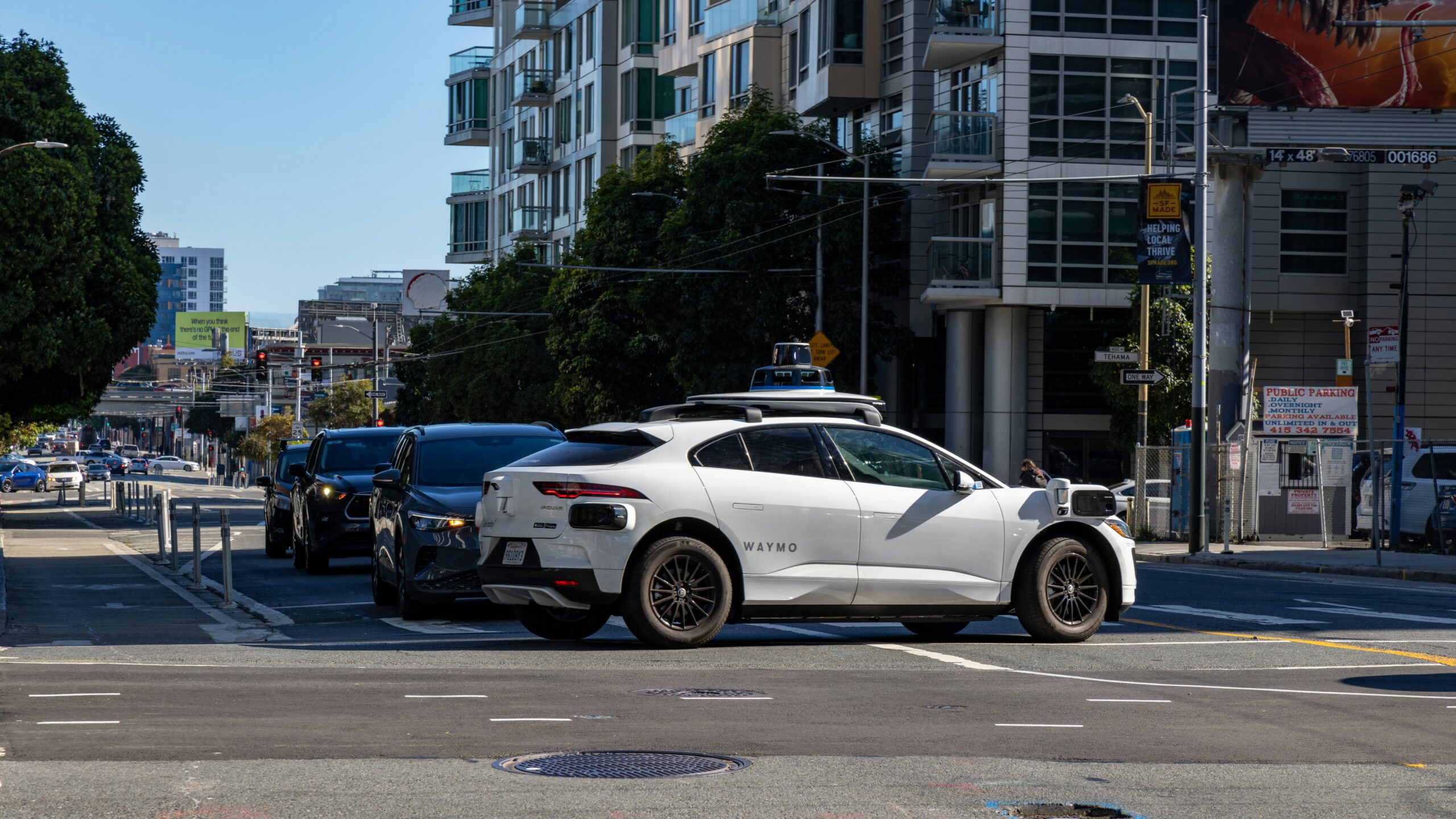
Waymo has become the reference point for what a commercial robotaxi business can look like at scale, and its financial backing reflects that ambition. Rather than a single $16 billion windfall, the company is building its war chest through a series of large commitments that give it the runway to expand service, refine technology, and push into new markets.
As capital piles up behind autonomous mobility, the stakes are shifting from whether robotaxis will arrive to how quickly they can be deployed safely and profitably. I see Waymo’s funding trajectory, operational metrics, and competitive landscape as a preview of how the broader transport industry may be reshaped over the next decade.
Waymo’s funding base and Alphabet’s long game
Waymo’s financial story starts with its parent, Alphabet, and the decision to treat self‑driving as a long‑horizon bet rather than a short‑term experiment. Alphabet Inc has committed $5 billion in a multiyear investment to the business, a signal that it is prepared to absorb years of heavy capital spending in pursuit of a dominant position in autonomous mobility. That backing sits alongside outside investors such as Silver Lake, Tiger Global and T. Rowe Price, which gives Waymo both strategic cover and market validation that its technology and business model are worth sustained support.
In parallel with Alphabet’s internal commitment, Waymo has also raised external capital specifically to accelerate commercialization. A separate funding round brought in $5.6 billion, earmarked to expand the company’s autonomous ride‑hailing service, Waymo One, in key U.S. markets including San Franc. By combining Alphabet’s $5 billion pledge with this $5.6 billion raise, Waymo is effectively operating with more than $10 billion in dedicated backing, even if that capital has arrived in stages rather than as a single $16 billion event. I view that layered structure as important context for understanding the scale of its current expansion push.
From pilot to scale: Waymo One’s growth curve
The most concrete evidence that this funding is translating into real‑world traction comes from Waymo One’s ride volumes. Waymo has emerged as a clear frontrunner in the robotaxi race, delivering over 200,000 paid rides per week across the United States at the beginning of 2025. Hitting that level of demand required not just technical maturity but also the operational discipline to keep vehicles on the road, maintain high uptime, and manage a complex dispatch network that spans dense urban cores and more sprawling suburbs.
Those 200,000 weekly trips also hint at how quickly usage can compound once a service crosses a reliability threshold that everyday riders trust. Earlier milestones, such as reaching 100,000 rides per week, marked psychological turning points for the company, but doubling that figure shows that robotaxis are starting to move beyond novelty status. In my view, this is where the heavy capital investment begins to pay off: every additional city Waymo enters, and every extra vehicle it deploys, can be leveraged across the same core software stack and mapping infrastructure, which helps justify the billions already committed.
New cities, new rules: expansion beyond early strongholds
Waymo’s expansion strategy is not just about adding more cars to existing streets, it is about carefully choosing new cities where the regulatory climate, road layout and rider demand align. The company has already used its funding to grow Waymo One in San Franc and other U.S. hubs, but it is also preparing for launches in some of the busiest European cities. That shift from a largely American footprint to a more international one will test how well its technology adapts to different driving cultures, signage standards and weather conditions, all of which can stress autonomous systems in new ways.
Regulators and city officials will play a decisive role in how quickly that expansion unfolds. European municipalities in particular tend to move cautiously on new mobility services, often requiring extensive safety data and public consultation before granting broad operating permits. I see Waymo’s deep pockets as a strategic asset here, because they allow the company to run lengthy pilot programs, gather the data regulators demand, and iterate on edge cases without being forced into premature commercialization. The trade‑off is that each new market becomes a multi‑year project, which makes the scale of Alphabet’s and investors’ commitments even more critical.
Rivals, partnerships and the battle for urban transport
Waymo is not building the future of urban transport in a vacuum. Ride‑hailing incumbents like Uber and Lyft have made clear they want to launch their own robotaxi services as soon as legal frameworks allow it, and they already control apps that millions of riders open every day. Those companies bring powerful distribution and pricing engines, but they still face the challenge of either developing autonomous technology in‑house or partnering with specialists like Waymo. I expect the eventual landscape to feature a mix of direct competition and deep integration, where a rider might hail a trip in the Uber app that is actually fulfilled by a Waymo vehicle behind the scenes.
For cities, this emerging rivalry could be both an opportunity and a headache. On one hand, competition between Waymo, Uber and Lyft promises more options, potentially lower prices, and better coverage in underserved neighborhoods. On the other, it raises complex questions about congestion, curb management and data sharing, especially if multiple fleets are vying for the same high‑value pickup zones. From my perspective, the companies that win long term will be those that can align their expansion plans with city priorities on safety, emissions and equity, rather than simply racing to deploy the most vehicles.
What the funding signals for the wider robotaxi market
When I look at the combined effect of Alphabet’s $5 billion commitment and the $5.6 billion external raise, I see more than just a large balance sheet. That level of capital signals to suppliers, regulators and competitors that robotaxis are moving into a durable, infrastructure‑like phase of development. Hardware makers can justify building specialized sensors and compute platforms, cities can plan around autonomous services as part of their long‑term transport mix, and rivals are pushed to either match the investment or find differentiated niches where they do not have to go head‑to‑head with Waymo’s scale.
At the same time, the funding does not guarantee success. Waymo still has to prove that Waymo One can reach sustainable unit economics, that riders will continue to choose driverless trips once the novelty fades, and that safety performance holds up as the service moves into more complex environments. The fact that Waymo is already delivering over 200,000 paid rides per week suggests strong early momentum, but the real test will be whether that growth can continue without requiring ever larger injections of capital. For now, the billions already committed give Waymo a commanding lead in the robotaxi race, even if the journey to a fully autonomous transport ecosystem is far from finished.
More From The Daily Overview
*This article was researched with the help of AI, with human editors creating the final content.

Grant Mercer covers market dynamics, business trends, and the economic forces driving growth across industries. His analysis connects macro movements with real-world implications for investors, entrepreneurs, and professionals. Through his work at The Daily Overview, Grant helps readers understand how markets function and where opportunities may emerge.

