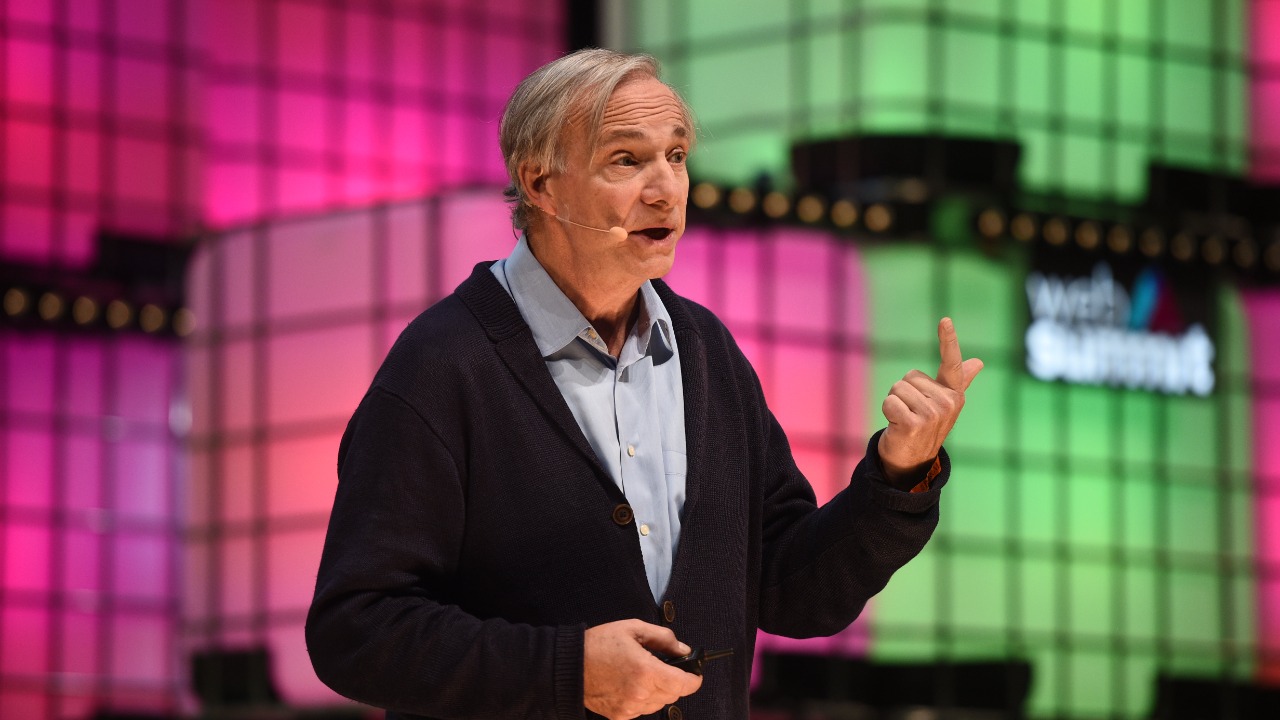
Gold’s blistering rise has turned a traditionally sleepy hedge into the most closely watched asset in global markets, and Ray Dalio is treating that move as a warning siren rather than a victory lap. The billionaire investor argues that the surge reflects deepening stress in currencies, bonds, and stocks, and that ignoring what gold is signaling could leave portfolios dangerously exposed. I see his message as less about chasing the metal’s momentum and more about reading it as a barometer of mounting systemic risk.
Dalio’s comments land at a moment when gold has already delivered standout returns and is edging closer to the kind of levels he has publicly predicted. With the metal trading near record territory and investors debating whether it can keep climbing, his view that the rally is a “red flag” forces a harder question: is gold’s strength a sign of opportunity, or evidence that the rest of the financial system is more fragile than it looks?
Dalio’s red flag: what a surging gold price really signals
Ray Dalio is not celebrating the metal’s run as a simple bull story, he is framing it as a symptom of deeper problems in the monetary system. In his view, when investors stampede into gold at this pace, they are voting against paper currencies and the policies behind them, especially in economies that rely heavily on debt and money creation. He has warned that when a country’s money is being devalued, people naturally look for alternatives, and a rapid repricing of gold is one of the clearest signs that confidence in that currency is eroding.
Dalio has tied this concern directly to the United States, arguing that the dollar’s weakness and the metal’s strength are two sides of the same coin. He has said that “when one’s currency goes down” and investors rush into hard assets, it reflects a loss of faith in policymakers’ ability to manage inflation and debt, a point he has underscored in comments highlighted in his warning about currencies. For Dalio, the gold chart is not just a price series, it is a real-time referendum on whether the world still trusts the promises embedded in government bonds and fiat money.
The “biggest story” of 2025: gold’s outperformance in context
Dalio has gone so far as to call gold’s performance the defining market development of the past year, arguing that it eclipsed the drama in equities and cryptocurrencies. He has described the metal as the “best major investment of the year,” pointing to how a simple long position in gold outpaced most stock indexes and many high-profile technology names. That kind of outperformance from a defensive asset is unusual, and in his telling, it is precisely why investors should pay attention to what it says about the broader cycle.
In his retrospective on 2025, Dalio framed the rally as the “biggest story in markets,” not because of speculative excitement but because it captured a shift in how investors think about safety and return. He noted that long gold delivered standout gains while also serving as a hedge against currency weakness and policy uncertainty, a combination he highlighted in his assessment that the metal was the top “major investment” of the year and the central narrative in markets, as reflected in his review of 2025 performance. When a conservative asset leads the league tables, Dalio argues, it usually means investors are bracing for trouble rather than chasing risk.
From “heart attack” risk to portfolio shield
Dalio’s alarm about gold’s surge is rooted in a broader diagnosis of American markets that he has been sharpening for months. He has warned that U.S. stocks and bonds are vulnerable to what he has called a potential “heart attack,” a sudden seizure in liquidity and confidence triggered by high valuations, heavy leverage, and policy missteps. In that scenario, he sees gold not as a speculative trade but as a kind of financial defibrillator, a store of value that can keep a portfolio alive when traditional assets are under acute stress.
He has described American markets as being at risk of a sharp and disorderly repricing, arguing that investors have grown complacent about the possibility of a rapid tightening in financial conditions. That is why he has been “pushing” gold as a shield, emphasizing that the metal’s role is to offset the damage if equities and bonds suddenly re-rate lower, a view captured in his warning that U.S. markets face “heart attack” risk and his advocacy of gold as protection in his comments on American market fragility. In that framing, the recent rally is less a bubble and more a premium investors are willing to pay for insurance.
Why Dalio calls gold “money like cash”
Dalio’s conviction about gold is philosophical as much as it is tactical. He has repeatedly described the metal as “money like cash,” but with one crucial difference: it is not at the mercy of central banks that can create more of it at will. In his view, that scarcity gives gold a unique role in portfolios, especially when inflation is eroding the purchasing power of bank deposits and short-term bills. He argues that in periods of monetary experimentation, investors need an anchor that is not someone else’s liability.
He has also stressed that gold tends to shine in “severe economic stress,” when confidence in both governments and corporate balance sheets is under pressure. In a social media response that drew wide attention, Dalio explained that the metal serves as a hedge against the failure of policymakers to manage debt and growth, and that its value is most evident when other assets are selling off, a point he made while defending his preference for the metal even after a pullback from record highs, as detailed in his explanation of why Dalio favors gold. For him, the recent surge simply reflects a growing recognition of that role.
How much gold Dalio thinks investors should actually own
Despite the dramatic language about red flags and heart attacks, Dalio’s prescription for individual investors is surprisingly measured. He has argued that a “well-diversified portfolio” should hold a meaningful, but not dominant, allocation to gold, typically in the low double digits. In his framework, the goal is not to bet the farm on a single commodity, but to ensure that a portfolio is not entirely dependent on the success of fiat currencies and government bonds.
Dalio has been explicit about the range he considers prudent, saying that somewhere between 10% and 15% of a neutral portfolio should be in gold. He has framed that slice as a strategic hedge rather than a short-term trade, emphasizing that it is designed to protect against tail risks in markets and the economy, a recommendation he laid out when he suggested gold as a shield for U.S. investors and quantified the allocation he considers appropriate in his guidance on a neutral portfolio. For investors watching the recent rally with a mix of envy and anxiety, that range offers a concrete benchmark grounded in his long-running “risk parity” philosophy.
Why Dalio prefers gold to Treasurys in the current cycle
Dalio’s emphasis on gold is also a direct critique of the traditional safe haven hierarchy that puts U.S. Treasurys at the top. He has warned that the primary risk for holders of Treasury debt is not default, but the erosion of real returns through inflation and currency debasement. In his analysis, aggressive money creation by the U.S. Federal Reserv and other central banks has changed the calculus, making it more likely that bond investors will be repaid in dollars that buy significantly less than they do today.
That is why he has urged investors to “choose this asset over Treasurys” in the current environment, arguing that gold offers a more reliable store of value when policymakers are effectively taxing savers through negative real yields. Dalio has linked this view to his broader concern about continued money printing by the U.S. Federal Reserv and the impact that has on the long-term purchasing power of fixed-income portfolios, a warning he laid out in detail when he contrasted the risks of Treasury holdings with the attributes of hard assets in his critique of Treasury risk. In that framework, the surge in gold is not irrational exuberance, it is a rational response to a bond market that no longer offers the safety it once did.
Can gold really reach $5,000 Per Ounce?
Dalio has not limited himself to abstract arguments about diversification, he has also put a bold number on where he thinks the gold price could go. He has said “I Predict Gold Will Cross $5,000 Per Ounce in 2026,” a forecast that reflects both his macro outlook and his assessment of how investors will respond if inflation and currency worries persist. That target implies significant upside from current levels and underscores how far he believes the repricing of hard assets may still have to run.
He has paired that prediction with practical guidance on “Here’s How Much You Should Buy, According to Hedge Fund Legend Ray,” effectively translating a macro thesis into portfolio decisions. By anchoring his forecast around the specific figure of $5,000 and tying it to a recommended allocation, Dalio is signaling that he sees the current rally as part of a longer arc rather than a short-lived spike, a stance he elaborated when he explained why he believes gold can reach $5,000 and how investors should size their exposure in his detailed $5,000 Per Ounce call. For investors, the question is not just whether that exact number is hit, but what it would mean for the rest of the financial system if it is.
Reading today’s price: what the spot market is telling us
To understand why Dalio sees the current move as a red flag, it helps to look at where the market is trading right now. The Gold Spot Price has climbed to levels that would have seemed aggressive only a few years ago, reflecting a steady bid from both institutional and retail buyers. As of January, the live Gold spot price for 1 ounce of Gold in U.S. dollars has been quoted around $4,465.36 USD, a level that puts Dalio’s $5,000 target within striking distance and suggests that a large part of his thesis is already being priced in.
That kind of move is not happening in a vacuum. It is unfolding against a backdrop of volatile bond yields, questions about the durability of equity valuations, and ongoing debate about how quickly inflation can be tamed. The fact that investors are willing to pay more than $4,000 for a single ounce of the metal speaks to a deep demand for perceived safety, a dynamic captured in the live pricing data that shows gold trading near $4,465.36 USD per ounce in the current spot market. For Dalio, that is not just a number on a screen, it is evidence that the search for a haven is intensifying.
What Dalio’s warning means for everyday investors
For individual investors, Dalio’s message is less about trying to time the top in gold and more about reassessing what counts as “safe” in a world of high debt and active central banks. If he is right that the metal’s surge is a red flag, then the real risk is not owning some gold, but being overexposed to assets that depend on low inflation and stable currencies to deliver their promised returns. That means rethinking the balance between cash, bonds, equities, and hard assets, and recognizing that the traditional 60/40 portfolio may not offer the same protection it once did.
At the same time, Dalio’s emphasis on diversification and measured allocations is a reminder not to swing from one extreme to another. He has consistently argued for a balanced mix of assets that can perform across different economic regimes, and his suggested 10% to 15% allocation to gold sits within that broader philosophy rather than outside it. For investors tracking markets through tools like Google Finance and watching the metal’s price tick higher, the key takeaway from Dalio’s warning is not to panic, but to treat gold’s surge as a signal to stress-test their assumptions about risk, return, and what true safety looks like in the current cycle.
More From TheDailyOverview

Grant Mercer covers market dynamics, business trends, and the economic forces driving growth across industries. His analysis connects macro movements with real-world implications for investors, entrepreneurs, and professionals. Through his work at The Daily Overview, Grant helps readers understand how markets function and where opportunities may emerge.