Beijing is trying to turn a tropical island the size of Belgium into the world’s newest duty-free playground at the very moment its trade surplus in goods has blown past the $1 trillion mark. The juxtaposition captures how China is leaning on both external demand and tightly managed internal experiments to keep growth on track. I see Hainan’s transformation into a sealed-off free trade port as a test of whether a controlled opening can coexist with a model built on outsized surpluses and a carefully managed currency.
The stakes are global. A $1 trillion surplus means the rest of the world is absorbing a vast wave of Chinese goods, while Hainan’s tax breaks and customs carve-outs are designed to pull in foreign brands, tourists and capital. How those two forces interact will help determine whether China’s next phase of growth eases trade tensions or deepens the imbalances that already define its relationship with major partners.
From surplus superpower to island experiment
China’s trade machine has rarely looked more formidable. Official figures show the country’s surplus in goods has already exceeded $1 trillion, with one detailed Commentary noting that the surplus grew from $993 billion in 2024 to $1.08 trillion in the first 11 months of 2025. Another set of customs data shows the annual surplus in goods topping the $1 trillion threshold for the first time as exports to non US markets offset weaker demand from the United States, confirming that China has become even more reliant on selling manufactured products abroad to sustain growth. That scale of surplus is not just a statistical milestone, it is a structural feature of how the economy is wired.
At the same time, Beijing is betting that a single province can help rebalance growth away from property and heavy industry. On 18 December 2025, Hainan became an independent customs zone from the rest of mainland China, marking the full implementation of its free trade port framework. The island is being positioned as a duty-free hub, a logistics gateway and a services showcase that can draw in tourists and high value consumption even as the broader economy leans on a vast export surplus. The contrast between a tightly controlled national model and a highly liberalized island enclave is deliberate, and it is central to understanding China’s current strategy.
Hainan’s full-island customs closure and what it really means
The phrase “full-island closure” sounds like a lockdown, but in Hainan’s case it is shorthand for a sweeping customs reconfiguration. On December 18, 2025, the Hainan Free Trade Port officially launched full-island closure operations, meaning the entire province now functions as a single customs territory separate from the rest of China. Goods can enter the island tariff free under “first line” rules, while movements between Hainan and the mainland are treated as if they were cross border flows. The goal is to lower the threshold for enjoying benefits, simplify procedures and make it easier for companies to route trade and investment through the island.
According to state media, these “special customs operations” are not a marginal tweak but a core part of Beijing’s plan to reshape global trade routes. One detailed account notes that the Chinese Communist Party wants to turn Hainan, a province roughly the size of Belgium, into perhaps the most open and business friendly jurisdiction in the world, with Xinhua describing the launch of “special customs operations” as a step toward that ambition. In practice, the closure means tighter control at the island’s perimeter, but looser rules inside, a combination that allows Beijing to experiment with liberalization without losing its grip on capital flows and trade statistics.
A new free trade framework built for services and control
Customs reform is only one layer of the Hainan experiment. The island is also operating under a new legal and regulatory framework that is meant to make it easier to move capital, data and people, while still keeping Beijing’s priorities intact. A detailed policy breakdown titled Four Things to Know About Hainan’s New Free Trade Framework explains that the island will enjoy streamlined approvals for foreign investment, more flexible cross border capital flows and simplified licensing for sectors like finance and professional services. At the same time, sensitive industries and data related activities will remain subject to standard regulatory controls, underscoring that this is a managed opening rather than a free for all.
In my view, that balance between openness and control is the defining feature of the Hainan project. The framework allows companies to base regional headquarters, trading entities and service centers on the island with tax incentives and lighter touch supervision, but it also keeps Beijing’s ability to intervene intact. A separate analysis of the New Free Trade Framework notes that while many sectors will see negative lists shortened or removed, areas tied to national security and social stability will still face tight scrutiny. Hainan is being built as a pressure valve for capital and trade, not as a challenge to the political system that governs the rest of the country.
Duty-free dreams: tourism, luxury and the 110 m target
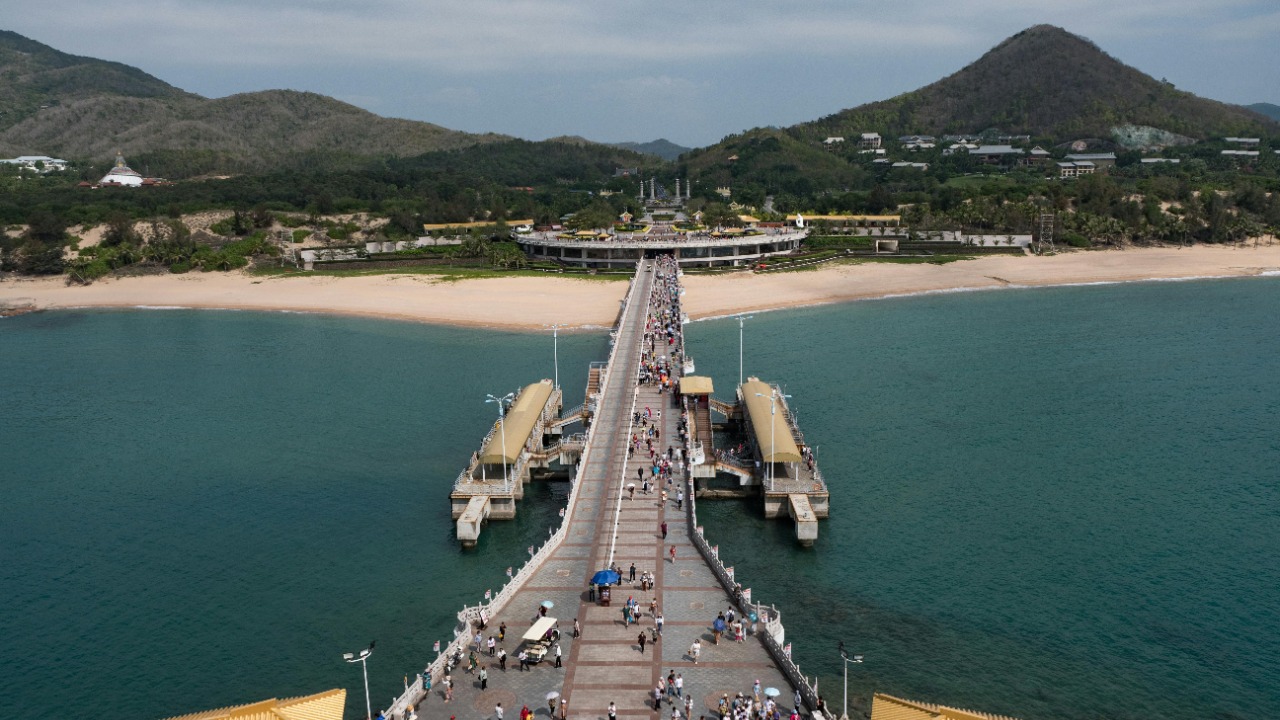
Hainan’s most visible bet is on tourism and duty-free shopping. Authorities in HAIKOU have set an explicit goal for the resort island to receive 110 m tourists by 2026, positioning it as a mass market alternative to overseas travel for mainland residents. Reports from South China describe a three year action plan to upgrade infrastructure, expand hotel capacity and improve services so that Hainan can handle that influx. The island’s beaches and tropical climate have long made it a domestic holiday favorite, but the new target reflects a push to turn tourism into a pillar industry that can offset the drag from a cooling property sector.
Luxury retail is central to that vision. Hainan, once hailed as a paradise for duty free shopping, has seen sales slow as pandemic era travel restrictions eased and consumers regained access to overseas outlets. A detailed feature in Hainan’s next chapter notes that new customs rules are being rolled out to revive the island’s appeal for high end brands in 2026, including adjustments to purchase quotas and product categories. The same analysis points out that Hainan’s duty free offensive has already triggered a consumption boom worth millions, but that authorities are now tightening oversight to curb smuggling and maintain market order. The 110 m visitor target is not just about sun and sand, it is about turning the island into a controlled outlet for China’s pent up appetite for luxury goods.
Customs tweaks, smuggling fears and the luxury comeback bet
To make the duty free model sustainable, regulators are fine tuning the rules that govern what tourists can buy and how they can take it home. Key milestones in Hainan’s policy evolution include raising the annual duty free shopping quota per person, expanding the list of eligible goods to cover items like cosmetics, home appliances and mini drones, and simplifying pick up procedures at airports and downtown stores. One breakdown of these changes highlights how the new customs regime is meant to support a luxury comeback by making it easier for shoppers to spend more in a single trip without facing cumbersome paperwork.
Yet the same reforms have raised concerns about arbitrage and gray market flows. Authorities have repeatedly warned about smuggling rings that exploit duty free quotas to move goods back to the mainland for resale, undercutting official retail channels. The feature that asks Will new customs rules spark a luxury comeback notes that regulators are tightening identity checks and purchase tracking to crack down on such practices and maintain market order. In my reading, this is another example of the broader Hainan paradox: the island is being opened up to encourage spending and foreign brand engagement, but every new channel also requires new layers of surveillance to keep the system from leaking.
Foreign brands, mega malls and the DFS test case
Global retailers are treating Hainan as both an opportunity and a stress test. DFS, the duty free specialist controlled by LVMH, is making what it calls “an unprecedented investment” in a 128,000 square meter project on the island that will feature more than 1,000 luxury brands when it opens by 2026. Company statements describe the planned complex as a mega mall that will bring together fashion, beauty, watches and jewelry under one roof, with DFS betting that China’s appetite for high end goods will remain robust even if outbound tourism recovers. The scale of the project, with its 128,000 square meters and more than 1,000 brands, underscores how seriously global players are taking the Hainan experiment.
For these companies, the island offers a rare combination of high spending domestic tourists, favorable tax treatment and a regulatory environment that is more predictable than many other parts of the country. At the same time, they are exposed to policy risk if Beijing decides to recalibrate quotas, tighten customs rules or shift incentives back toward mainland cities. The broader context is that Jan reporting on Hainan’s duty free offensive stresses that the goal is to reduce dependence on the real estate sector and develop new growth drivers. That means foreign brands are effectively being asked to help underwrite a structural shift in China’s growth model, with Hainan as the showcase.
Macro backdrop: a $1T surplus, a soft yuan and “proactive” policy
Hainan’s rise is unfolding against a macro backdrop that is both strong and fragile. On one hand, China’s export engine is humming, with customs data showing that the trade surplus in goods has exceeded $1 trillion as shipments to markets outside the United States grow. One detailed breakdown of November trade figures notes that China trade surplus tops $1 trillion for the first time on non US growth, even as exports to the United States fall. Another segment from The World on PRX underscores how unusual it is for a major economy to run such a large and persistent surplus without facing more intense external pressure.
On the other hand, Beijing is grappling with weak domestic demand, a property slump and persistent questions about the yuan. A recent update on China’s reserves notes that Forex Reserves Rose in December even as a “Yuan Debate Mounts,” with analysts linking the accumulation of foreign assets to China’s low inflation and subdued domestic investment. In his year end remarks, Xi Jinping promised that Pursuit of technological self sufficiency would be paired with more proactive macro policies in 2026, signaling that fiscal and monetary support will continue. Hainan’s free trade port is one of the tools being used to channel that support into new sectors without abandoning the export led model that underpins the $1 trillion surplus.
Trade tensions, the Trump truce and shifting partners
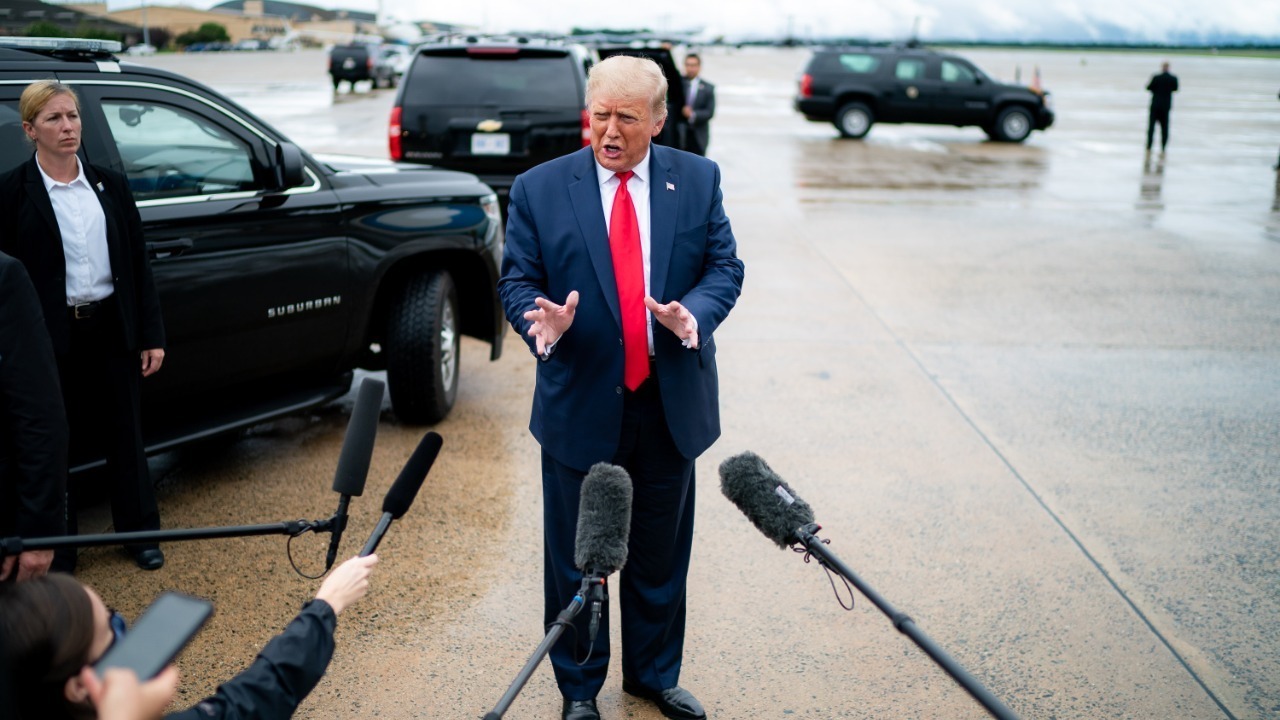
The scale of China’s surplus is already feeding into geopolitical friction. A recent segment titled China hits $1T trade surplus as US shipments plunge 29 percent despite a truce highlights how exports to the United States have fallen sharply even as the overall surplus has grown. The report frames the numbers as a story about the Trump truce, noting that the easing of tariffs and rhetoric has not translated into a meaningful narrowing of the bilateral imbalance. Instead, Chinese exporters have redirected goods to other markets, while the United States continues to import large volumes of Chinese manufactured products in categories that are less politically sensitive.
That shift underscores why Hainan’s role as a global trade and services hub matters beyond tourism. By creating a jurisdiction with looser rules and more attractive tax treatment, Beijing is signaling to companies in Europe, Southeast Asia and the Middle East that they can deepen ties with China even as Washington keeps a wary eye on strategic sectors. At the same time, Chinese officials are using diplomatic channels to push back against criticism of the surplus, with foreign ministry briefings, including those that touch on Japan and Taiwan, emphasizing that trade policy is being conducted within World Trade Organization rules. Hainan’s success or failure will feed into that narrative, either as evidence that China can open up in a way that benefits partners, or as another flashpoint in debates over unfair advantages.
Can a duty-free island rebalance an export-heavy giant?
For all the ambition poured into Hainan, it is worth asking how much difference one island can make to an economy of China’s scale. The province is often described as being roughly the size of Belgium, and its population and GDP are tiny compared with coastal powerhouses like Guangdong and Jiangsu. Yet Beijing is clearly using Hainan as a laboratory for policies that could later be replicated elsewhere if they prove compatible with the country’s political and economic constraints. The island’s positioning on global maps, from Hainan Island searches to tourism campaigns, reflects a deliberate effort to brand it as something distinct from the rest of the mainland.
In my view, the more important question is not whether Hainan can single handedly rebalance China’s economy, but whether the model it represents can coexist with the structural forces that have produced a $1 trillion surplus. The island’s free trade port status, highlighted in profiles of Hainan as a province and in more focused looks at Hainan as a resort destination, is built on attracting imports of high value goods and services. That runs counter to the export heavy pattern that has driven China’s rise, but it also complements it by giving domestic consumers a place to spend some of the income generated by the trade boom. Whether that is enough to ease external pressure, or whether it simply recycles surplus earnings within a controlled environment, will be one of the key tests of China’s economic strategy in the years ahead.
More From TheDailyOverview

Grant Mercer covers market dynamics, business trends, and the economic forces driving growth across industries. His analysis connects macro movements with real-world implications for investors, entrepreneurs, and professionals. Through his work at The Daily Overview, Grant helps readers understand how markets function and where opportunities may emerge.