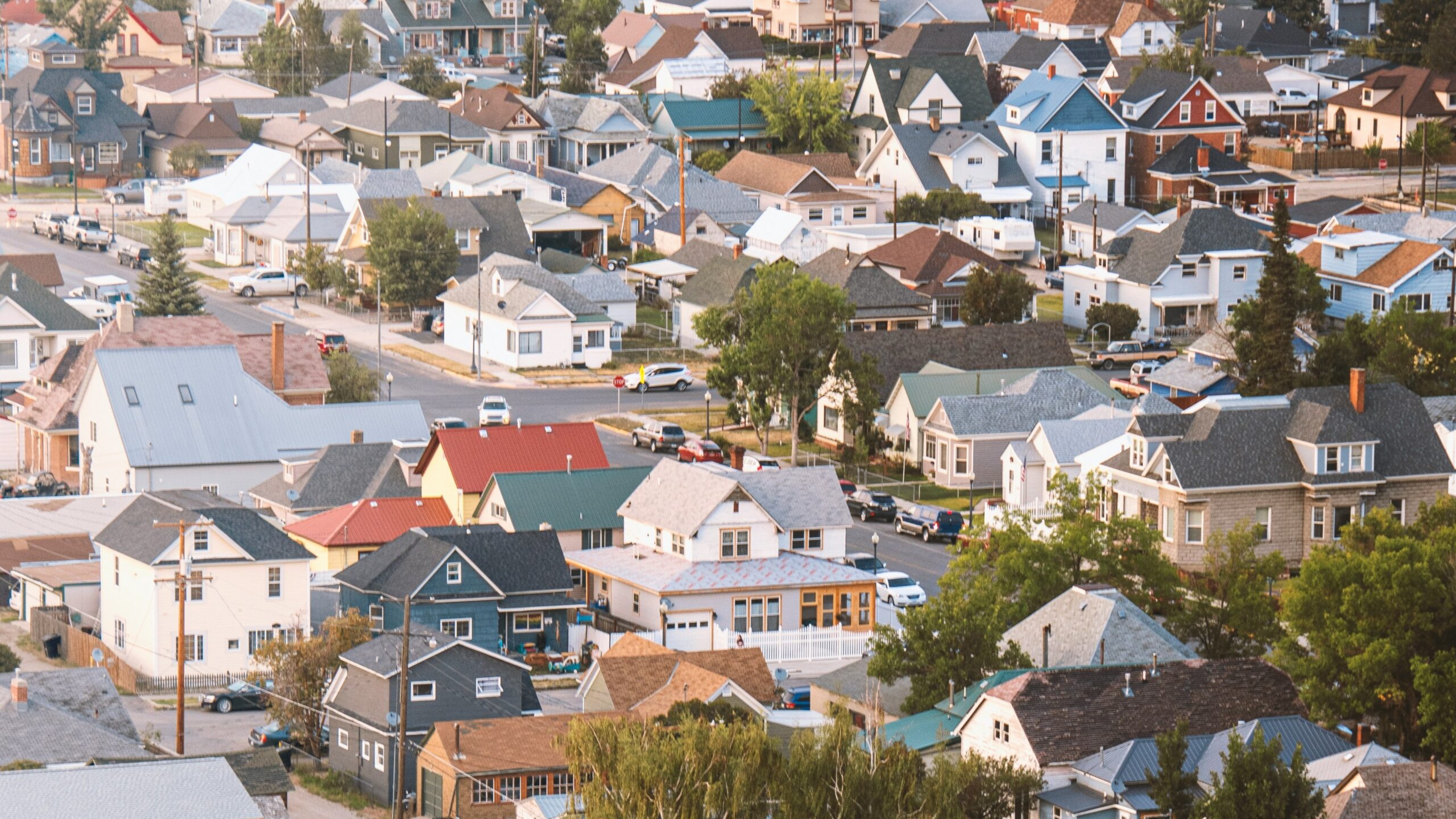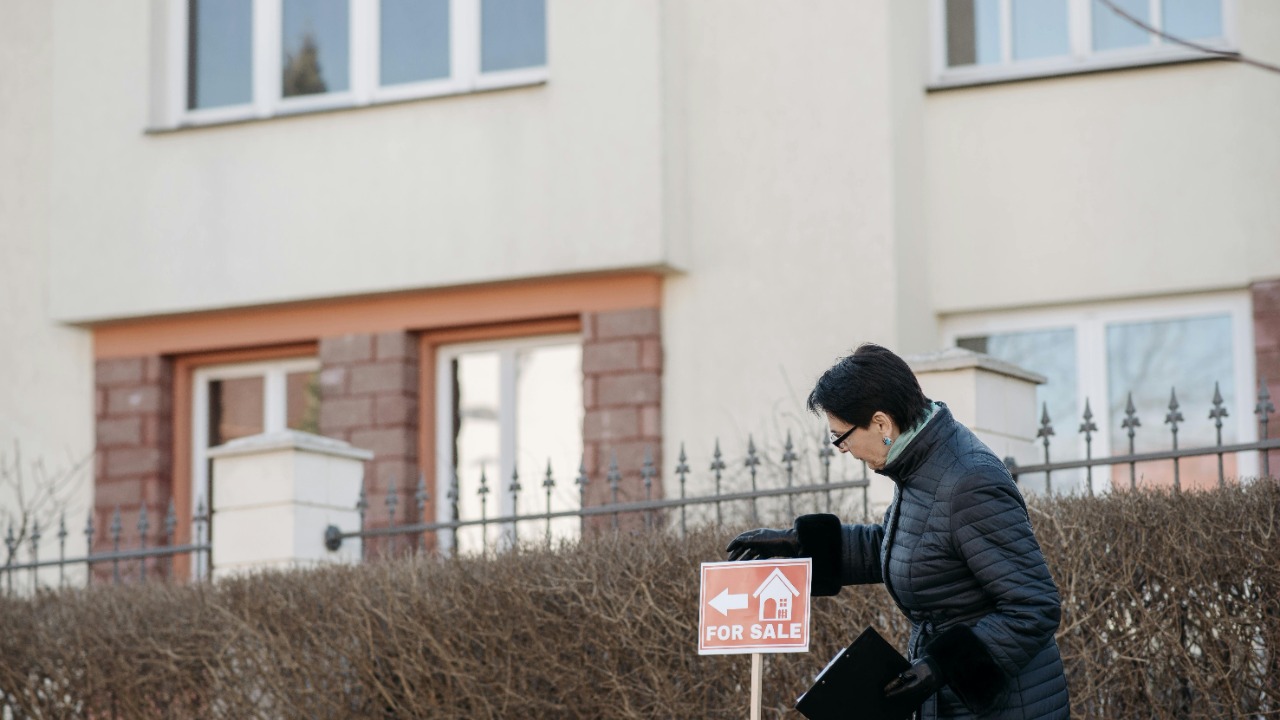
The American housing market has quietly tipped into a strange imbalance. There are now far more real estate professionals chasing deals than there are homes available, and the gap between people with licenses and actual listings is widening even as inventory inches up. The result is a profession where a growing share of agents sell little or nothing at all, even while buyers and sellers still overwhelmingly rely on them.
That mismatch is not just a curiosity for industry insiders. It is reshaping how agents work, how consumers experience the market and how money flows through one of the country’s most important sectors. The numbers show a classic case of market saturation colliding with a structural housing shortage, and the fallout is only beginning.
The raw math: nearly 1.5 million agents, under a million listings
To understand how crowded the profession has become, I start with the basic headcount. In 2025 and 2026, the United States has 1,489,932 Realtors, meaning agents who belong to the National Association of Realtors and follow its code of ethics. Those members are spread across 102,116 real estate brokerages, a footprint that reaches from dense coastal metros to smaller markets in Florida and California. When I factor in non‑member licensees, one analysis notes there are about 1.5 m NAR members and possibly up to 3 million licensed Real Estate Agents in the United States, underscoring just how many people are competing for a finite pool of deals.
On the other side of the ledger is housing supply. Federal data on Housing Inventory show an Active Listing Count of about 912,696 homes across the United States in Jan 2026, a figure that rounds to 912 thousand in the official series ACTLISCOUUS. A separate look at the same dataset shows January 2026 inventory at 912,696 active listings nationwide. Stack those numbers against the 1,489,932 Realtors and the imbalance is stark: there are roughly 63 percent more member agents than homes on the market, meaning Realtors now outnumber homes for sale by well over the 30 percent implied in the headline.
How we got here: a decade of easy entry and tight supply
The glut of agents did not appear overnight. For years, low interest rates and surging prices made real estate look like an accessible path to flexible, lucrative work, especially as online courses and state licensing portals lowered the barrier to entry. One lending analysis framed it as a milestone, noting that the National Association of Realtors reported a record number of members when it asked How Many Real in the USA, and highlighting how the United States real estate sector had swelled in 2024. At the same time, consumer awareness of the distinction between Real Estate Agents and Realtors remained fuzzy, something a separate guide on Real Estate Agents and Realtors captures when it walks through What the Difference is and reassures You that confusion is common.
Supply, however, never kept pace. Inventory has been grinding lower since the late 2010s, with active listings sliding from 1,154,120 homes in January 2017 to 1,043,951 in January 2018, then 1,110,636 in January 2019 before dropping again to 951,675 in January 2020. Even with a recent uptick, the January 2026 level of 912,696 remains far below that earlier baseline. The US housing market has only recently shifted from a chronic shortage of listings to a more balanced environment, with one report noting that The US market is now in a phase where home sellers outnumber buyers for the first time in years according to The US data from Red, but that shift has not been enough to absorb the wave of new licensees.
Market saturation: too many agents chasing too few deals
What we are seeing now is textbook market saturation. When a field becomes crowded with providers, competition intensifies, margins compress and weaker players struggle to survive. A broader analysis of saturation notes that it can have a profound impact on market dynamics, forcing companies to adapt through pricing changes, shifts in marketing tactics and eventual consolidation, as outlined in a primer on market saturation. Real estate is following that script: with roughly 1.5 million NAR members and possibly up to 3 million licensees, the United States has more agents than the current level of demand can support.
The human impact is already visible in production numbers. One widely shared industry blog argued that 74% of all Realtors sold zero homes in 2024, warning readers to Let that sink in and pointing out that a randomly chosen Realtor was likely to have closed nothing all year. Another marketing analysis put the figure differently, saying recent industry data show that approximately 70% of licensed agents had not sold a single home in 2025, and that with more agents and fewer buyers, the competition is intense. Even if the exact percentages differ, the direction is clear: a majority of licensees are not meaningfully participating in the market.
When most agents sell nothing: the productivity crisis
Behind those percentages are real careers stalling out. A social media post that ricocheted through the industry reported that 440,000 real estate agents left the business in 2024 in the U.S., and that only 21 percent of agents sold a home. Another commentary drilled into the claim that 70 percent of agents sold nothing in 2025 and argued that the data, as explained by Here by Emma Neff, tell a more nuanced story but still confirm that a large share of licensees are effectively inactive. For working agents, that means more colleagues competing for the same listing appointments and buyer leads, while for consumers it raises the odds of landing with someone who has little recent experience.
The productivity gap is not new. Even in the frenzied pandemic market, a report on lessons from 2020 noted that 88 percent of buyers used an agent to purchase their home, according to NAR, even as bidding wars and a shortage of inventory made each transaction more complex. Today, the difference is that the pie is smaller and more fragmented. When 1,489,932 Realtors are sharing fewer than a million active listings, the average agent’s slice shrinks, and the long tail of low producers grows.
Consumers still want agents, even in a crowded field
Despite the oversupply of professionals, buyers and sellers have not abandoned the traditional model. A recent profile of home buyers and sellers found that Only 5 percent of homes over the past year sold as For Sale By Owner, an all‑time low, while a record 91% of sellers used a real estate agent rather than going it alone to avoid paying commission fees. A separate breakdown of seller attitudes echoed that figure, noting that 91 percent of sellers used an agent in 2025 and explaining What They Value, from pricing strategy to negotiation and local demand insights, even as headlines suggested trust in agents was eroding Betwee scandals and lawsuits.
That reliance persists even as the broader market tilts. One analysis of current conditions notes that Home Sellers Now by 47%, and unpacks What It Means for Prices as supply begins to outpace demand. A separate market update on social media put it more bluntly, saying Housing has quietly flipped into a buyer‑favorable market and that As of Dec 2025, sellers outnumber buyers by about 47%, the widest gap on record. In that environment, experienced agents can help sellers adjust expectations and pricing, while buyers lean on them to navigate a landscape where affordability, rates and economic uncertainty are keeping many would‑be purchasers on the sidelines.
Legal shocks and shifting trust reshape the profession
The imbalance between agents and listings is colliding with a separate shock: legal and regulatory changes around commissions and representation. A detailed industry case study noted that the recent NAR settlement has sent shockwaves through the real estate industry, forcing agents to re‑evaluate their strategies for securing consistent business and pushing referral networks to the forefront. Another analysis of new paperwork requirements described how Agreements Testing Trust Across Real Estate Industry The have altered the way buyers, sellers and agents interact, explaining that the National Association of rules have reshaped expectations and that seller and agent have shifted dramatically.
For consumers, these changes add another layer of complexity to an already confusing landscape. A marketing guide aimed at agents talks about 9 Result Oriented Tips for setting up Real Estate Drip Campaigns for 2024, and frames the modern market as a hypercompetitive environment where only those who communicate clearly and consistently will thrive. When there are more agents than listings, and when commission structures are under scrutiny, trust and transparency become differentiators. That is especially true in states like Florida and California, which a national headcount of Realtors identifies as having some of the highest concentrations of National Association of Realtors members.
What comes next: consolidation, specialization and a thinner roster
Looking ahead, I expect the gap between agents and listings to narrow not because inventory will suddenly surge, but because the profession itself will shrink and consolidate. The exodus of 440,000 agents in 2024 is an early sign of that shakeout. Commentary on America’s agent glut has already warned that When you realize there are 1.5 m NAR members and possibly up to 3 million licensees in the United States, it becomes clear that many are struggling to keep the lights on, as one critique of NAR membership levels put it. As market saturation theory suggests, the likely outcome is fewer, more productive agents who handle a larger share of transactions, while part‑timers and low producers drift away.
At the same time, the core value proposition of representation is unlikely to disappear. Historical data from NAR show that even in the chaotic 2020 market, NAR and the National Association of Realtors found that 88 percent of buyers used an agent, and more recent surveys put seller reliance at 91 percent. As long as contracts, inspections, appraisals and negotiations remain complex, most people will want a guide. The challenge, in a world where Realtors outnumber homes for sale by a wide margin, is ensuring that the agents who survive the shakeout are the ones who can actually deliver that guidance, not just the ones who were quickest to sign up for a license.
More From The Daily Overview
*This article was researched with the help of AI, with human editors creating the final content.

Elias Broderick specializes in residential and commercial real estate, with a focus on market cycles, property fundamentals, and investment strategy. His writing translates complex housing and development trends into clear insights for both new and experienced investors. At The Daily Overview, Elias explores how real estate fits into long-term wealth planning.