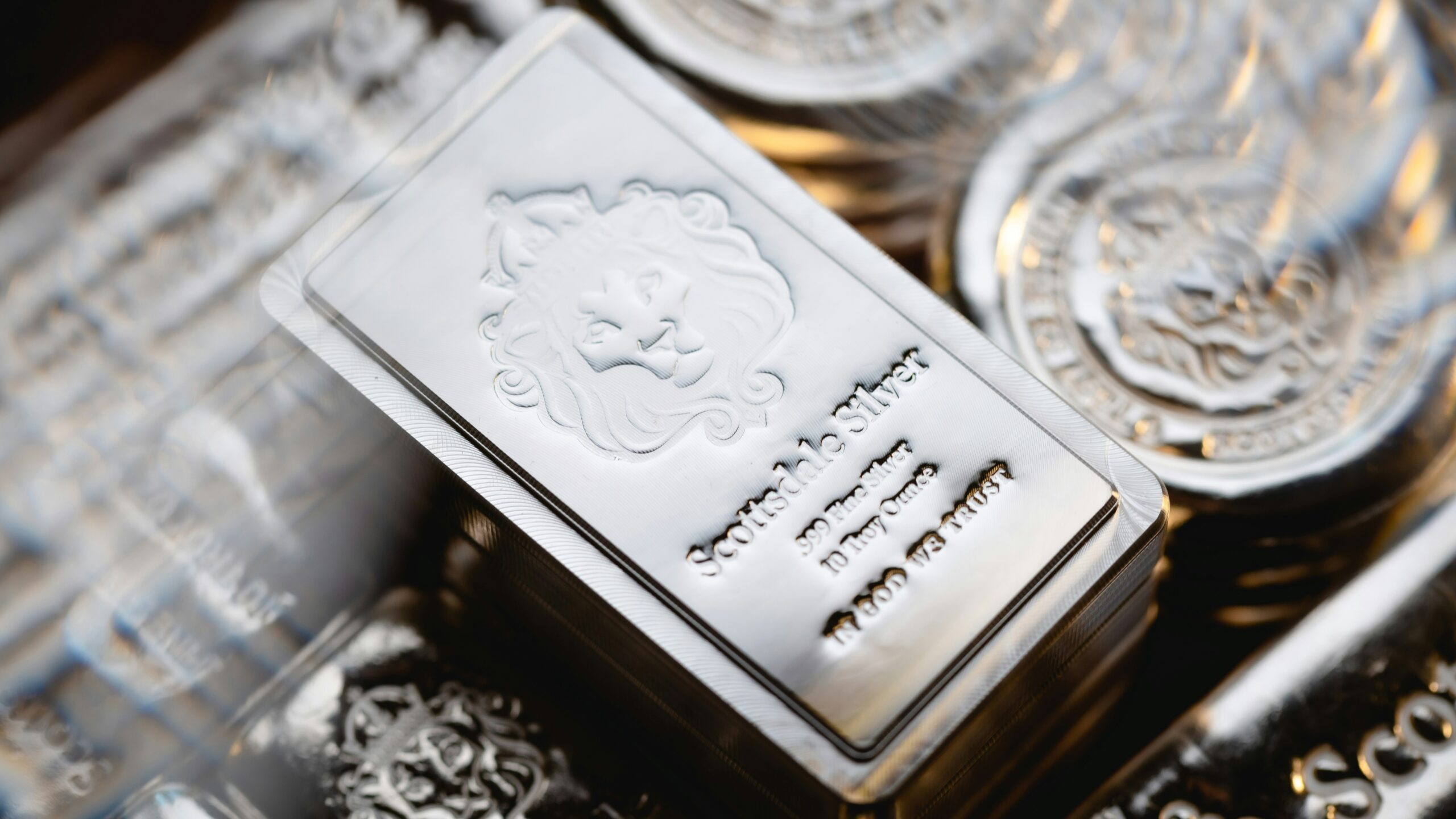
Silver’s blistering rally has turned a once-sleepy metal into one of the hottest trades in global markets, but the very speed of that ascent is now flashing danger. Former JPM quant chief Marko Kolanovic is warning that the surge has all the hallmarks of a blow‑off top and that prices are at risk of collapsing by roughly 50% within the next year. For investors who have piled into the trade as an inflation hedge or a bet on industrial demand, the call raises uncomfortable questions about how much downside they are really prepared to stomach.
The warning lands at a moment when speculative fervor around precious metals is colliding with a murkier macro backdrop. Silver has not only pushed to record territory, it has also dramatically outpaced gold, drawing in momentum traders who care more about charts than fundamentals. That combination, Kolanovic argues, rarely ends with a gentle glide lower.
The ex-JPM quant’s stark 50% crash call
Marko Kolanovic built his reputation inside JPM as a strategist who translated complex quantitative signals into blunt market calls, and he is applying the same approach to Silver’s latest spike. In his view, the current price level and positioning data point to a market that has detached from underlying demand and is being driven instead by speculative flows. That is why he has framed the downside not as a mild correction but as a potential halving of value, explicitly flagging a 50% plunge as a realistic outcome rather than a tail risk.
What makes his warning stand out is the language he uses around probabilities. Kolanovic has described a deep drawdown as “almost guaranteed,” a phrase that reflects his reading of how stretched the rally has become relative to historical patterns in Silver and other metals. In his analysis, the current setup resembles the final stages of past commodity booms, when prices overshoot fair value, volatility compresses, and then a sharp reversal wipes out latecomers. That assessment is echoed in separate coverage of Silver at records, where Kolanovic is cited as arguing that the move looks unsustainable even as some investors remain convinced the rally has further to run.
Red-hot price action and echoes of past manias
The ferocity of the recent move has turned Red-hot Silver into a magnet for short‑term traders, with intraday swings that would have looked extreme even during previous bull markets. Prices have vaulted to new highs in a compressed window, outpacing the more measured climb in gold and leaving traditional valuation anchors behind. That kind of vertical ascent is precisely what Kolanovic points to when he compares the current environment to the final days of earlier commodity surges, including the 2011 peak that still looms large in the memory of metals veterans, a comparison highlighted in detailed coverage of Red Silver.
Momentum has been reinforced by a wave of retail interest, with social media chatter and trading apps amplifying every breakout to fresh highs. For many newer participants, Silver’s dual identity as both a precious metal and an industrial input has been part of the appeal, offering a story that spans inflation hedging, green‑energy demand, and speculative upside. Yet as Kolanovic and other commentators have noted, the speed of the rally has far outstripped any incremental change in those underlying narratives, a disconnect underscored in reporting that describes Silver’s rally as increasingly detached from fundamentals.
Why Kolanovic sees the rally as unsustainable
From a quant’s perspective, the problem is not that Silver has gone up, it is how it has gone up. Kolanovic’s framework focuses on positioning, volatility, and cross‑asset correlations, and on those measures he sees a market that has become one‑sided and fragile. When speculative longs dominate and implied volatility sinks even as prices spike, the stage is set for a sharp unwind once any catalyst appears. That is the pattern he has identified in his latest assessment of Silver positioning, where he argues that the current structure leaves little margin for error.
He also points to the widening gap between Silver and other parts of the metals complex. While gold has benefited from similar macro tailwinds, its move has been more orderly, and industrial metals tied directly to global growth have not matched Silver’s parabolic trajectory. That divergence suggests to Kolanovic that investors are extrapolating best‑case scenarios for demand while underestimating the risk of a slowdown or policy shift that could sap enthusiasm. In his view, the combination of record prices, crowded trades, and growing caution among seasoned analysts, as reflected in multiple assessments of Marko Kolanovic, is a classic recipe for a sharp correction.
What a 50% slide would mean for investors
If Silver were to fall by roughly 50% from its recent highs, the damage would extend far beyond a handful of speculative accounts. Exchange‑traded products that track the metal would see their net asset values cut in half, wiping out years of gains for buy‑and‑hold investors who bought into the inflation‑hedge narrative. Mining equities, which typically move with even greater volatility than the underlying commodity, could fare worse, with balance sheets and capital‑spending plans suddenly under pressure. For leveraged traders using futures or options, a move of that magnitude could trigger margin calls and forced liquidations, amplifying the downside in a feedback loop that Kolanovic has seen play out in other crowded trades, as outlined in his broader comments on metals risk.
For individual investors, the key question is not whether Kolanovic’s forecast will prove exactly right, but whether their portfolios are built to survive that kind of volatility. A 50% drawdown in a single position can be devastating if it is concentrated, but manageable if it sits inside a diversified mix of assets. That is where basic tools such as price charts and historical data, available through platforms like Google Finance, can help investors understand how extreme the current move has been relative to past cycles and stress‑test their own risk tolerance before the market does it for them.
How to navigate a market Kolanovic calls “almost guaranteed” to break
Faced with a high‑conviction warning from a figure like Kolanovic, I see three broad options for investors: reduce exposure, hedge, or consciously accept the risk. Trimming positions into strength is the simplest response, locking in some of the gains from Silver’s run while leaving room to participate if the rally somehow extends. More sophisticated players might look to options strategies that cap downside while preserving upside, though the cost of such protection tends to rise once volatility picks up. In either case, the starting point is acknowledging that a market described as “almost guaranteed” to suffer a major setback is not one where complacency is rewarded, a point underscored in detailed reporting on Kolanovic’s warning.
The other path is to stay invested but reframe Silver as a speculative satellite holding rather than a core store of value. That means sizing positions so that even a 50% collapse would not derail long‑term financial plans, and pairing the metal with assets that are likely to behave differently in a downturn. It also means resisting the temptation to chase every spike, especially when the underlying drivers look more like momentum and leverage than a steady improvement in fundamentals. For those who choose that route, the discipline to stick with a pre‑defined risk budget may matter more than any single price target, particularly in a market that a veteran quant like Marko Kolanovic now views as dangerously stretched.
More From TheDailyOverview
*This article was researched with the help of AI, with human editors creating the final content.

Grant Mercer covers market dynamics, business trends, and the economic forces driving growth across industries. His analysis connects macro movements with real-world implications for investors, entrepreneurs, and professionals. Through his work at The Daily Overview, Grant helps readers understand how markets function and where opportunities may emerge.

