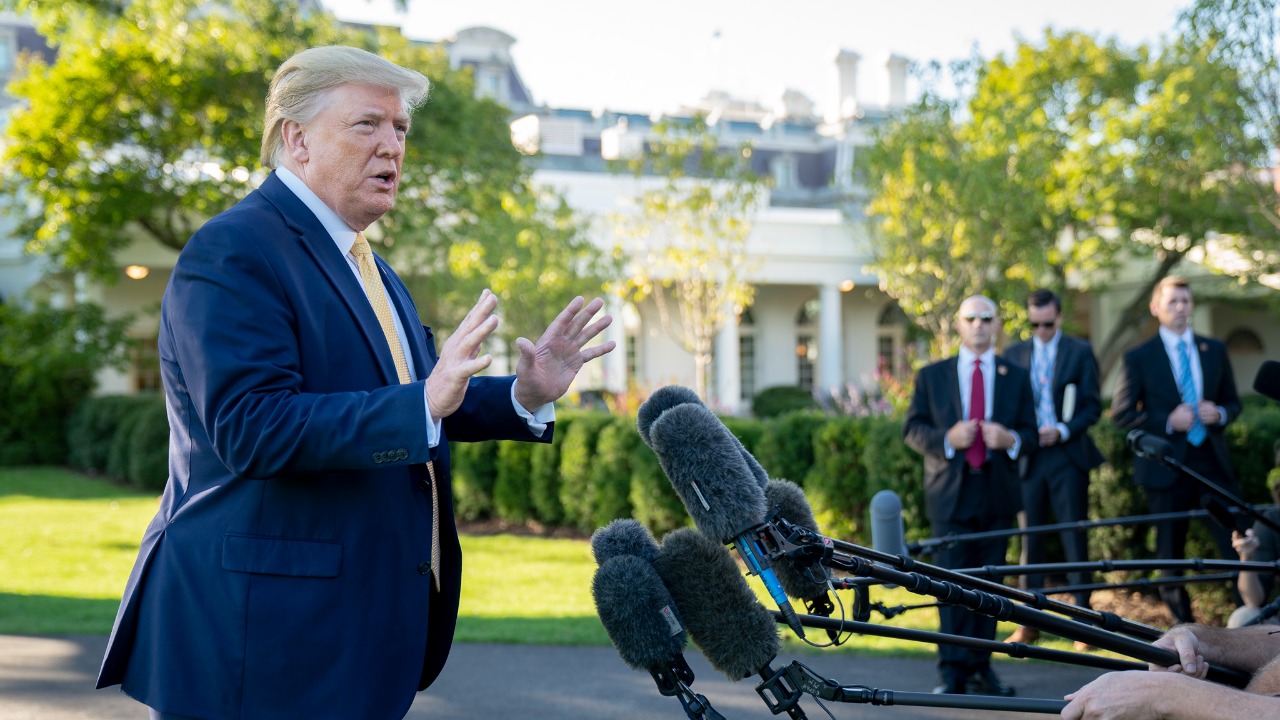
President Donald Trump has promised to stop taxing Social Security benefits, pitching the idea as a sweeping break for retirees. The fine print tells a narrower story, with the biggest gains flowing to a relatively affluent slice of seniors and even some younger workers, while many low income beneficiaries see little change. The plan also raises pointed questions about how much strain it could put on already fragile Social Security and Medicare finances.
How Social Security is taxed now, and what Trump wants to change
To understand who wins from a no tax approach, I have to start with how the current system works. Today, retirees pay federal income tax on up to 85 percent of their benefits, but only if their overall income crosses specific thresholds. Many lower income seniors already owe nothing on their monthly checks, which means wiping out the tax on benefits does not raise their after tax income at all. Analysts examining how it currently works note that the tax mainly bites retirees who have sizable additional income from work, pensions, or investments.
President Donald Trump has framed his Social Security Tax Plan as a way to let retirees keep more of what they earned, but the structure of the proposal matters as much as the slogan. One version, described as eliminating federal income tax on benefits, would simply exempt those payments from taxable income while leaving the rest of the code intact. Another, sometimes paired with a new senior deduction, layers in age and income tests that sharply limit who can claim the relief. In one detailed breakdown of Exempting Social Security from income taxation, researchers stress that the design choice determines whether the plan is a broad based benefit or a targeted tax cut for those already doing relatively well in retirement.
The one group that gains the most: higher income seniors
When I follow the money through the tax tables, one group stands out as the clear winner: seniors with substantial income beyond their Social Security checks. Because these retirees are the ones currently paying tax on up to 85 percent of their benefits, they are also the ones who see the largest dollar savings if that tax disappears. A careful distributional analysis finds that exempting benefits from income tax does not change after tax income for the bottom quintile at all, while upper income retirees collect the bulk of the windfall. That pattern is central to the conclusion that Exempting Social Security primarily benefits those already in stronger financial shape.
The administration has also floated a new senior deduction that phases out at high incomes, but the details again tilt toward better off households. One prominent estimate notes that the deduction phases out fully at $250,000 for married couples, a level that still captures a relatively affluent slice of the retiree population. For the vast majority of these higher income taxpayers, the combination of a new deduction and lighter taxation of benefits delivers a meaningful cut in their overall bill. Policy analysts who have walked through the numbers argue that, contrary to the rhetoric, the structure of the deduction means it does not significantly help low and middle income seniors, even as it reduces revenues by an estimated $1.5 trillion over ten years, a result highlighted in a review of For the vast majority of higher income taxpayers.
Who is left out: low income retirees and seniors under 65
The flip side of that skew is that many of the most vulnerable retirees see little or no gain. Because a large share of low income beneficiaries already pay zero federal tax on their Social Security, eliminating the tax on benefits does not put extra cash in their pockets. Some proposals add age and income restrictions that further narrow eligibility. One version of the so called big, beautiful bill, for example, excludes Social Security recipients under 65 and sets income cutoffs that bar individuals and couples above specified thresholds from claiming the new tax break. Reporting on how the plan would work notes that Social Security recipients under 65 and couples making $250,000 or more would be ineligible.
That design choice undercuts the political promise that every retiree will see relief. Seniors who rely almost entirely on their monthly checks, especially those in the bottom quintile of the income distribution, already face no tax on their benefits and therefore do not gain from the change. Meanwhile, some older workers who are still in the labor force but have not yet turned 65 would continue to pay tax on their earnings and might not qualify for the new deduction at all. The result is a policy that leaves the most cash strapped retirees largely where they started, while concentrating new advantages on those with more income and more flexibility, a pattern that critics say is at odds with the administration’s messaging about helping low and middle income seniors, as underscored in the analysis of For the vast majority of higher income taxpayers.
Millennials and younger workers: a quieter set of winners
There is another, less obvious group that stands to benefit from Trump’s Social Security Tax Plan, at least on paper. Younger workers who expect to receive benefits decades from now could see a modest increase in their lifetime welfare if the tax on those future payments disappears. One analysis of Trump Social Security Tax Plan: Which Millennials Benefit Most finds that certain millennial cohorts, especially those with higher projected earnings, would enjoy a noticeable bump in after tax retirement income. The study of Trump Social Security Tax Plan and Which Millennials Benefit Most describes how President Donald Trump’s recent proposal could translate into an increase in their lifetime welfare.
Yet those gains come with a large caveat, because they depend on Social Security’s long term solvency. If the program’s trust funds are depleted sooner, future retirees may face across the board benefit cuts that dwarf any tax savings. Analysts who have modeled the interaction between tax policy and trust fund health warn that reducing revenue without a replacement source accelerates the date when automatic reductions would kick in. In that scenario, millennials might find that the promise of tax free benefits is offset by smaller checks, a trade off that is particularly stark for younger workers who will spend decades paying payroll taxes into the system before they ever see a dollar back.
The risk to Social Security and Medicare’s finances
Behind the distributional debate sits a more basic question: how to pay for the lost revenue. Federal income taxes on Social Security benefits currently flow into the trust funds that support both retirement and disability payments, as well as Medicare. Eliminating that stream without a replacement would widen the programs’ funding gaps and could move up the date when automatic cuts are triggered. Policy experts who have examined the proposal warn that many seniors could ultimately be hurt if Social Security and Medicare’s trust funds run dry sooner and benefits have to be reduced. One detailed explainer on what the plan would mean notes that Social Security and Medicare would both feel the strain.
Supporters of the plan sometimes argue that faster economic growth could offset the lost tax revenue, pointing to models in which lower marginal rates encourage work and investment. The same analysis that finds Exempting Social Security from income taxation does not help the bottom quintile also suggests that, in theory, the policy could boost long run economic growth. But even that optimistic scenario does not guarantee that the extra growth would be captured inside the trust funds in time to prevent shortfalls. Without a concrete replacement funding source, the risk is that today’s tax cut for higher income retirees and some younger workers becomes tomorrow’s benefit cut for everyone, a trade off that Congress would ultimately have to confront if it chooses to enact the plan described in the review of Exempting Social Security from income taxation.
Politics, perception, and the gap between promise and reality
Politically, the appeal of a no tax message is obvious. Social Security is one of the most popular federal programs, and the idea of letting retirees keep every dollar of their benefits fits neatly on a campaign placard. President Donald Trump has leaned into that simplicity, presenting his Social Security Tax Plan as a straightforward way to reward a lifetime of work. Coverage that asks Who Would Benefit the Most
When I line up the numbers, the gap between promise and reality becomes hard to ignore. The plan’s structure channels the largest gains to higher income seniors and some well positioned millennials, while leaving low income retirees and Social Security recipients under 65 with little to show for the headline. At the same time, it risks weakening the finances of Social Security and Medicare unless lawmakers pair it with politically painful choices on other taxes or spending. That combination is why, beneath the simple slogan, the proposal looks less like a universal break for retirees and more like a targeted tax cut that favors one group above all others.
More From TheDailyOverview
- Dave Ramsey says these two simple questions show whether you’re rich or poor
- Retired But Want To Work? Try These 18 Jobs for Seniors That Pay Weekly
- IRS raises capital gains thresholds for 2026 and what’s new
- 12 ways to make $5,000 fast that actually work

Nathaniel Cross focuses on retirement planning, employer benefits, and long-term income security. His writing covers pensions, social programs, investment vehicles, and strategies designed to protect financial independence later in life. At The Daily Overview, Nathaniel provides practical insight to help readers plan with confidence and foresight.

