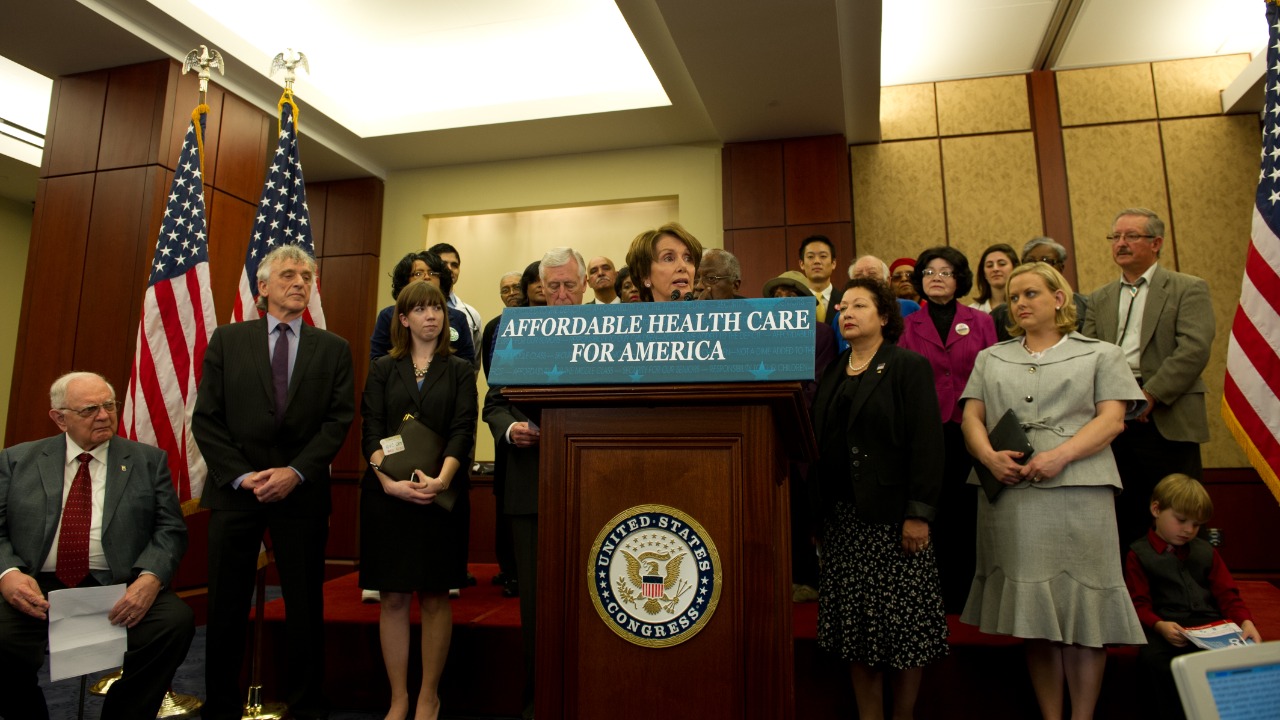
Republicans in Congress are racing to sell new health policy ideas just as the Affordable Care Act’s enhanced premium tax credits approach their scheduled end, setting up a high-stakes fight over how much help people will get to pay for coverage. The debate is no longer about whether to subsidize insurance at all, but whether to keep the current ACA structure or redirect that money into conservative favorites like Health Savings Accounts and stricter eligibility rules. What happens next will determine whether millions of people see their monthly premiums spike, lose coverage altogether, or are pushed into a very different kind of marketplace.
The ticking clock on enhanced ACA tax credits
The core tension in this debate is timing: the enhanced premium tax credits that expanded Affordable Care Act help are scheduled to expire at the end of 2025, and the political system is only now grappling with what that means. Under current law, the extra assistance that lowered costs for Marketplace plans is set to vanish, a change that nonpartisan analysts describe as a built-in shock to the system rather than a gradual adjustment. That looming cutoff is the backdrop for every Republican proposal now surfacing, because any alternative has to be ready before the enhanced subsidies disappear or millions of households will feel the difference in their 2026 bills.
Policy tools already exist to show people what is at stake. A widely used online calculator explains that, About the current rules, the enhanced premium tax credits under the Affordable Care Act (ACA) are temporary and scheduled to end, which would immediately change how much of the premium the federal government covers. Another interactive tool walks consumers through how the ACA enhanced premium tax credit affects their monthly costs today, making the coming shift less abstract and more like a line item in a family budget. I see Republicans responding not to a theoretical policy question, but to a calendar problem that is already baked into federal law.
What happens to premiums if subsidies vanish in 2026
Behind the partisan messaging, the math on premiums is blunt. Health policy experts warn that if the enhanced subsidies lapse in 2026, average premiums for Marketplace enrollees could effectively double for many people who have come to rely on the extra help. One detailed analysis lists as its Key Takeaways that Expiration of the enhanced subsidies would reverse earlier reductions in average premiums and would disproportionately hit those who purchase coverage on the marketplace. That is the financial cliff Republicans are stepping into as they pitch alternatives.
Insurers are already preparing customers for the possibility of higher costs. One major carrier’s consumer guide to upcoming Marketplace rules explains that some Affordable Care Act (ACA) health insurance tax credits are scheduled to change and that, in 2026, if enhanced premium tax credits are not extended, many people will pay more out of pocket for Marketplace coverage. When I look at those projections alongside the federal calculators, it is clear that the fight in Washington is not over a marginal tweak, but over whether to allow a sharp jump in what families owe each month for the same plans.
Who benefited from enhanced Premium Tax Credits
To understand why the looming expiration is so contentious, it helps to look at who gained from the enhanced Premium Tax Credits in the first place. A detailed issue brief titled Enhanced Premium Tax Credits, Who Benefits, How Much, and What Happens Next explains that the expanded help was designed to smooth out the old “subsidy cliff” that cut off assistance abruptly at a certain income level. Eligibility for premium assistance is now more gradual, which pulled in middle income families who previously earned just enough to lose help but not enough to comfortably pay full price.
Consumer advocates have been fielding questions from those households as the expiration date approaches. A policy explainer framed as Ask an Expert: Enhanced Premium Tax Credit (PTC) Expiration notes that most people’s health insurance premiums are currently reduced by these enhanced credits and warns that if they end, your premiums will be impacted. I read that as a reminder that the beneficiaries are not a narrow slice of the market, but a broad swath of people who buy coverage on their own and have built their household budgets around the current level of federal help.
Republican alternatives: HSAs and structural rewrites
Republicans are not simply arguing to let the subsidies die; they are trying to redirect the money into a different architecture of coverage. A long-running conservative idea has been to lean more heavily on Health Savings Accounts, which give people tax-advantaged dollars to spend on medical costs instead of subsidizing premiums directly. A major ACA research hub notes that The New ACA Repeal and Replace Health Savings Accounts Proposals from some Republicans in Congress would effectively repeal some Affordable Care Act protections and shift support into HSAs or something similar. That is the philosophical throughline connecting today’s proposals to earlier repeal-and-replace efforts.
Those ideas are now being repackaged as a response to the subsidy deadline. One recent report describes how Republicans are proposing direct Health Savings Account payments to ACA enrollees rather than extending enhanced premium tax credits, a shift that would send cash into individual accounts instead of lowering the sticker price of insurance. In practice, that would turn a predictable monthly discount into a more flexible but potentially less protective pool of money, especially for people who get sick and quickly burn through their HSA balance.
House GOP bills and the search for a middle path
Inside the House, Republicans are testing whether there is room for a more centrist compromise that tweaks the ACA without scrapping it. Reporting on the internal negotiations notes that House front-line and moderate GOP members have rallied around One bill from Reps Don Bacon, Tom Suozzi, and Josh Gottheimer that would reform the Affordable Care Act while adjusting subsidies. That kind of bipartisan branding is meant to reassure voters who like their current coverage but worry about rising costs.
At the same time, party leaders are under pressure from conservative groups that want a cleaner break from the ACA framework. A separate account of the internal debate explains that the GOP doubles down on ACA subsidy alternatives as lawmakers try to show they can reach a consensus on a new plan. When I line up those stories, I see a party trying to walk a tightrope between swing-district members who fear backlash if subsidies vanish and ideological allies who view any extension as a betrayal of long-standing promises to unwind Obamacare.
Older adults and the risk of a coverage shock
One group stands to feel the impact of any misstep especially quickly: older adults who are not yet eligible for Medicare. Advocacy groups warn that if subsidies fall back to pre-enhancement levels, premiums for people in their 50s and early 60s could spike so sharply that many will simply drop coverage. A detailed brief on older enrollees explains that HR 1’s Impact on ACA Marketplaces would increase the number of uninsured older adults and that many could become uninsured unless Congress acts. That is the human face of what can otherwise sound like an abstract fight over tax credits.
Republican alternatives that rely more heavily on Health Savings Accounts may be a tough sell for this demographic. People in their late 50s with chronic conditions often have higher ongoing costs and less time to build up HSA balances, so shifting support away from upfront premium help could leave them exposed. When I weigh that against the warnings about the ACA Marketplaces, it is clear that any Republican plan that does not explicitly address older adults risks creating a politically explosive coverage gap just as this age group approaches retirement.
Work requirements and coverage losses in GOP blueprints
Beyond the structure of subsidies, some Republican health coverage proposals would tighten eligibility through work requirements and other conditions. A comprehensive review of recent plans concludes that they would Take coverage away from people who do not meet harsh work requirements and that All three plans would increase the number of uninsured and raise costs for those who remain covered. That approach reflects a long-standing conservative belief that public assistance should be tied to employment, but it also raises the stakes of the ACA subsidy debate for low wage workers and people with unstable jobs.
Layering work requirements on top of expiring subsidies could compound the disruption. If enhanced tax credits end in 2026 and new rules simultaneously make it harder to qualify for remaining help, the people most likely to fall through the cracks will be those with fluctuating hours, caregiving responsibilities, or health conditions that limit their ability to work. From a policy design perspective, that is a very different vision from the ACA’s original goal of creating a relatively straightforward Marketplace where eligibility is based primarily on income rather than employment status.
Trump, Paragon and the push to let subsidies expire
President Donald Trump has added another layer of complexity by signaling that he would prefer to move away from the current subsidies altogether. In recent coverage of the internal Republican debate, one account notes that, Complicating the debate further, Trump said he would rather not extend the subsidies and prefers a system that fits a broader GOP health care plan. That presidential posture makes it harder for Republicans who might otherwise quietly support an extension to protect their constituents from premium spikes.
Conservative policy shops are reinforcing that message. One influential group, Paragon, wants Republicans to let the enhanced ACA subsidies expire and has been promoting a new health care plan that would change how people access the benefit. When I put those pieces together, I see a coordinated push from the White House and allied think tanks to frame the end of enhanced subsidies not as a crisis to be averted, but as an opportunity to force a broader rewrite of the ACA.
How the current administration’s ACA stance set the stage
The current standoff is also a product of choices made earlier in the decade, when a different administration expanded the ACA’s financial help. A detailed policy overview titled ACA Changes in 2025 and Beyond: What Does the Current Administration Mean for the ACA explains that, in 2025, Biden-era policies had maintained and extended enhanced ACA subsidies, reinforcing the idea that robust Marketplace assistance was here to stay. Those moves helped drive enrollment to record levels but also meant that more people would feel the pain if the extra help ever went away.
Now, with a different president in office and Republicans controlling the policy conversation, that earlier expansion has become a political fault line. Supporters of the ACA argue that rolling back the enhancements would undo gains in coverage and affordability, while conservatives see the scheduled expiration as a chance to reset expectations and pivot toward their preferred tools. The fact that the enhanced subsidies were always time limited is what allows Republicans to frame their alternatives as a return to the original law rather than a new cut, even though for enrollees the effect would be indistinguishable from a fresh reduction in help.
What consumers should watch as 2026 approaches
For people who buy their own coverage, the policy crossfire in Washington can feel distant until it shows up as a higher bill or a canceled plan. Yet the reporting and tools already available give a clear sense of what to monitor over the next year. Consumers can use federal calculators to see how much of their current premium is tied to enhanced credits and how much would be left if those credits vanish, and they can track insurer notices that preview likely changes to out of pocket costs in 2026. The Anthem guide to Marketplace Health Coverage changes, for example, spells out that some Affordable Care Act (ACA) tax credits are set to change and that people may pay more out of pocket if enhanced premium tax credits are not extended.
At the same time, advocacy groups are urging enrollees to pay attention to congressional negotiations, not just open enrollment dates. The expert Q&A on Enhanced Premium Tax Credit PTC Expiration underscores that most people’s premiums are currently reduced by the enhanced credits and that your premiums will be impacted if they end, which is a polite way of saying that the stakes are personal and immediate. As Republicans advance ACA substitutes and the clock on the current credits keeps ticking, the most practical step for consumers is to stay informed, run the numbers for their own situation, and be ready to reassess their coverage if Congress decides that 2026 is the year to rewrite the rules.
More From TheDailyOverview
- Tennessee loses $2.6B megafactory and faces major layoffs
- Retired But Want To Work? Try These 18 Jobs for Seniors That Pay Weekly
- What to do with your pennies after the U.S. stops minting them
- Home Depot CEO warns of a troubling customer trend in stores

Nathaniel Cross focuses on retirement planning, employer benefits, and long-term income security. His writing covers pensions, social programs, investment vehicles, and strategies designed to protect financial independence later in life. At The Daily Overview, Nathaniel provides practical insight to help readers plan with confidence and foresight.

