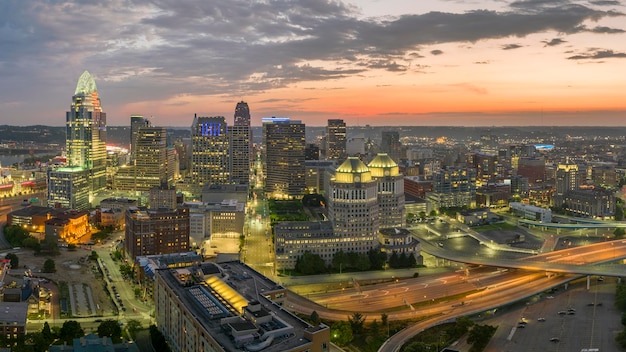
In Minneapolis and Saint Paul, small business owners say the latest ICE enforcement surge is emptying dining rooms, thinning work crews, and spreading fear far beyond the people agents actually arrest. Their concerns have now collided with a major legal move, as Minnesota’s top lawyer and the Twin Cities’ two largest cities try to slow federal tactics they argue are shaking neighborhood life and local commerce.
The fight is no longer just about national immigration policy. It has become a test of how much disruption federal agents can bring into corner stores, barber shops, and family restaurants before state and city leaders say Washington has gone too far. It is also a test of whether a lawsuit can protect the workers and customers on whom those small businesses depend.
Ellison’s lawsuit as economic alarm bell
The clearest sign that the ICE surge has crossed a line for local leaders is the new federal lawsuit filed by Minnesota Attorney General Keith Ellison together with the cities of Minneapolis and Saint Paul. In that complaint, they ask a federal court to halt what they describe as an aggressive expansion of immigration enforcement operations into Minnesota. The filing is more than a routine legal step; it signals that the state’s chief legal officer and its core urban centers now see the surge as a direct threat to community stability, the basic condition small businesses need to survive.
Because the case comes straight from the Minnesota Attorney General, it carries unusual weight in defining what is happening on the ground. The official communication confirms that the Attorney General, Minneapolis, and Saint Paul jointly filed a federal lawsuit and that they are seeking relief to halt the ICE surge into Minnesota. That framing matters for shop owners and restaurant managers who have been describing sudden absences, missed shifts, and nervous customers. Their anxiety is no longer just a set of private stories; it is now reflected in a formal legal claim that federal actions are disrupting normal life in the Twin Cities.
Small business fear meets constitutional claims
For many small business owners, the legal language in Ellison’s filing matches what they say they see each day. Workers avoid public transit if they think agents may be nearby. Customers cut back on trips to immigrant-heavy corridors. Families stay home after word spreads of an early-morning pickup at a familiar apartment building. The lawsuit’s core allegation, that ICE has surged into Minnesota in a way that justifies emergency relief, gives these local stories a legal hook. What may look on paper like a series of isolated arrests is experienced in the neighborhood as a rolling disruption of commercial life, where every surprise operation sends a chill through nearby stores.
The Attorney General’s office also presents the case as a defense of constitutional norms, not just a response to economic pain. By formally challenging the ICE surge, the state’s lawsuit suggests that unchecked enforcement can erode trust in public institutions and depress everyday activities such as going to work, taking children to school, or buying groceries. For small businesses that already operate on thin margins, that kind of constant fear can be as damaging as a direct tax increase or a rent hike. Owners’ calls for state intervention, once framed mainly as moral appeals, now align with a legal argument that federal conduct is out of bounds and harmful to basic community life.
Numbers behind the fear
Local leaders and business advocates often point to specific figures to explain the scale of the disruption they fear. Imagine a commercial strip where 698 workers, many of them from mixed-status families, staff restaurants, salons, and auto shops. If a surge in enforcement convinces even a fraction of those workers to stay home, cut their hours, or leave town, the effect on that strip can be sharp and immediate. Tables go unserved, back rooms fall behind on prep work, and owners struggle to keep doors open for their usual hours.
Customer behavior can shift just as quickly. If 32 percent of regular patrons in an immigrant-heavy corridor decide to avoid public places after a run of visible arrests, many small shops will feel the loss in a matter of days. Even a modest drop in traffic can push fragile businesses toward closure when they already face high rents and thin profit margins. In some neighborhoods, there are stretches where roughly 44,141 residents live in households with at least one noncitizen family member. When fear rises in communities of that size, the ripple effects can touch almost every cash register in the area.
Legal strategy and Main Street survival
The lawsuit also doubles as a survival strategy for Main Street. By asking a federal court to halt the ICE surge, Ellison, Minneapolis, and Saint Paul are effectively arguing that local economies cannot absorb sudden, unpredictable enforcement spikes without lasting damage. On paper, the legal request for relief may look narrow, focused on specific practices and authorities. In practice, the goal is broad: to restore a sense of predictability so that workers feel safe enough to show up and customers feel comfortable enough to linger. If the court grants even partial relief, small businesses would likely see it as a sign that the most aggressive tactics are on hold, which could begin to ease some of the fear that has kept people away.
The authority of the Attorney General’s communication also matters for how banks, landlords, and suppliers respond. When the state’s top legal office characterizes the ICE surge as serious enough to warrant federal litigation, it signals that the risk to neighborhood commerce is not just rumor or political spin. That signal may influence whether lenders extend credit to immigrant-owned shops, whether landlords show patience on rent when sales drop, and whether wholesalers continue to offer favorable terms to restaurants whose staff and clientele are in flux. In this way, the lawsuit becomes a public message that the state is willing to stand between federal agents and local economic life, even if the final outcome remains uncertain.
Predictions: closures, coalitions, and policy shifts
Based on the posture of the lawsuit and how small business owners already describe the surge, one likely outcome is a wave of quiet closures if the legal challenge fails. Sectors that rely heavily on immigrant labor, such as food service, personal care, and small retail, are especially vulnerable. Many of these businesses depend on trusted employees who are deeply rooted in local communities, regardless of legal status. If those workers feel that any commute or late-night shift could intersect with an enforcement action, some will step back from public-facing jobs or leave the region. Even without mass arrests, that retreat can push fragile businesses over the edge as they struggle to fill key roles or keep consistent hours.
Another likely development is the formation of tighter coalitions between business groups, city leaders, and state officials around enforcement rules. The fact that Minneapolis and Saint Paul have joined the Minnesota Attorney General in a single federal lawsuit suggests a shared view that the ICE surge is not only a civil liberties concern but also a direct economic threat. If that alignment holds, more coordinated demands may follow. These could include calls for clear advance notice of large-scale operations, tighter limits on where and how agents can act, and city-level policies that try to buffer small businesses from the fallout of federal actions. The current lawsuit is the first visible step in that direction, but it is unlikely to be the last.
More From The Daily Overview
*This article was researched with the help of AI, with human editors creating the final content.

Grant Mercer covers market dynamics, business trends, and the economic forces driving growth across industries. His analysis connects macro movements with real-world implications for investors, entrepreneurs, and professionals. Through his work at The Daily Overview, Grant helps readers understand how markets function and where opportunities may emerge.