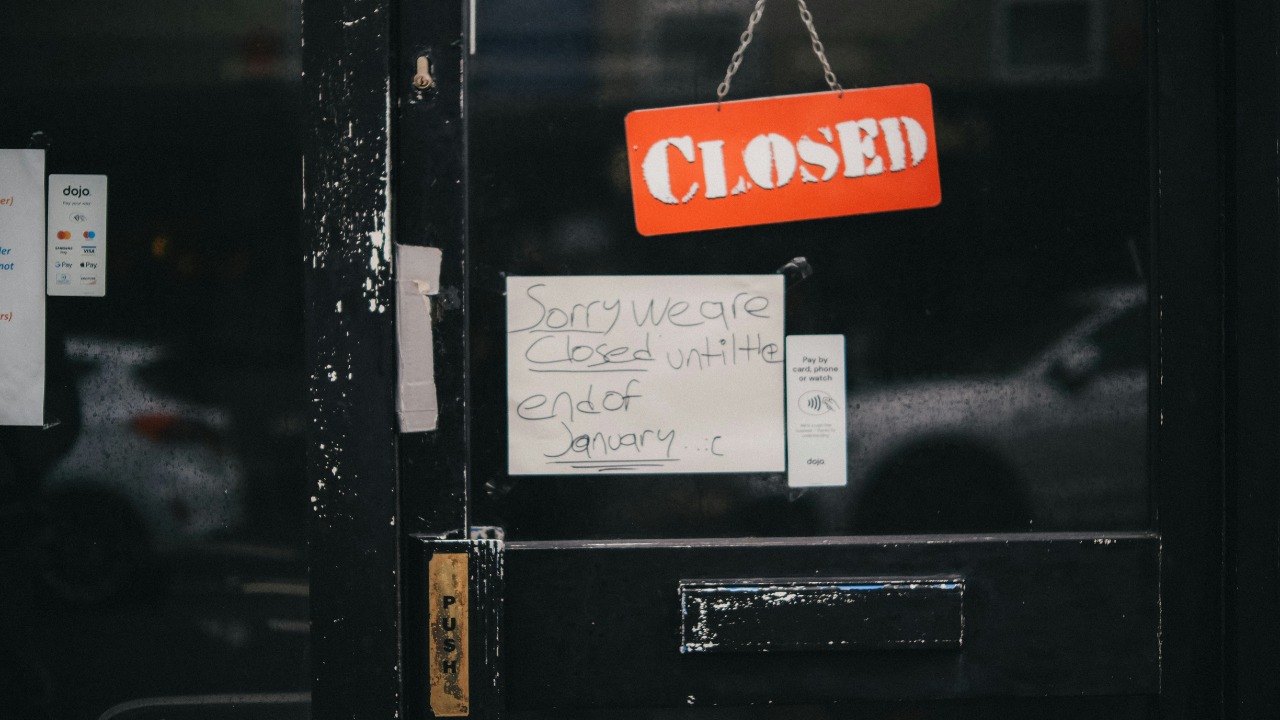
The pace of U.S. retail store closures has decelerated to its slowest rate in three years, yet the sheer volume of shuttered locations continues to displace thousands of workers and reshape entire communities. Federal employment data reveals that the structural erosion of brick-and-mortar retail is now running alongside a parallel expansion in electronic commerce, creating a labor market that is simultaneously shrinking in one channel and growing in another. The question facing workers, local governments, and investors is whether the jobs being created online can match the scale, wages, and accessibility of the ones disappearing from storefronts.
Seasonal Swings Mask Deeper Structural Losses
Retail employment has always followed a predictable rhythm: stores hire aggressively ahead of the holiday season, then shed those temporary workers in January and February. That cycle can make underlying job losses look worse, or better, than they actually are. Analysis from the U.S. Bureau of Labor Statistics traces net changes in retail trade employment from 2018 through 2025, separating structural closure-related job losses from predictable seasonal layoffs. This distinction matters because it allows analysts to identify how much of the decline in retail headcounts stems from permanent store closures rather than the normal ebb and flow of holiday hiring, and it underscores that the current slowdown in closures is occurring against a backdrop of long-running contraction.
When seasonal noise is stripped away, the picture becomes clearer: permanent job losses tied to store closures have moderated compared with the peak years of the so‑called retail apocalypse, but they have not stopped. The federal data serves as a neutral benchmark, grounding the conversation in payroll records rather than anecdotal reports of empty mall corridors or isolated chain bankruptcies. For workers who lost positions at shuttered locations, the seasonal distinction is academic; their jobs did not come back after the holidays because the stores themselves did not reopen. That structural gap is what separates the current slowdown from a genuine recovery and explains why communities continue to feel the effects even as headline closure counts drift lower.
Clothing Retail Firms Shrink While E-Commerce Expands
The clothing sector offers one of the clearest illustrations of how physical retail is contracting. According to the U.S. Census Bureau, clothing and clothing accessories retail firms shrank significantly between 2017 and 2022, a contraction documented in the Economic Census. Fewer firms meant fewer storefronts, fewer cashiers, fewer stock clerks, and fewer managers, with the pullback especially visible in mid-price apparel chains that once anchored suburban shopping centers. The disappearance of these tenants left gaps in local commercial districts that were not easily filled by smaller boutiques or temporary pop-up stores, and the associated job losses were concentrated among hourly workers who often had limited alternative employment options nearby.
At the same time, the Bureau’s Business Dynamics statistics show that electronic shopping and mail-order firms were actively creating jobs during the same window, reflecting the ongoing shift toward online purchasing and home delivery. This is not a one-for-one swap: warehouse and fulfillment roles differ sharply from in-store retail positions in terms of location, skill requirements, and scheduling, and they tend to cluster near major freight corridors rather than neighborhood shopping centers. Detailed establishment-level information in Economic Census tables for clothing retailers confirms the scale of the decline in NAICS 448 categories, while complementary breakdowns in industry code data underscore that contraction is widespread across different types of apparel outlets rather than confined to a single niche.
Why Job Replacement Is Not Job Recovery
The optimistic reading of the numbers is that e-commerce growth will eventually absorb displaced retail workers, turning a painful transition into a net-neutral shift in employment. The skeptical reading, which available evidence supports more strongly, is that job replacement and job recovery are fundamentally different things. Traditional sales roles, as described in the federal occupational outlook for retail workers, typically require minimal formal education and offer flexible scheduling that accommodates caregivers, students, and people seeking part-time hours. Fulfillment center roles, by contrast, often demand fixed shifts, sustained physical exertion, and comfort with technology-driven performance monitoring, narrowing the pool of workers who can realistically make that switch even when positions are technically available.
This mismatch means that even when aggregate employment across the broader retail and logistics ecosystem holds roughly steady, the composition of that employment is shifting in ways that affect specific populations disproportionately. Older workers, people without reliable transportation, and residents of rural or exurban areas where brick-and-mortar stores served as primary employers face the steepest barriers to transitioning into e-commerce roles that may be located dozens of miles away. Broader indicators tracked by the U.S. Department of Labor help place these changes within the context of overall labor market conditions, but they offer limited visibility into which communities are losing accessible, entry-level jobs and which are gaining physically demanding warehouse work. Without more granular data linking individual store closures to subsequent employment outcomes, policymakers are left to infer the human cost of the transition from partial signals.
A Slower Decline Is Still a Decline
Framing the current environment as a three-year low in closures risks creating a false sense of relief. A slower rate of store shutdowns does not reverse the cumulative damage of years of contraction, particularly in regions that were heavily reliant on mid-tier chains and enclosed malls. Communities that lost anchor tenants in 2019 or 2020 have not seen those large spaces refilled at anything close to the original rate, and the resulting commercial vacancies weigh on local tax bases as property values stagnate or decline. Researchers using the advanced Census portal can trace establishment counts and employment levels over multiple years, revealing that once a critical mass of stores disappears from a corridor, nearby small businesses often struggle with reduced foot traffic and rising per-tenant costs.
The dominant assumption in much of the commentary around retail closures is that the market is simply correcting after decades of overbuilding, particularly in the United States, which has long maintained far more retail square footage per capita than most other developed economies. There is some truth to that argument, but correction implies an endpoint, a moment when supply and demand reach equilibrium and the rate of closures stabilizes at a low baseline. The continued expansion of online shopping suggests that equilibrium may involve permanently fewer physical stores than even conservative projections from a decade ago anticipated. For workers in the sector, the practical consequence is a labor market that keeps tightening in one direction while expanding in another that may not be accessible to them, turning what looks like a modest macroeconomic adjustment into a profound local employment shock.
What the Federal Data Cannot Tell Us
Government datasets from the Bureau of Labor Statistics and the Census Bureau provide a crucial foundation for understanding how retail employment is changing, but they cannot answer every question that matters to affected workers and communities. Establishment-level counts and industry-wide payroll totals reveal where firms are opening and closing, yet they do not track what happens to individual employees after a store goes dark. Did they move into other local service jobs, shift into warehousing, leave the labor force entirely, or relocate to a different region? Without longitudinal, person-level data tied specifically to retail displacement, the social and economic consequences of the shift from storefronts to screens remain only partially visible, and anecdotes from particularly hard-hit towns can either overstate or understate the broader trend.
These blind spots have concrete implications for policy. Efforts to support displaced workers, through retraining, transportation assistance, or incentives for new employers, are more effective when they are grounded in precise information about who is losing jobs and what realistic alternatives exist nearby. The federal statistics now available make it clear that the retail landscape is not returning to its pre-apocalypse status quo, even as the pace of closures slows, and that e-commerce growth is reshaping where and how related work is performed. What they cannot do is guarantee that the emerging mix of jobs will offer the same accessibility, stability, and community presence that brick-and-mortar stores once provided, leaving local leaders to navigate a structural transition with tools that are still catching up to the scale of the change.
More From The Daily Overview
*This article was researched with the help of AI, with human editors creating the final content.

Grant Mercer covers market dynamics, business trends, and the economic forces driving growth across industries. His analysis connects macro movements with real-world implications for investors, entrepreneurs, and professionals. Through his work at The Daily Overview, Grant helps readers understand how markets function and where opportunities may emerge.

