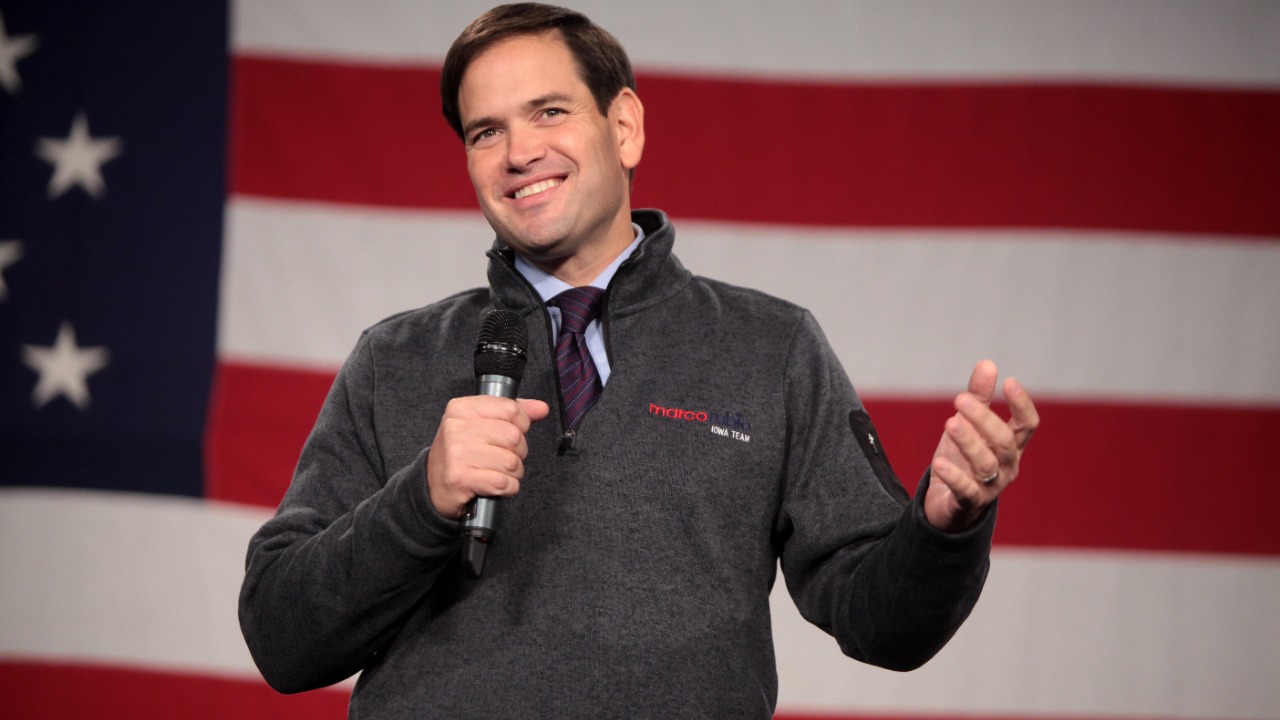
The Trump administration is quietly assembling one of the most intrusive financial control systems Washington has ever proposed for a foreign oil producer, and Senator Marco Rubio has become its chief explainer. In public testimony and speeches, Rubio has outlined how the United States intends to capture and direct the cash from Venezuelan crude sales, turning the country’s main export into a lever for political transition. The plan is framed as a lifeline for ordinary Venezuelan citizens, but it also concentrates extraordinary power over another nation’s core revenue stream in the hands of President Donald Trump and his advisers.
At its heart, the strategy is about who gets to touch the money that flows from Venezuela’s oil wells to global markets. Rubio has stressed that Caracas will still pump and ship the barrels, yet Washington will sit at the choke point where payments are received, audited, and released. That structure, he argues, is designed to prevent a repeat of the corruption and geopolitical maneuvering that flourished under Nicolás Maduro, while critics warn it edges uncomfortably close to economic trusteeship.
The three‑step vision: stabilization, recovery, transition
Rubio has cast the oil cash scheme as the opening move in a broader, three‑step roadmap for Venezuela: stabilization, recovery, and transition. In his telling, the first phase uses tight control of export revenues to halt economic free fall, keep basic services running, and prevent a new spiral of hyperinflation. He has described this as a deliberate sequencing, with oil money serving as the stabilizing anchor that allows any future political settlement to take root in a country that has already endured years of collapse in production, currency, and public trust, a framework he laid out while discussing Venezuela.
The second and third phases, as Rubio sketches them, depend on using those same oil proceeds to rebuild and then to hand off. Recovery would mean channeling funds into power grids, hospitals, and schools, while transition would see control of the revenue mechanism gradually shift to a new Venezuelan government that meets democratic benchmarks. He has argued that the United States does not want the country “descending into chaos,” but instead wants a managed glide path from Maduro’s rule to a more legitimate leadership, with the oil plan as the financial scaffolding that makes that glide path possible, a vision he elaborated in remarks that have been circulated in full online.
How the cash pipeline would actually work
Behind the rhetoric, Rubio has offered a surprisingly granular description of the mechanics. Under the plan, Venezuela would be allowed to sell crude on the open market, but the payments would not flow directly to Caracas. Instead, the money would land in accounts effectively controlled by the United States, which would then decide how and when to disburse it. Rubio has emphasized that Washington would not “control the actual oil,” only the proceeds, a distinction he drew while arguing that under Maduro, Venezuela’s oil industry had been twisted to benefit corrupt elites and foreign buyers such as China.
Rubio has said the United States would issue detailed instructions to Venezuelan authorities on what the money can and cannot be spent on, and would back that up with regular audits. The idea is to create a closed loop in which every dollar from oil exports is tracked from the buyer’s transfer to the final expenditure on salaries, food imports, or infrastructure. He has framed this as a response to the “looting” of state resources in the past, insisting that “we only control the dispersal” of funds, not the country itself, a line he used while explaining that The US would rely on audit tools to enforce compliance.
Rubio’s assurances and the Senate’s skepticism
In the Senate, Rubio has been pressed to explain how this unprecedented control will be exercised and who will benefit. During a hearing, Senator Chris Murphy of Conn asked for explicit assurances that the sale of Venezuelan oil would be fair and open, not rigged to benefit politically connected companies or foreign allies. Rubio responded that the system is designed so that the money is used “for the benefit of the Venezuelan people,” and that the Trump team would not allow sweetheart deals, a pledge he made while detailing how the administration intends to manage Venezuelan oil money.
Rubio has also tried to reassure lawmakers that the United States is not about to subsidize a new patronage machine in Caracas. He has said repeatedly that Washington will not cover Venezuela’s budget shortfalls or underwrite new borrowing, but will instead release funds only for specific, vetted projects and social needs. In his account, this is a way to avoid repeating the mistakes of past sanctions relief, when cash injections were quickly diverted, a point he underscored while explaining that The Trump administration will not subsidize new debt or risky investments in Venezuela.
From seized tankers to full financial trusteeship
The oil cash plan does not exist in a vacuum, it builds on a series of increasingly aggressive U.S. moves against Maduro’s energy network. Earlier this month, the United States seized a Venezuela‑linked sanctioned oil tanker in the North Atl, a high‑profile enforcement action that signaled Washington’s willingness to physically intercept shipments tied to the old regime. Rubio has cited that seizure as part of a broader toolkit that includes sanctions, asset freezes, and now the proposed revenue control system, a progression that was laid out in coverage of What the United States is doing to shape Venezuela’s future.
At the same time, Rubio has been careful to argue that the new framework is not about permanent trusteeship but about using leverage to help stabilize the country. He has said the United States will not directly run Venezuelan ministries or dictate every policy choice, but will insist that oil money be used to help stabilize the country rather than to fund repression or corruption. In his view, the seized tanker and other enforcement steps are the stick, while the promise of controlled but steady revenue flows is the carrot that can coax a post‑Maduro leadership into responsible behavior, a balance he described while outlining how WASHINGTON intends to manage the next phase.
Accusations of “piracy” and the global stakes
Critics, especially on the left, have reacted with fury to Rubio’s blueprint, branding it a form of legalized theft. One activist group described the approach as “Straight Up Piracy and Extortion,” seizing on Trump’s own boast that he will control money from the sale of Venezuelan oil as proof that this is less about democracy and more about plunder. They argue that testifying to the Senate Foreign Relations Committee about how the United States will hold another country’s main revenue stream in escrow crosses a line from sanctions into outright economic domination, a charge leveled in a blistering account of how Trump Says He.
Rubio and his allies counter that the alternative is not some neutral status quo, but a continuation of the Maduro era in which oil profits were siphoned off to cronies and foreign partners. They point to years in which Caracas relied on buyers like China and on opaque deals with intermediaries in places such as Qatar to keep cash flowing despite sanctions, arguing that a transparent, U.S.‑supervised system is an improvement. In their telling, the real piracy was the quiet diversion of billions of dollars away from Venezuelan hospitals and schools, and the new plan is an attempt, however heavy‑handed, to reverse that pattern.
More From TheDailyOverview
*This article was researched with the help of AI, with human editors creating the final content.

Grant Mercer covers market dynamics, business trends, and the economic forces driving growth across industries. His analysis connects macro movements with real-world implications for investors, entrepreneurs, and professionals. Through his work at The Daily Overview, Grant helps readers understand how markets function and where opportunities may emerge.

