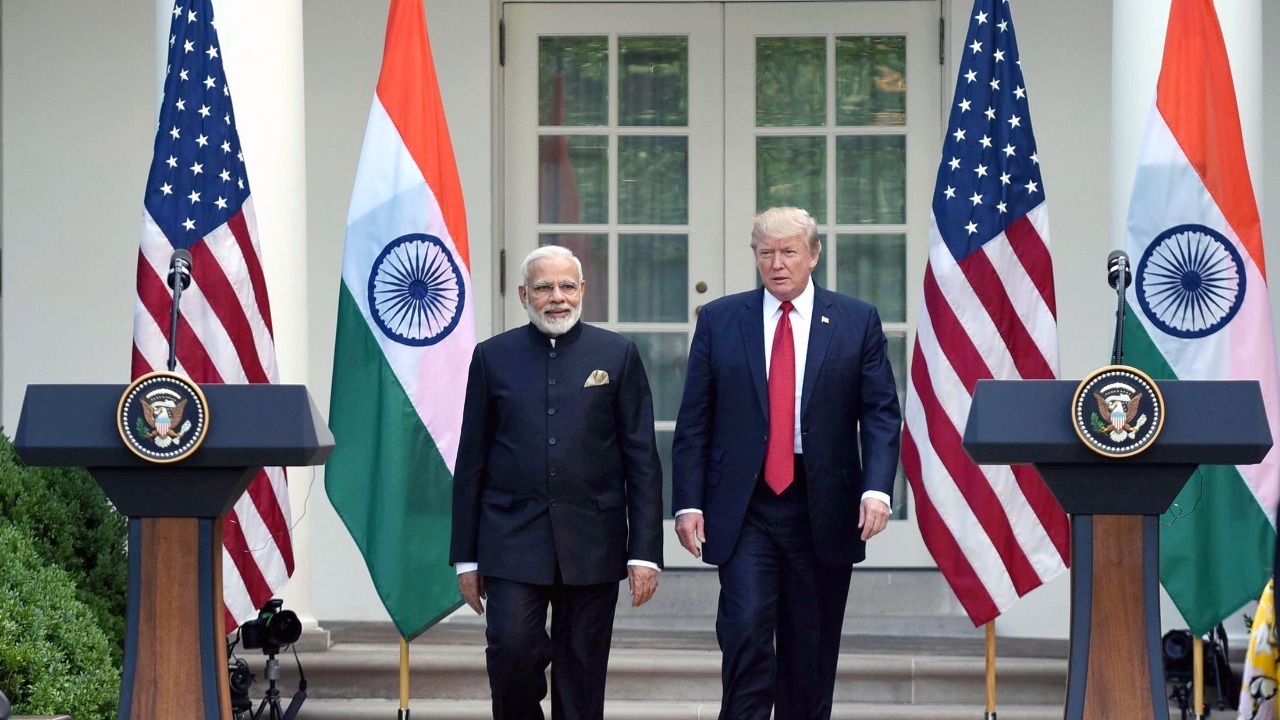
As India locks in a sweeping trade pact with the European Union, Washington suddenly finds itself watching from the sidelines of a market it once assumed would tilt naturally toward the United States. President Trump’s tariff brinkmanship has strained ties with New Delhi, yet it may now be creating the political cover both capitals need to finally close a long discussed bilateral deal. The question is whether US–India trade talks will simply restart, or whether they are about to return with the kind of urgency that can reshape global supply chains.
For New Delhi, the stakes are clear: diversify export markets, secure technology access and protect politically sensitive sectors at home. For Washington, the calculus is more complicated, as the administration weighs “America First” instincts against the reality that India is cutting deals elsewhere and that life, and trade, are moving on without the United States.
Tariffs, snubs and a fragile negotiating history
The current moment is rooted in a bruising recent history. Trade talks between the United States and India have been described as fragile after President Trump hit New Delhi with 25% tariffs, a move that hardened positions in Trade and politics alike. Those duties, aimed at correcting what the White House framed as unfair treatment of American goods, landed hardest on Indian exporters already navigating tight margins and volatile demand.
Indian officials have repeatedly signaled that they will not simply absorb US demands. New Delhi has been resisting market access for American grains and dairy, citing the need to protect the livelihoods of small farmers and the broader rural economy, a stance detailed in reporting on how New Delhi has approached recent negotiations. That defensive posture has fed a narrative in Washington that India is slow walking talks, even as Indian officials insist they are responding to shifting US goalposts.
EU deal jolts Washington’s calculus
The shock that may finally reset that dynamic came from Brussels, not Washington. EU and India negotiators have clinched a major trade deal that has been described as a rebuff to Trump, with the agreement highlighted as a FEATURED moment in the global tariff fight. For Brussels, the pact secures access to one of the world’s fastest growing consumer markets. For India, it locks in a powerful alternative partner at a time when US tariffs and threats of further measures against Canadian neighbors and others have injected uncertainty into global trade.
In parallel, analysts note that the European Union is edging out the United States as New Delhi’s preferred partner in key sectors. Reporting on the “Need to know” section of an Inside India briefing underscores that India is preparing to slash duties on imported cars as part of its outreach to Europe, even as the India–US trade deal talks are described as being at a very advanced stage, a juxtaposition that captures how Need for diversification is reshaping India’s external economic strategy.
“Life goes on” without a US deal, but pressure is building
From Washington’s side, there is a growing recognition that India is not waiting around. Analysts quoted in coverage of Trump’s tariff strategy argue that the United States is yet to respond meaningfully to the EU–India pact, and that Trump’s “America First” trade policy has encouraged partners to hedge by deepening ties elsewhere, a trend captured in assessments that America First has not stopped others from moving ahead. The implicit message is that life goes on without a US–India trade deal, and that Washington risks ceding influence in a region where supply chain realignment is accelerating.
Yet that same realization is also creating momentum to reengage. A separate analysis notes that US–India trade talks could get a boost precisely because America now sees that commerce and diplomacy are proceeding without it, a framing that suggests the EU–India agreement is acting as a wake up call for India and the United States. For a White House that has often equated leverage with tariffs, the risk of being structurally sidelined in Asia’s largest democracy may prove a more powerful motivator than any single dispute over dairy or digital taxes.
Talks “very near” the finish line, but trust is thin
On paper, the two sides are closer than ever to a deal. India’s latest Economic Survey states that India’s trade negotiations with the United States are anticipated to conclude this year, a milestone that officials say would ease external uncertainties and cap a process that has been underway since at least March of the previous year, according to assessments of how India’s strategy is evolving. Another detailed reading of the same document emphasizes that India’s ongoing trade talks with the United States may finally reach a conclusion, warning that prolonged uncertainty has already weighed on exports and hit investor sentiment, a concern highlighted by the TOI Business Desk.
Officials on both sides have been even more bullish in their public comments. One report quotes a senior figure saying the India–US trade deal is “just about dotting Is, crossing the Ts” and may be finalised any day now, with the same account noting that the update was carried by the 56 minute mark in a broader briefing. Another piece of reporting says India and the United States are close to finalizing a trade deal, with Officials indicating that most issues have been resolved and that the process is proceeding smoothly, suggesting a resolution is imminent for India and the.
Diplomats, surveys and the politics of reassurance
Behind the scenes, diplomats are working to turn those optimistic soundbites into binding text. India and the US are described as “actively engaged” in trade negotiations, with Sergio Gor, the new US ambassador to India, stressing that the two sides remain committed to resolving differences even on contentious issues such as digital trade and agricultural access, a stance captured in coverage of how India and the are approaching the talks. A separate briefing summarised by Takeaways from Bloomberg AI notes that US Ambassador to India Sergio Gor has publicly predicted that the United States and India will resolve their differences, including over tariffs, reinforcing the sense that the Ambassador sees a path to closure for India Sergio Gor.
At the same time, Indian policymakers are using official documents to signal both resolve and caution. The Economic Survey’s language that India’s trade negotiations with the United States are expected to conclude this year is echoed in other commentary that India’s trade negotiations with the United States are anticipated to conclude this year, potentially easing external uncertainties and ending a period in which there has been no agreement since March of the previous year, as highlighted in assessments of United States ties. That dual messaging, optimistic yet hedged, reflects a political reality in which any deal must satisfy domestic constituencies wary of exposing Indian farmers and small manufacturers to sudden competition.
More From TheDailyOverview
*This article was researched with the help of AI, with human editors creating the final content.

Grant Mercer covers market dynamics, business trends, and the economic forces driving growth across industries. His analysis connects macro movements with real-world implications for investors, entrepreneurs, and professionals. Through his work at The Daily Overview, Grant helps readers understand how markets function and where opportunities may emerge.

