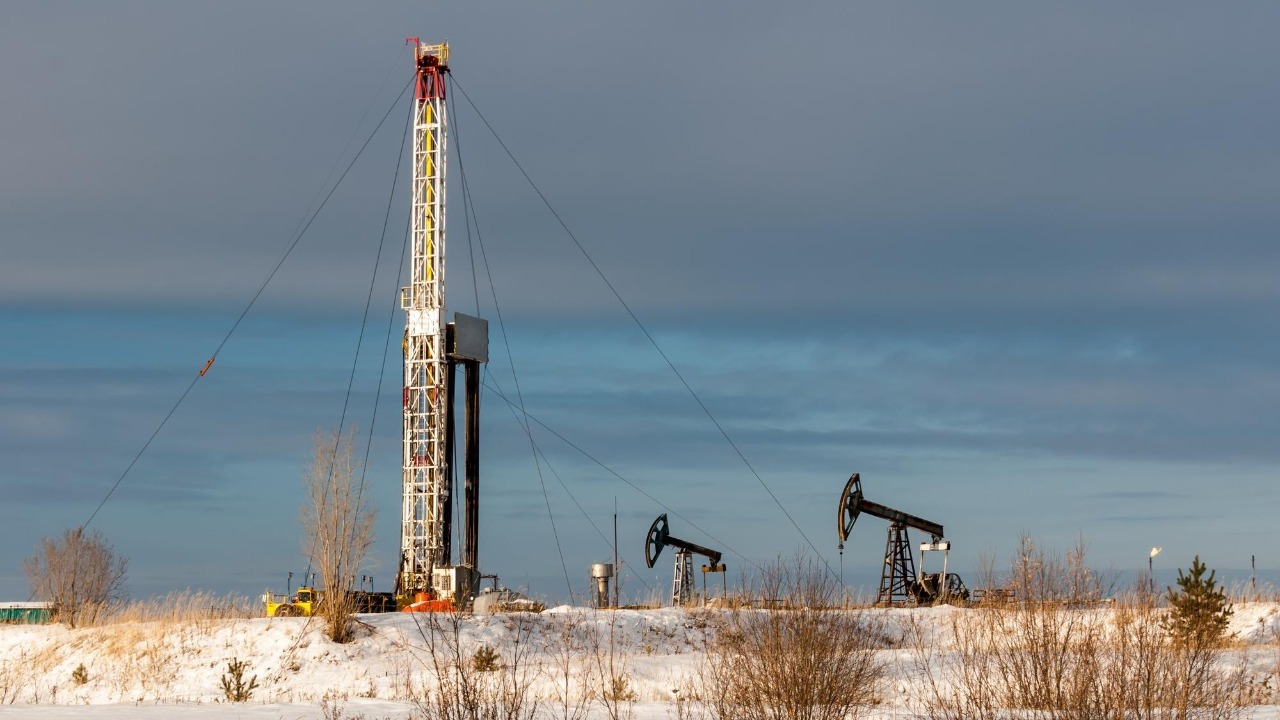
Russia’s wartime economy is running into a wall as sanctions and price caps squeeze the oil revenues that have long bankrolled the Kremlin. The collapse in cash from crude exports is now feeding through to the state budget, the currency and the broader financial system, forcing President Vladimir Putin to lean harder on domestic banks and taxpayers. The question is no longer whether sanctions hurt, but whether they can structurally weaken the money machine behind Russia’s war.
Oil and gas once gave Moscow a comfortable cushion to absorb shocks and fund both social spending and the military without visible strain. That cushion is thinning fast as discounted prices, shrinking export volumes and tighter enforcement combine to push Russian oil income to its lowest levels since the early phase of the Covid‑19 crisis. I see a regime scrambling to adapt, improvising fixes that buy time but do not resolve the underlying squeeze.
The budget hole that will not stay small
The most immediate sign that the oil cash crunch is real is the scale of Russia’s emerging budget gap. Official figures and independent analysis point to a public deficit that could almost triple this year if current trends in energy income persist, a scenario that would mark a sharp break from the Kremlin’s long‑standing preference for fiscal conservatism. One assessment warns that Russia Faces Potential as oil revenues fall, underscoring how central hydrocarbon taxes remain to the state’s finances. For a government that has long sold itself domestically as a steward of macroeconomic stability, a deficit blowout is politically and strategically costly.
Behind the headline numbers is a simple arithmetic problem. Oil and gas receipts that once comfortably covered a large share of spending are now coming in far below plan, forcing the Finance Ministry to draw more heavily on borrowing and reserves. Analysts at Alfa Investment project that if discounted oil prices and the current rouble exchange rate persist, the deficit could almost triple without necessarily triggering immediate financial destabilisation. I read that as a warning that the state can muddle through in the short term, but only by accepting a structurally weaker fiscal position.
Oil revenues plunge to Covid‑era lows
The pressure on the budget starts with a dramatic fall in what Russia earns from taxing its energy sector. In January, In January, Russian state revenues from taxing the oil and gas industries fell to 393bn rubles (€4.27bn), down from 587bn rubles (€6.38bn) a year earlier, the lowest level since the COVID‑19 pandemic according to Janis Kluge of the German Institute for International and Security Affairs. That collapse is not a marginal fluctuation, it is a structural hit that reflects both lower prices for Russian crude and the cost of rerouting exports away from Europe. When a core revenue stream drops by roughly a third in a single year, the knock‑on effects are unavoidable.
Those monthly figures sit on top of a grim annual picture. Reporting on Russian oil revenue points to a 24% collapse and a $72 billion deficit, with February Urals cargoes now trading at discounts of $10 per barrel to Brent. The 2025 budget had assumed Urals crude would sell at a much higher level, so every dollar of discount widens the gap between planned and actual income. When I look at those numbers, I see a state that misjudged how durable the sanctions‑driven discount would be and is now paying for that optimism.
Sanctions, price caps and the Urals discount
The mechanics of the squeeze lie in how sanctions have segmented the global oil market. European measures and the G7 price cap have driven a wedge between Russia’s Urals crude and international benchmarks, forcing Moscow to accept steep discounts to keep barrels moving. Analysis of stiffening European sanctions describes a gap of nearly $27 per barrel at one point between Urals and Brent, a spread that translates directly into lost tax revenue for the Kremlin. Even as global oil prices have recovered from their pandemic lows, Russia is not fully sharing in that upside.
Background reporting that cites Earlier work by Reuters and Russia’s Finance Ministry notes that oil and gas revenues in January 2026 fell to their lowest level since July 2020, with some shipments reportedly sold at just US$22‑25 a barrel. When Urals trades that far below Brent, the Kremlin must either accept the revenue loss or cut volumes further, neither of which is attractive. I see this as the core success of the sanctions regime: it has not stopped Russian exports outright, but it has forced Moscow into a buyer’s market where it has little pricing power.
Europe tightens the screws on Russia’s oil trade
European policymakers are not standing still as Russia adapts. The European Commission has proposed its 20th sanctions package targeting Russia, with a particular focus on the so‑called shadow fleet of tankers that help Moscow circumvent price caps and insurance restrictions. The plan would allow The European Commission to block access to European ports for vessels suspected of helping Russia dodge sanctions, tightening enforcement where it has been weakest. If member states sign off, that would raise the cost and risk of moving Russian crude through opaque shipping networks.
Strategists who track the war economy argue that Europe still has untapped leverage. One influential analysis contends that Europe has the to deal a meaningful, perhaps even fatal, blow to Russia’s war machine because oil exports remain the backbone of its hard‑currency earnings. That argument rests on the observation that Russia’s oil and gas revenues are already at their lowest level in many years, even before the latest sanctions package takes full effect. From my perspective, the trajectory is clear: each new round of measures chips away at the profitability of Russia’s energy exports, even if volumes hold up.
From cash cow to dwindling lifeline
For years, oil exports were a cash cow for Russia, underwriting both domestic stability and foreign adventures. Sanctions and the price cap have turned that asset into a dwindling lifeline. Reporting on how oil exports have been hit notes that the cap did reduce government oil revenues temporarily, especially after an EU ban on most Russian seaborne oil forced Russia to sell at a discount to countries like India and China. Even where buyers have continued imports of Russian oil, they have used the sanctions environment to negotiate lower prices and more favorable terms.
The domestic consequences are mounting. One detailed account of how Russian oil revenue describes how the resulting revenue drop is forcing President Vladimir Putin to borrow from Russian banks and raise taxes. While these measures can plug short‑term gaps, they shift the burden of war financing onto domestic savers and businesses, potentially crowding out private investment. I see that as a classic sign of a state that is running out of easy external options and is starting to cannibalise its own economy to sustain military spending.
How Moscow is trying to adapt
Faced with shrinking oil income, the Kremlin is deploying a familiar toolkit: currency management, fiscal tweaks and appeals to patriotism. Officials have allowed the rouble to weaken, which boosts the value of dollar‑denominated oil revenues in local terms, even as it erodes household purchasing power. At the same time, the Finance Ministry is adjusting tax formulas and export duties to capture a larger share of whatever profits the energy sector still generates. In the short run, these steps can stabilise the budget, but they also risk undermining the long‑term health of the private sector that Russia needs to diversify away from hydrocarbons.
There is also a political narrative at work. By framing sanctions as an external siege, the Kremlin justifies higher taxes and forced lending from state‑aligned banks as patriotic contributions to national defense. Yet the hard numbers from Russia’s Finance Ministry and independent analysts show that oil and gas revenues are at their weakest since mid‑2020, even as war‑related spending climbs. I read that mismatch as a warning sign: propaganda can obscure the trade‑offs for a while, but it cannot refill the state’s coffers.
The limits of resilience
Supporters of the Kremlin often argue that Russia has weathered sanctions better than expected, pointing to continued growth in some sectors and the absence of a full‑blown financial crisis. There is some truth to that, but it risks missing the cumulative effect of a prolonged revenue squeeze. When Russia faces the potential tripling of its budget deficit at the same time that oil receipts are at multi‑year lows, resilience starts to look more like managed decline. The state can keep paying soldiers and pensions, but only by sacrificing investment, social services or financial stability elsewhere.
Ultimately, the collapse in oil cash is not just a story about spreadsheets in Moscow, it is about the sustainability of Russia’s current path. As Rus war economy becomes more dependent on a shrinking and heavily discounted export, its room for maneuver narrows. I see a regime that can probably fund its war for some time yet, but only by accepting slower growth, higher domestic strain and a growing reliance on financial repression. Sanctions have not toppled the system, but they have turned Putin’s money machine into a far more fragile engine.
More From The Daily Overview
*This article was researched with the help of AI, with human editors creating the final content.

Grant Mercer covers market dynamics, business trends, and the economic forces driving growth across industries. His analysis connects macro movements with real-world implications for investors, entrepreneurs, and professionals. Through his work at The Daily Overview, Grant helps readers understand how markets function and where opportunities may emerge.

