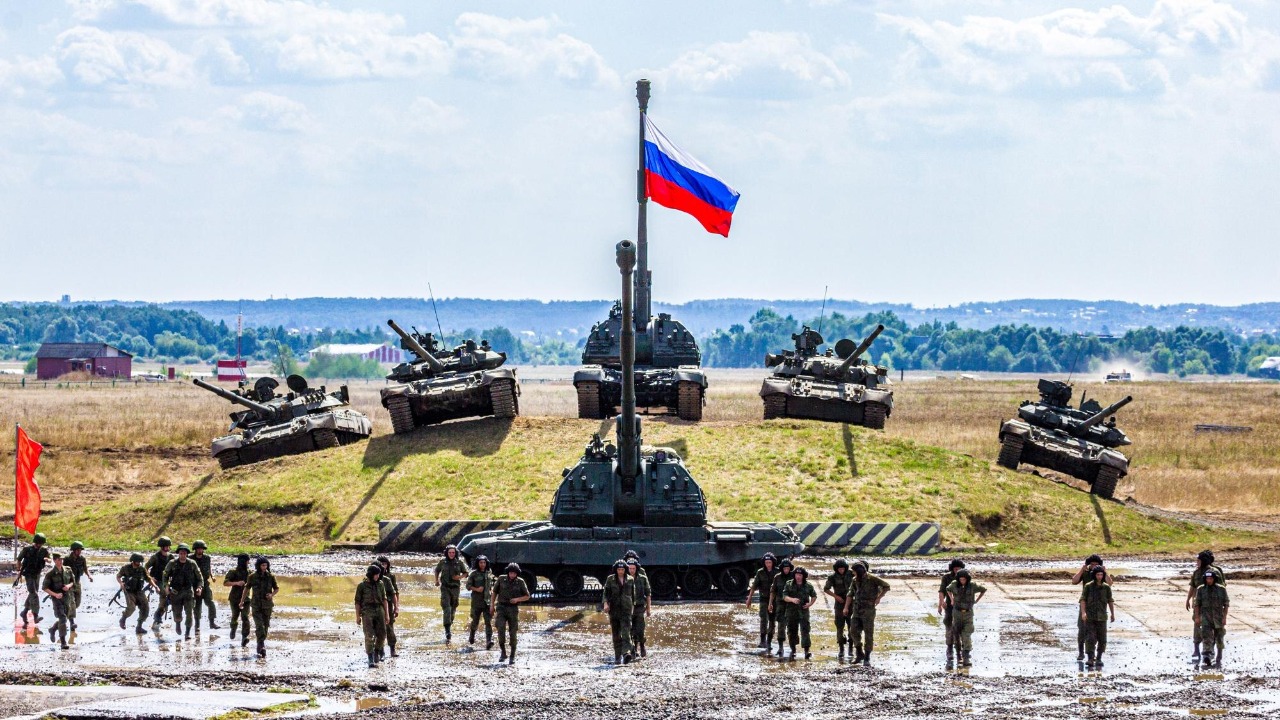
Russia’s full-scale invasion of Ukraine is increasingly colliding with a quieter, more targeted campaign that hits where it hurts most: high-value hardware and the logistics that keep it moving. A single sabotage operation that wipes out a $50 million asset can rival a week of attritional fighting, and it is starting to show in the way Moscow’s forces are bleeding both equipment and confidence. As the war grinds on, these precision blows are turning into a strategic tax on the Kremlin’s war machine, forcing hard choices between replacing lost kit, sustaining the front, and keeping the wider economy afloat.
I see a pattern emerging that goes beyond battlefield skirmishes or daily casualty counts. From a $50 M fighter jet torched on the ground to air defense systems picked off by drones and covert teams, Ukraine and its allies are exploiting every vulnerability in Russia’s vast but brittle military system. The result is a series of setbacks that may not decide the war overnight, but that steadily erode Moscow’s ability to project power and adapt.
Sabotage on the tarmac: a $50 million fighter erased in seconds
The most striking recent example of this strategy is the destruction of a Su-30SM, an Aircraft Worth $50 Million, in a covert operation at a Russian Airfield earlier this year. Taking out a modern multirole fighter on the ground is not just a tactical win, it is a financial and psychological shock that ripples through the Russian Air Force. A single Su-30SM represents years of industrial effort, scarce imported components, and a pilot training pipeline that cannot be quickly replicated, so losing it to a Sabotage Attack rather than in open combat underscores how porous Russia’s rear areas have become.
That same theme of targeted resistance surfaced again when Ukraine’s military intelligence highlighted how Resistance networks helped ensure a $50 Russian Fighter Burned in a separate Sabotage incident. The reporting framed it as proof that Putinism Is Growing more contested even inside Russia’s own security perimeter, with Ukraine’s services claiming a broader campaign of covert disruption. I read these operations as part of a deliberate effort to make every high-end aircraft a liability on the ground, forcing Moscow to divert resources into base security, dispersal, and repairs instead of sorties over the front.
Air defenses under pressure: $50M blows to Buk and Tor systems
While fighters grab headlines, the quieter dismantling of Russia’s air defenses may matter even more for the long war. Ukrainian forces have repeatedly targeted Buk and Tor systems that form the backbone of Russian short and medium range protection, and each successful strike chips away at Moscow’s ability to shield ammunition depots, bridges, and troop concentrations. Earlier this year, Ukrainian drones destroyed $50M worth of Russian Buk and Tor air defense systems, with one strike also hitting a Russian “Bukhanka” personnel carrier, according to detailed accounts that highlighted how even relatively cheap unmanned aircraft can neutralize equipment valued between $25 and $30 million in a single engagement, as described in reports on Ukrainian Drones.
That pattern continued into the autumn, when Ukrainian units inflicted what was described as a $50 Million Loss for Russia by using drones to destroy and damage two Tor-M2 systems. Analysts noted that degrading these platforms creates more opportunities for Ukraine’s own aircraft, missiles, and drones to operate with reduced risk of being shot down, effectively opening corridors in the sky one battery at a time, as outlined in assessments of the $50 Million Loss. I see these strikes as part of a systematic campaign to peel away layers of protection, making every subsequent operation easier and cheaper for Ukraine while forcing Russia to spend ever more to plug the gaps.
Zaporizhzhia and beyond: precision hits on strategic systems
The occupied Zaporizhzhia region has become one of the clearest laboratories for this approach, with Ukrainian reconnaissance and strike assets hunting for high value targets behind the front. Ukrainian intelligence reported that its forces hit a $50M Russian Buk-M3 air defense system in this area, describing the platform as one of the most advanced of its class in Russia’s fleet and emphasizing the blow to Moscow’s ability to defend key logistics routes and command posts in the south. The operation, which was coordinated with real time surveillance and then publicized via the intelligence service’s official channels, underscored how Ukraine is using precision to offset Russia’s numerical advantages, as detailed in coverage of the $50M Russian Buk-M3 strike.
These attacks are not isolated stunts, they are part of a broader operational logic that treats every high end radar, launcher, or command vehicle as a strategic node. When a Buk-M3 is knocked out, it is not just the launcher that disappears, it is the radar coverage, the trained crew, and the protective umbrella over nearby units. I read the Zaporizhzhia strike as a signal that Ukraine intends to keep contesting Russian control of occupied territory not only with infantry assaults, but with a steady drumbeat of deep precision hits that make long term occupation more expensive and less sustainable.
Attrition by numbers: daily losses and a stretched war economy
Behind these headline grabbing sabotage operations lies a grinding arithmetic that is just as punishing. Ukrainian officials reported that Russia lost 960 soldiers killed and wounded over a single recent 24 hour period, along with more than 350 weapons and pieces of equipment, a snapshot that captures the scale of daily attrition on the front. Those figures, tied to Nov 17, 2025 and framed as part of a broader tally of losses, show how even when the front lines appear static, the human and material cost for Russia continues to climb, as reflected in detailed breakdowns of how Russia has lost 960 personnel in a day.
The same reporting on that Nov 17, 2025 period noted that Russian forces also saw significant losses in vehicles, artillery, and other systems, with more than 350 items ranging from armored platforms to support equipment knocked out or captured. When I put those numbers alongside the high value sabotage strikes, the picture that emerges is of a military fighting two wars at once: one of mass attrition at the front, and another of targeted losses in the rear that sap its most sophisticated capabilities, as illustrated by the tally of more than 350 weapons and vehicles in that single day.
All of this is landing on an economy that is already straining to keep up. Analysts tracking Russia’s war economy in Nov 2025 have pointed out that Technology constraints are slowing adaptation and quality improvements in weapons and industry, even when quantity targets are met. The assessment is that Moscow has managed to mobilise production enough to muddle through for now, but at the cost of growing inefficiencies, rising budget pressures, and structural fragility in the years ahead, as laid out in a detailed examination of Russia’s war economy. When a single sabotage hit wipes out a $50 Million asset, it is not just a battlefield loss, it is a direct test of how long that strained system can keep replacing what is destroyed.
Sabotage spreads: from Russian airfields to European railways
The logic of sabotage is no longer confined to Russian territory or the immediate war zone. European security services are increasingly warning that Moscow is exporting the same playbook abroad, targeting infrastructure that supports Ukraine or NATO logistics. Polish authorities said that Russian intelligence was likely behind a series of railway sabotage incidents that disrupted train traffic, a claim that points to a widening shadow conflict over supply lines and political signaling. The statement, tied to Nov 17, 2025 and reported the following day on November 18, framed the incidents as part of a broader pattern of hostile activity by Russian operatives on European soil, according to accounts of how Russian intelligence likely
For Ukraine, this widening arena cuts both ways. On one hand, it underscores that sabotage is now a central tool in the conflict, used by both sides to hit each other’s logistics, morale, and political cohesion. On the other, it reinforces why Kyiv is investing so heavily in its own covert and long range capabilities, from the networks that enabled a Russian Fighter Burned in Sabotage to the drones that turned a Buk-M3 into scrap. I read the $50 M setbacks inflicted on Russia’s military hardware as part of a broader contest over who can impose more friction on the other’s war effort, not just at the front but across borders and deep into the rear.
More From TheDailyOverview
- Dave Ramsey says these two simple questions show whether you’re rich or poor
- Retired But Want To Work? Try These 18 Jobs for Seniors That Pay Weekly
- IRS raises capital gains thresholds for 2026 and what’s new
- 12 ways to make $5,000 fast that actually work

Grant Mercer covers market dynamics, business trends, and the economic forces driving growth across industries. His analysis connects macro movements with real-world implications for investors, entrepreneurs, and professionals. Through his work at The Daily Overview, Grant helps readers understand how markets function and where opportunities may emerge.

