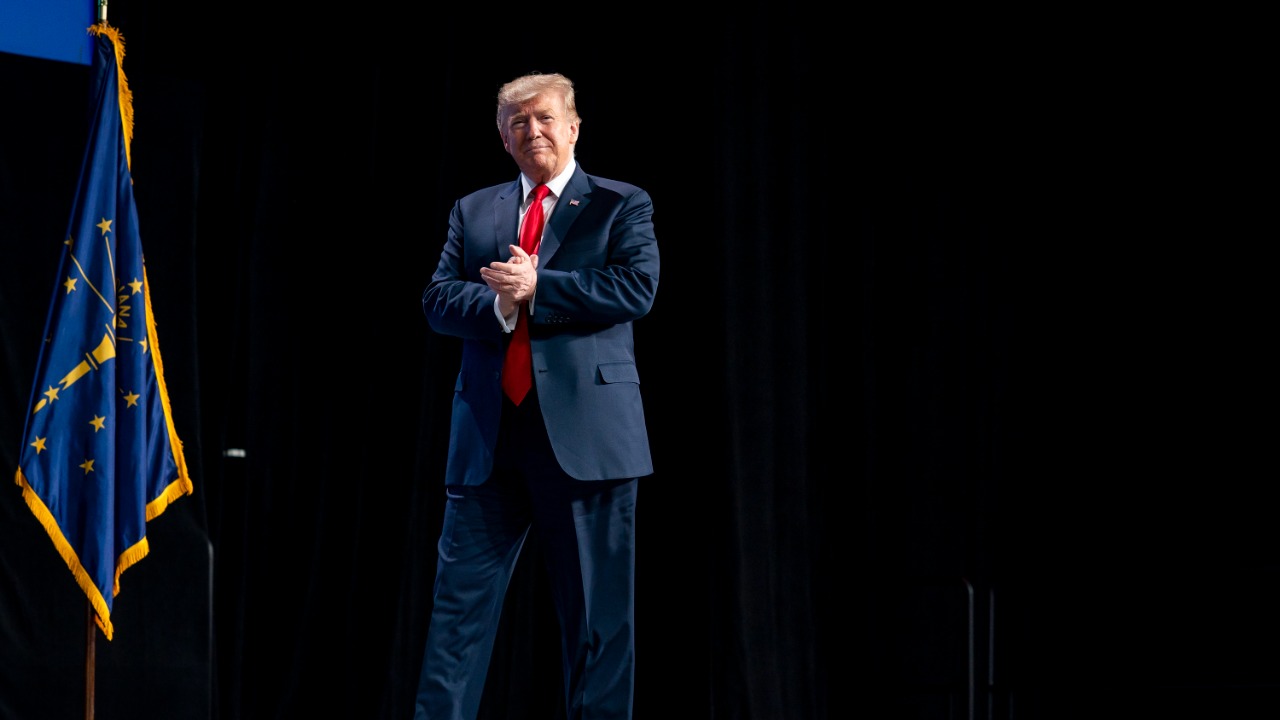
The Trump administration’s push to dismantle the federal Education Department has raised a blunt, practical question for tens of millions of borrowers: what happens to their student loans if the agency in charge of them disappears. The short answer is that the debt does not vanish, but the systems that govern repayment, forgiveness and customer service could be reshaped in ways that matter for every monthly bill. I want to walk through what would likely change, what would stay firmly in place and where the biggest risks of disruption really lie.
What Trump’s plan actually targets, and who would take over
When President Donald Trump talks about scrapping the Education Department, he is not proposing to erase federal student debt, he is proposing to move the machinery that manages it. In remarks from the Oval Office on a Friday in Mar, Mr. Trump said the Small Business Administration, or SBA, would assume oversight of federal student loans and Pell grants, shifting core responsibilities out of the agency that has handled them for decades and into a lender that already runs large credit programs for entrepreneurs and disaster relief. That Oval Office announcement, delivered as part of a broader executive order, signaled that the administration sees student lending less as an education policy tool and more as a credit portfolio that can be managed alongside other federal loan programs, a framing that shapes everything that follows for borrowers who rely on income driven plans, deferments and forgiveness.
Trump administration officials had previously floated ideas to reorganize or shrink the department, but the new executive order goes further by explicitly naming the Small Business Administration as the future home for key student aid functions and by sketching a breakup of the existing agency into separate pieces. According to detailed reporting on the administration’s internal blueprint, the Education Department would be carved up so that loan servicing and enforcement functions are spun out, while other education programs are reassigned or wound down, a process described as a “new breakup” of the agency that is already being mapped out in planning documents and transition memos. That same reporting explains that the proposed breakup is designed to keep the federal loan system running even as the department itself is dismantled, with the SBA expected to inherit contracts with servicers and the authority to manage repayment under the executive order’s terms, a shift that would represent one of the largest bureaucratic transfers of a federal credit portfolio in modern history, as outlined in the administration’s own new breakup plan.
Your loans do not disappear, even if the department does
The most important point for borrowers is also the least intuitive: If the Department of Education is eliminated, the legal obligation to repay federal student loans does not go away. Federal student debt is created by statute and contract, not by the existence of a particular agency, so even a full shutdown of the department would leave those promissory notes intact and enforceable, with payments still due according to the terms borrowers signed. Experts who have examined the administration’s proposal have been explicit that borrowers who owe federal student loans would still be expected to pay back their balances, and that any change in the supervising agency would not, by itself, cancel principal, erase interest or automatically forgive balances, a reality that has been underscored in detailed explainers about what happens to student loans if the department is eliminated, including one published on Feb 21, 2025 that walks through why borrowers remain on the hook even if the agency disappears and why, as that piece puts it, “If the Department of Education is eliminated, borrowers who owe federal student loans would still be expected to pay back their balances” in Feb.
That continuity is not just a political choice, it is a legal requirement baked into the Higher Education Act and the contracts that govern federal lending, which specify that the United States government is the creditor regardless of which office handles the paperwork. Analysts who have modeled the shutdown scenario stress that the federal government would simply designate another entity to administer the loans, and that borrowers would see their accounts transferred rather than forgiven, a distinction that matters for anyone hoping the agency’s demise might be a backdoor to cancellation. In fact, one detailed analysis framed the question bluntly: If the Education Department were shut down, another federal entity would take over the loan system, with the debt itself remaining intact and enforceable, a point that has been reiterated in coverage that explains that “If the Education Department were shut down, another federal entity would take over the loan system” and that the core borrower obligations would survive any bureaucratic reshuffle, as laid out in a Mar 25, 2025 examination of what happens If the Education Department closes.
Who might run the loan system next, from SBA to Treasury
Once you accept that the loans themselves survive, the next question is who actually runs the system if the Education Department is dismantled, and here the reporting points to a few concrete possibilities. Mr. Trump has already said from the Oval Office that the Small Business Administration, or SBA, would assume oversight of federal student loans and Pell grants, effectively turning the SBA into the new hub for servicing contracts, repayment rules and enforcement, a role that would sit alongside its existing portfolio of small business and disaster loans. That plan, outlined in Mar remarks from the Oval Office on Friday, would give the SBA a dramatically expanded mandate and would require it to build or import expertise in income driven repayment, public service forgiveness and school accountability, areas that have historically lived inside the Education Department’s Office of Federal Student Aid, and that shift is precisely why some analysts warn of a rocky transition if the SBA becomes the primary steward of the student loan system, as described in detailed coverage of how Mr. Trump wants the SBA to take over.
Other experts, however, have pointed to the Department of the Treasury as a more likely or more logical landing spot, especially if Congress or the courts narrow the scope of the executive order and push the administration toward an agency that already manages large scale federal debt. In reporting from Mar 6, 2025, analysts noted that if this takes place, student loans would likely be transferred to the Department of the Treasury, arguing that Treasury’s existing infrastructure for collecting taxes and servicing savings bonds could be adapted to handle student loan payments and that the agency’s experience with large financial systems might make it better suited than the SBA to manage tens of millions of borrower accounts. One expert quoted in that coverage put it bluntly, saying that “Even if the Education Department closes, repayment is definitely going to happen,” underscoring that the debate is about which agency, not whether any agency, will be responsible for collecting the money, a perspective captured in a detailed breakdown of what happens to student loans if the department closes and why the Department of the Treasury is seen as a likely fallback.
How repayment, forgiveness and servicing could change
For borrowers, the most tangible impact of dismantling the Education Department would show up in the details of repayment plans, forgiveness programs and day to day servicing, not in the abstract question of which agency’s name appears on the letterhead. If the SBA or Treasury takes over, they would inherit a complex web of income driven repayment options, deferment and forbearance rules, and specialized programs like Public Service Loan Forgiveness, all of which require careful administration to avoid errors that can cost borrowers thousands of dollars. Analysts who have studied the administration’s breakup plan warn that any rushed transfer of servicing contracts or data systems could lead to misapplied payments, lost records or inconsistent guidance, especially if new staff are learning the rules on the fly, and they note that even routine servicing transfers within the existing system have generated spikes in borrower complaints, a pattern that could be magnified if the entire portfolio is moved under a new agency as part of the Education Department’s new breakup plan.
Forgiveness programs are particularly vulnerable in a transition, because they depend on long timelines and precise record keeping that can be disrupted if accounts are shuffled between agencies or servicers without airtight data transfers. Experts who have modeled the shutdown scenario say that borrowers pursuing income driven forgiveness or Public Service Loan Forgiveness should expect their qualifying payment counts and employment certifications to be moved over, but they also caution that any gaps in the data could lead to disputes that take months or years to resolve, especially if the new agency is still building its own oversight capacity. That is why many advocates are urging borrowers to download their payment histories, keep copies of employer certifications and monitor their accounts closely if the breakup moves forward, steps that can help protect their place in line even as the federal bureaucracy around them is reconfigured, a concern that has been echoed in multiple analyses of what happens If the Department of Education is eliminated and how repayment and forgiveness could be affected.
What borrowers should watch for next
For now, the most practical move for borrowers is to focus less on the political theater of abolishing an agency and more on the concrete signals that affect their accounts, such as notices of servicer changes, updates to repayment plan options and any new guidance on forgiveness eligibility. If the executive order to dismantle the Education Department proceeds, there will be a formal transition plan that spells out which agency is taking over, how and when accounts will be transferred and what protections are in place to prevent errors, and borrowers should read those notices carefully rather than assuming that no news is good news. I would pay particular attention to whether the SBA or the Department of the Treasury is named as the new administrator, since each brings different strengths and weaknesses to the task of managing a massive loan portfolio, and to whether Congress or the courts impose conditions that slow or reshape the breakup, which could affect the timing of any changes to repayment systems.
Ultimately, the Trump administration’s move to scrap the Education Department is a political statement about the role of the federal government in schools, but for borrowers it is a logistical story about who sends the bills, who answers the phone and who decides whether a decade of payments counts toward forgiveness. The debt itself is not on the chopping block, and every expert analysis so far agrees that repayment will continue under whichever agency inherits the portfolio, even if the transition is bumpy. As the process unfolds, the smartest strategy for borrowers is to stay informed, keep meticulous records and be ready to challenge errors, because the one thing that will not change, regardless of which agency is in charge, is that the federal government will still expect those student loans to be repaid.
More From TheDailyOverview
- Dave Ramsey says these two simple questions show whether you’re rich or poor
- Retired But Want To Work? Try These 18 Jobs for Seniors That Pay Weekly
- IRS raises capital gains thresholds for 2026 and what’s new
- 12 ways to make $5,000 fast that actually work

Silas Redman writes about the structure of modern banking, financial regulations, and the rules that govern money movement. His work examines how institutions, policies, and compliance frameworks affect individuals and businesses alike. At The Daily Overview, Silas aims to help readers better understand the systems operating behind everyday financial decisions.

