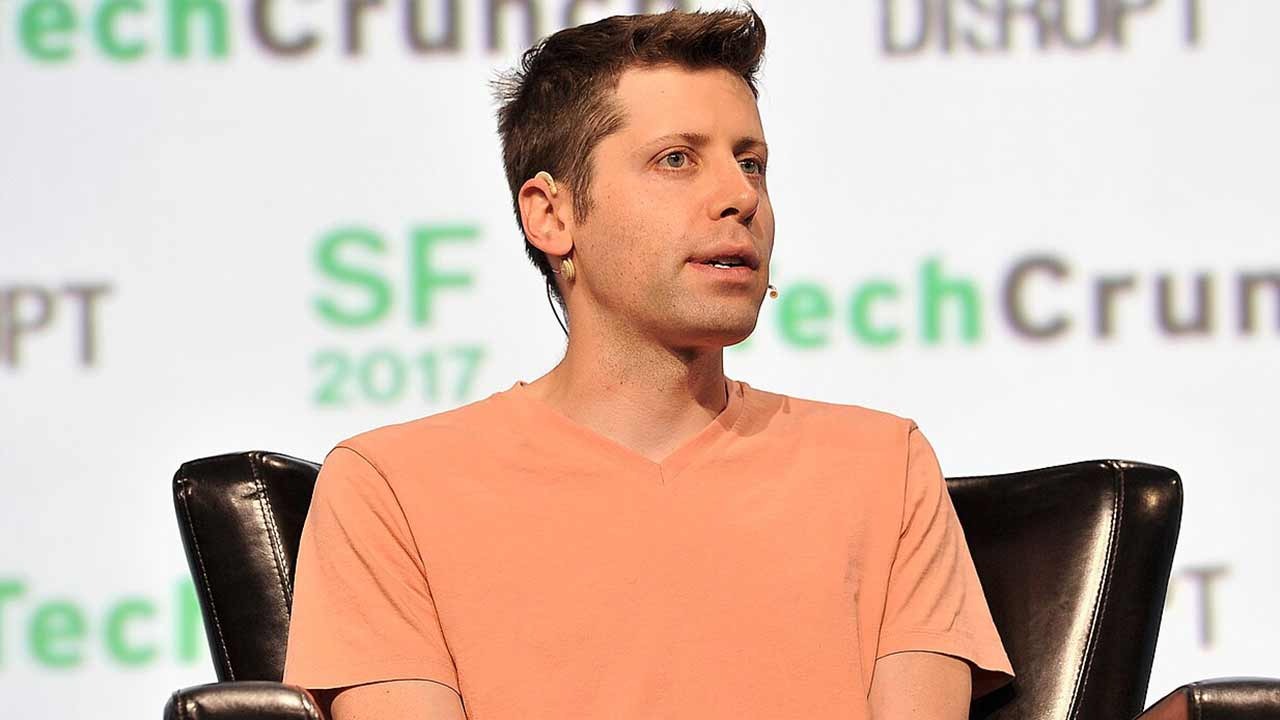
OpenAI CEO Sam Altman accused fellow tech leaders of using artificial intelligence as a convenient excuse to justify workforce cuts that have nothing to do with the technology. Speaking at the India AI Impact Summit in February 2026, Altman told CNBC-TV18 that companies are engaged in “some AI washing” by blaming AI for layoffs they planned to carry out regardless. The charge arrives as firms including Pinterest and Meta have announced job cuts alongside messaging about reallocating resources toward AI, raising questions about whether the technology is genuinely driving workforce reductions or simply providing corporate cover.
Altman Draws a Line Between Real Displacement and Corporate Spin
Altman’s remarks split the issue into two distinct realities. He acknowledged that there is some real displacement as companies adopt automation and generative tools, but argued that a separate category of cuts is being dressed up in AI language for strategic convenience. The distinction matters because it comes from the head of the company most responsible for the current wave of generative AI adoption. Altman’s point implies that some boardrooms may be exploiting the hype cycle to avoid harder conversations about cost-cutting, poor planning, or shifting market conditions that predate the current AI boom.
The interview framing was deliberate. Altman chose an international stage, the India AI Impact Summit, to make the accusation, signaling that the pattern he described is not limited to Silicon Valley or the United States. His use of the term “AI washing” deliberately echoes regulatory language that federal agencies have already deployed against companies making exaggerated claims about their AI capabilities. That linguistic overlap positions Altman’s critique within an emerging enforcement framework rather than as a casual opinion, and it implicitly invites regulators, investors, and journalists to interrogate whether AI is being cited as a genuine operational driver or as a reputational shield.
Pinterest and Meta: Two Case Studies in AI-Labeled Cuts
Pinterest filed a Form 8-K with the SEC on January 27, 2026, disclosing a board-approved global restructuring plan that included a workforce reduction of less than 15%. The filing stated that the company was reallocating resources to AI-focused roles and prioritizing AI-powered products as part of broader transformation initiatives. On paper, this reads like a textbook AI pivot, aligning headcount with a new technological focus. But the language also serves a secondary purpose: it frames job losses as forward-looking investment rather than contraction, which can influence how analysts interpret the move and how it is reflected in market sentiment toward the stock.
Meta followed a similar playbook. The company began cutting jobs in its Reality Labs division in mid-January 2026, according to an internal memo attributed to executive Andrew Bosworth, as it shifted investment away from the metaverse and toward AI wearables and devices. A company spokesperson described the move as a reallocation toward AI glasses and related hardware, and the San Francisco Chronicle noted that Meta’s public messaging emphasized this AI shift from the outset. In both the Pinterest and Meta cases, the AI rationale was baked into official communication, making it difficult for affected workers or outside observers to separate genuine technological transformation from ordinary restructuring or long-running strategic missteps.
Labor Data Complicates the AI-Job-Loss Narrative
Independent research complicates the idea that AI is already a major driver of job losses across the economy. The Yale Budget Lab examined Current Population Survey data from the Bureau of Labor Statistics and found no clear relationship between AI exposure and changes in employment or unemployment at the end of 2023. Its December update reported that occupations deemed more exposed to AI had not yet experienced systematically higher job loss or unemployment compared with less-exposed roles. That finding directly challenges the narrative that generative AI adoption is forcing rapid, broad-based workforce reductions.
This does not mean AI will never reshape labor markets or that displacement is purely fictional. The Yale team has emphasized that its work is an early baseline in a fast-moving technological cycle, and future data could show stronger effects as adoption deepens and tools become more capable. But the current gap between what companies claim and what population-level surveys show mirrors the disconnect Altman highlighted. When corporate statements describe layoffs as AI-driven in the absence of clear macro evidence, it raises the possibility that executives are using AI as a narrative device to justify decisions primarily rooted in more conventional forces such as margin targets, investor pressure, or shifts in consumer demand.
Regulators Already Have a Name for This
Federal regulators were warning about AI-related deception well before Altman’s 2026 comments. The Federal Trade Commission issued business guidance in early 2023 telling companies to keep their AI claims in check, stressing that overstated or misleading assertions about artificial intelligence could be treated as deceptive marketing. While that document focused on product capabilities and marketing, the underlying principle is that companies should not make exaggerated or unsupported AI claims that could be considered deceptive.
Securities regulators have echoed that concern in the capital markets. The chair of the Securities and Exchange Commission has compared “AI washing” to the high-tech cousin of greenwashing, warning that public companies should not simply sprinkle AI language into filings and earnings calls without substantive backing, according to The Wall Street Journal. For firms that tie restructuring or layoffs directly to AI strategy in their official disclosures, that comparison is more than rhetorical. If AI washing follows the same trajectory as environmental overstatement, companies may ultimately be pushed to substantiate their AI narratives with concrete metrics, or risk facing questions about whether their workforce explanations were as misleading as inflated sustainability claims.
Investors, Workers, and the Risk of AI Hype
The stakes of AI washing extend beyond regulatory exposure. Public companies operate in an environment where AI is seen as a key driver of future growth, and that perception is already reflected in how investors track individual equities and broader market benchmarks. When executives attribute layoffs to AI, they are not just explaining internal decisions; they are also signaling alignment with a narrative that markets currently reward. That creates a structural incentive to emphasize AI even when the underlying driver of cuts is more mundane, such as a revenue slowdown or a failed product line.
For workers, the messaging has a different but equally significant impact. Framing layoffs as the inevitable result of AI adoption can make job losses feel technologically predetermined rather than the outcome of human choices about budgets and strategy. Altman’s comments implicitly challenge that fatalism by suggesting that at least some of the cuts being branded as AI-driven would have happened anyway. If employees and labor advocates accept that distinction, they may be more likely to question whether AI is being used as cover for decisions that could have been handled differently, or to push for retraining and redeployment in cases where automation truly is changing job content rather than eliminating roles outright.
Altman’s critique also hints at an emerging accountability test for corporate leaders. If AI is powerful enough to justify layoffs, it should also be powerful enough to justify measurable efficiency gains, new products, or improved customer outcomes. As more data accumulates from independent researchers and regulators sharpen their focus on AI-related claims, companies that lean on AI to explain workforce reductions may increasingly be asked to show the other side of the ledger: where, exactly, the technology is delivering the promised benefits, and whether those gains required job cuts on the scale being claimed.
More From The Daily Overview
*This article was researched with the help of AI, with human editors creating the final content.

Grant Mercer covers market dynamics, business trends, and the economic forces driving growth across industries. His analysis connects macro movements with real-world implications for investors, entrepreneurs, and professionals. Through his work at The Daily Overview, Grant helps readers understand how markets function and where opportunities may emerge.