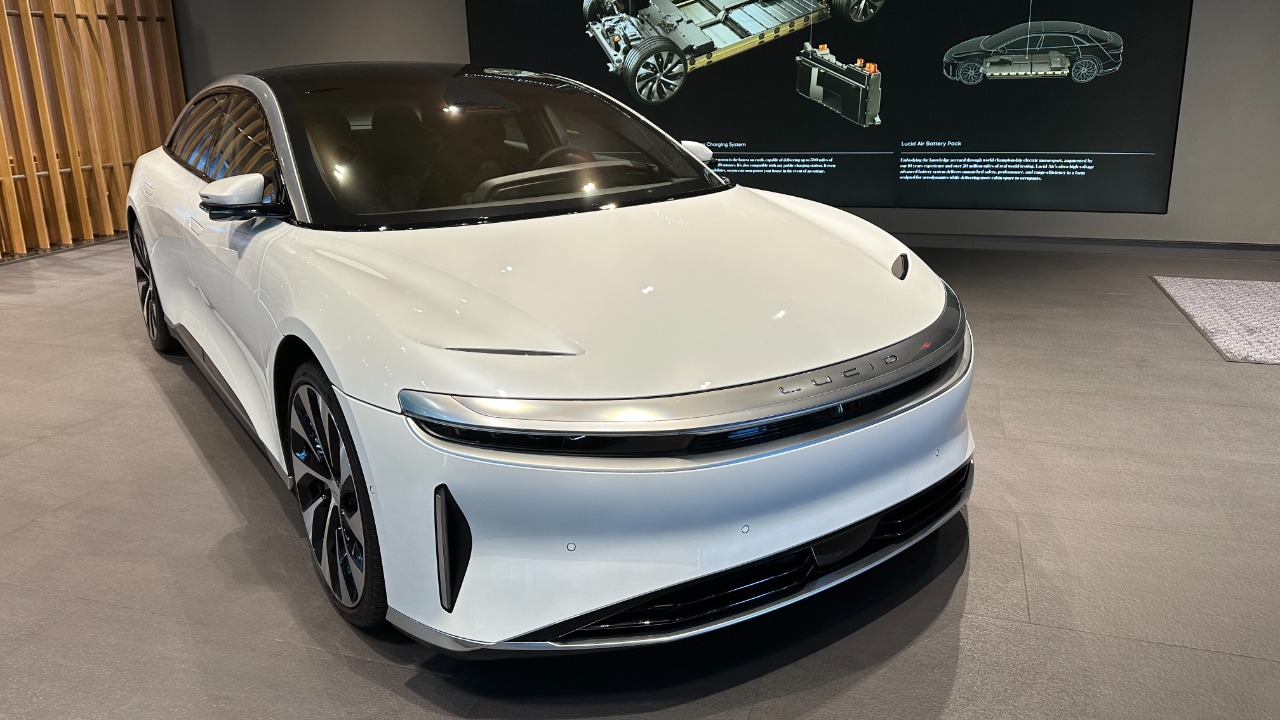
Lucid Group, the Saudi-backed electric vehicle startup that positioned itself as a direct challenger to Tesla, reported a net loss of about $2.7 billion for fiscal year 2025 while cutting roughly 2,500 U.S. jobs across multiple rounds of layoffs. The company’s manufacturing ambitions, once fueled by billions in sovereign wealth funding, now face a harsh reckoning as cash burn accelerates and production volumes remain a fraction of what was promised. For nearly a thousand workers at a single Arizona plant and additional staff in California, the dream of building a homegrown Tesla rival has already ended.
A $2.7 Billion Loss Laid Bare in SEC Filings
Lucid’s audited financial statements tell a blunt story. The company’s 2025 10-K filing, submitted to the U.S. Securities and Exchange Commission, disclosed a net loss of about $2.7 billion for the year ended December 31, 2025. That figure, drawn from audited results including management discussion and analysis, risk factors, and detailed cash flow data, reflects a company spending far more than it earns as it tries to scale luxury EV production against a market leader with massive cost advantages. Even as revenue has grown from early years, operating expenses tied to research, tooling, marketing, and overhead continue to dwarf sales, leaving Lucid deeply in the red and far from the $8 billion production-and-expansion vision it once promoted.
The filing also provides context on Lucid’s headcount across U.S. and global operations, painting a picture of an organization that expanded aggressively during the EV hype cycle and is now contracting under financial pressure. Cash used in operating activities remained substantial, and the risk factors section of the 10-K outlines ongoing concerns about the company’s ability to achieve profitability and maintain sufficient liquidity. The gap between Lucid’s spending rate and its revenue generation has not narrowed in a meaningful way, raising hard questions about how long even deep-pocketed backers will tolerate annual losses of this magnitude, including the roughly $2.6 billion loss cited in some reports. With capital expenditures still required to complete manufacturing buildouts and launch new models, the company faces a narrowing path to justify its valuation and long-term strategy.
Arizona and California Bear the Brunt of Job Cuts
The layoffs have hit hardest at Lucid’s Casa Grande, Arizona manufacturing facility. A WARN notice filed with the state shows the company laid off hundreds of employees at that single location, a devastating blow to a plant that was supposed to be the centerpiece of Lucid’s American production strategy. Casa Grande was chosen specifically because of its proximity to suppliers and favorable operating costs, but the facility has operated well below its designed capacity since opening. Instead of ramping up to the multi-shift, high-volume operation once envisioned, the plant has been forced to adjust staffing to match more modest production runs.
California has not been spared. The state WARN database confirms a separate filing for Lucid’s Newark operations, where the company maintains engineering and corporate functions. Combined with the Arizona cuts and additional reductions tracked through state employment records, the cumulative toll across multiple rounds reaches approximately 2,500 U.S. positions eliminated. Each round of cuts has been framed as a cost-reduction measure aligned with demand, but the pattern suggests something deeper than routine belt-tightening, a fundamental mismatch between Lucid’s production reality and its capital-intensive business plan. For affected regions, the reversals have undercut earlier promises of stable, long-term manufacturing and technology jobs anchored by a marquee EV brand.
Labor Board Orders Worker Reinstatement
The workforce reductions have not proceeded without legal friction. The National Labor Relations Board’s Region 28 office in Phoenix secured an injunction in federal court requiring Lucid USA Inc. to reinstate certain employees and take remedial actions pending further NLRB proceedings. According to the agency’s description of the court order, Lucid was directed to reverse specific personnel decisions while the underlying unfair labor practice case moves forward. The unusual step of seeking and winning an injunction signals that, in the NLRB’s view, the company’s conduct risked causing irreparable harm to workers’ rights before the case could be fully adjudicated.
The NLRB matter, with filings accessible through the board’s electronic docket and searchable via its case citation portal, adds a layer of regulatory risk to Lucid’s already precarious position. A company burning through billions annually while fighting federal labor complaints faces a credibility problem with both workers and investors, especially as it seeks to present itself as a high-tech employer of choice. The reinstatement order means Lucid cannot simply treat its labor force as a variable cost to be slashed at will; there are legal guardrails, and the NLRB has demonstrated willingness to enforce them through court action. For current employees, the case underscores that future restructuring efforts may be closely scrutinized, potentially complicating management’s ability to pivot quickly in response to market shifts.
The Saudi Bet That Has Not Paid Off
Lucid’s financial trajectory exposes a central tension in the broader EV industry. Saudi Arabia’s Public Investment Fund has poured billions into the company over several funding rounds, a bet premised on the idea that a premium EV brand could carve out meaningful market share against Tesla and help diversify the kingdom’s economy. The 10-K filing’s risk disclosures and cash flow statements make clear that this bet has not yet delivered returns. Production volumes remain low relative to the capital deployed, and the luxury EV segment has proven far more difficult to scale than early projections suggested, especially as higher interest rates and economic uncertainty dampen demand for big-ticket vehicles.
Tesla, by contrast, has spent years driving down manufacturing costs and expanding its model lineup into more affordable price points, creating a volume base that supports its fixed costs. Lucid’s Air sedan, while praised by reviewers for its technology and range, competes in a narrow price band that limits its addressable market to affluent buyers willing to take a chance on a newer brand. The company’s plan to introduce a midsize SUV called the Gravity was meant to broaden its appeal and tap into one of the most popular vehicle segments, but bringing a second model to market while losing $2.7 billion a year on the first creates enormous execution risk. Every quarter of losses at this scale erodes the financial runway, regardless of how much sovereign wealth stands behind the venture, and raises the prospect that future funding could come with stricter conditions or demands for strategic changes.
What the Losses Mean for U.S. EV Manufacturing
Lucid’s struggles carry implications beyond its own balance sheet. The Casa Grande plant was promoted as evidence that advanced EV manufacturing could thrive in the American Southwest, bringing high-skill jobs to a region eager for economic diversification. With nearly a thousand workers cut from that facility alone and more reductions in California, the local economic impact is significant. Communities that welcomed Lucid with tax incentives, infrastructure improvements, and workforce training programs are now absorbing the consequences of a scaling plan that stalled, raising questions about how state and local governments should structure future incentive packages for emerging manufacturers.
The broader lesson is that building a sustainable EV ecosystem in the United States requires more than marquee announcements and generous subsidies—it depends on realistic production targets, robust demand, and disciplined cost control. Lucid’s experience shows how quickly an ambitious factory can become underutilized when sales fall short of projections, and how painful the adjustment can be for workers and host communities. For policymakers, the company’s $2.7 billion annual loss and thousands of job cuts serve as a cautionary tale about betting heavily on a single flagship employer. For the industry, they underscore that even with deep-pocketed backers and cutting-edge technology, the path from startup promise to profitable mass production is steep, and missteps along the way can reverberate far beyond corporate headquarters.
More From The Daily Overview
*This article was researched with the help of AI, with human editors creating the final content.

Grant Mercer covers market dynamics, business trends, and the economic forces driving growth across industries. His analysis connects macro movements with real-world implications for investors, entrepreneurs, and professionals. Through his work at The Daily Overview, Grant helps readers understand how markets function and where opportunities may emerge.

