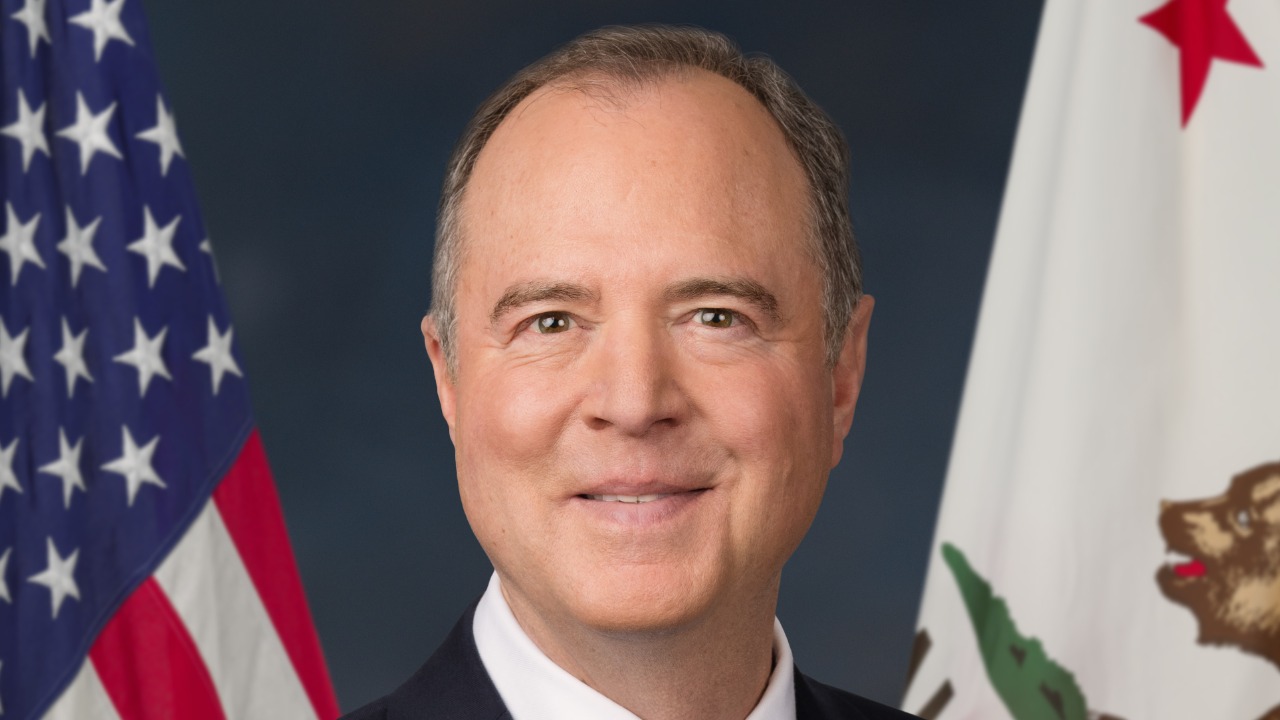
President Donald Trump is selling a story of broad prosperity, but the lived reality for many households is a paycheck that does not stretch as far as it used to. Senator Adam Schiff has argued that the apparent boom is built on rising prices, heavier household risk, and policies that reward the very top while leaving everyone else exposed. If that critique is right, protecting your money now means assuming the good times are more fragile than they look and acting accordingly.
I want to walk through what Schiff is actually warning about, how it connects to your rent, your grocery bill, and even your insurance premiums, and then spell out practical steps you can take to shore up your finances. The goal is not to pick a political side, but to treat Schiff’s argument as a risk scenario and show how an individual saver or investor can respond.
Schiff’s core warning: a boom that skips the middle class
Adam Schiff’s basic claim is that the headline economy looks strong while the foundation for working families is eroding. He argues that wages are not keeping up with the basic costs of living, so even people who are technically employed and seeing nominal raises feel poorer in real terms. In his view, the beneficiaries of Trump’s policies are large corporations and high earners, while the middle class is squeezed by higher prices for essentials and a tax code tilted toward the top.
In his own policy blueprint, Schiff points to the way “their wages simply aren’t increasing fast enough to keep up with the basic costs of living,” while, as he puts it, “Meanwhile, corporations continue to rake in record profits,” and he calls for federal action on price gouging and other drivers of household strain. If that diagnosis is right, then the apparent boom is less a tide lifting all boats and more a transfer of purchasing power away from wage earners, which is exactly the kind of imbalance that can snap back painfully when growth slows.
Trump’s “affordability hoax” rhetoric and why it matters
Schiff has also zeroed in on the way President Trump talks about affordability, accusing him of treating the crisis as a messaging problem rather than a real economic emergency. Trump has publicly dismissed concerns about rising costs as a “con job” and an “affordability hoax,” framing complaints about rent, groceries, and medical bills as partisan attacks rather than evidence of structural problems. That posture signals to investors and households that the White House is more focused on defending its record than on tackling the underlying drivers of high prices.
In a televised interview, Schiff criticized Trump’s continued downplaying of what families are facing and argued that this denialism leaves people more exposed if the economy turns. He contrasted that with the way he believes policy should work, tying affordability to democratic stability and warning that when leaders insist everything is fine, households are effectively told to fend for themselves. For anyone trying to protect their money, the implication is clear: do not assume that federal policy will quickly rescue you from a cost-of-living shock.
Housing, tariffs, and the quiet squeeze on your budget
One of the clearest places where Schiff says the “fake boom” shows up is in housing. He has warned that Trump’s tariff strategy is feeding directly into higher construction and materials costs, which then filter into rents and home prices. When lumber, steel, and imported fixtures get more expensive, builders pass those costs on, and families feel it in their monthly payments even if their income has barely moved.
Schiff has argued that Trump’s trade policies are driving up the cost of living by making inflation worse rather than better, and he has specifically highlighted how tariffs are pushing up housing, groceries, and everyday goods. In California, he has warned that the combination of high rents and higher prices for basics is forcing people out of their communities and deepening homelessness. If your rent is rising faster than your pay, that is not a side issue, it is the core of your financial risk, and it is why Schiff’s critique focuses so heavily on the cost side of the ledger rather than on stock indexes or GDP.
When Trump calls affordability a “con job” and what Democrats propose instead
Trump’s decision to label affordability concerns a “con job” is not just a rhetorical flourish, it shapes the policy agenda. If the president insists that complaints about rent and groceries are exaggerated, there is little incentive to pursue aggressive housing or wage reforms. That leaves households facing a gap between official optimism and their own bank balances, which is exactly the kind of disconnect that can lull people into overextending themselves during a boom.
Democrats, including Schiff, have tried to fill that vacuum with detailed housing plans that treat the crisis as real and urgent. One proposal frames the stakes bluntly: “When families can’t afford to stay in their communities, when veterans sleep on our streets, when working people are one paycheck away from losing their homes, our economy is not working,” a line that anchors a broader affordable housing plan. For your personal finances, the message is that you cannot rely on the current boom to fix housing on its own, and you should plan as if high rents and home prices will remain a long term drag.
Insurance and hidden risks in a “strong” economy
Beyond visible bills like rent and groceries, Schiff has focused on quieter financial risks that can suddenly blow up a household budget, especially in a climate stressed by climate change and market volatility. Property insurance is a prime example. As disasters become more frequent and costly, insurers raise premiums or pull back from high risk areas, leaving homeowners with higher fixed costs or even without coverage. That is the kind of slow moving crisis that does not show up in a jobs report but can devastate a family’s balance sheet.
To address this, Senator Adam Schiff has reintroduced legislation called the Incorporating National Support for Unprecedented Ri initiative, which is designed to stabilize property insurance markets in partnership with state regulators. The fact that a sitting senator feels compelled to focus on insurance market stability is itself a warning sign: even in a supposed boom, basic financial protections are fraying. For individual households, that means reviewing coverage, understanding deductibles, and budgeting for higher premiums should be part of any serious plan to protect your money.
Tax cuts, billionaires, and why the boom feels uneven
Schiff’s critique of Trump’s boom also runs through the tax code. He argues that Republican tax priorities have favored billionaires and large corporations, while leaving the middle class with relatively modest relief and ongoing exposure to high costs. In his telling, the economy looks strong partly because asset prices are high and corporate profits are robust, not because ordinary workers are genuinely better off after taxes and bills.
On the Senate floor, he has blasted Republican plans that, in his words, choose to “give tax cuts to billionaires” instead of investing in “our children,” “our workers,” and “our future,” framing the budget as a choice about what the country can afford rather than an accounting exercise. In that speech, he argued that “We’re asked what we choose to afford. We could choose to invest in our children. In our workers. In our future. Or we” could continue down a path that leaves the middle class behind, a contrast he drew while criticizing Republican plans. For your finances, the takeaway is that you should not assume future tax policy will automatically favor wage earners, and you may need to build your own buffer rather than counting on broad based tax relief.
Housing supply, redistricting fights, and the politics behind your rent
Schiff has tried to pair his criticism of Trump’s record with concrete proposals to expand housing supply and lower costs. He has joined bipartisan efforts to change tax rules so that more homeowners are willing to sell, which in theory would increase turnover and free up inventory for younger buyers. The idea is that if people can keep more of their gains when they sell, they are more likely to move, which can ease pressure in tight markets and give renters a path into ownership.
One such effort involves a bill that he introduced with colleagues to let Americans keep more of their proceeds when they sell a home, with the explicit goal of increasing housing availability and affordability for the next generation. At the same time, Schiff has been willing to confront Trump’s political maneuvers, noting how Indiana Senate Republicans rejected Trump’s redistricting push, a reminder that fights over power and representation can shape which communities get resources and which are ignored. In one interview, Indiana Senate Republicans were cited as pushing back on Trump’s redistricting agenda, underscoring how political maps can influence economic outcomes. For renters and buyers, these battles are not abstract, they help determine whether your neighborhood sees new housing, transit, and services or continues to lag.
How Schiff links economic pain to democratic risk
Schiff has been unusually explicit in tying economic stress to the health of American democracy. He argues that when people feel locked out of opportunity, they become more vulnerable to authoritarian appeals and less trusting of institutions. In that framework, Trump’s insistence that affordability concerns are overblown is not just bad economics, it is a threat to democratic stability, because it deepens the sense that leaders are out of touch with everyday life.
As he prepared to move from the House to the Senate, Schiff said he was less interested in talking about Trump personally and more focused on tackling economic woes as part of a broader effort to save American democracy. He framed it this way: “But as he heads to the Senate after nearly a quarter-century in the House, Schiff said he is more interested in tackling economic woes than relitigating the past, arguing that solving economic problems and saving American democracy go hand in hand,” a perspective captured in his comments about the Senate and the need to solve these problems. For individual savers, that link is a reminder that financial planning is not just about numbers, it is about resilience in a political environment that can change quickly if economic frustration boils over.
Practical ways to protect your money if the boom cracks
If you accept Schiff’s premise that the current boom is fragile and skewed, the logical response is to build your own shock absorbers. That starts with liquidity. A dedicated emergency fund, even a modest one, can keep you from turning a temporary setback into long term debt. Financial planners often suggest three to six months of essential expenses, but if that feels out of reach, the key is to start small and automate contributions so the cushion grows quietly in the background.
Guidance on how to do this in practice is straightforward: build an emergency buffer, keep a meaningful share of your safety net in cash or cash equivalents, and avoid overextending yourself on discretionary spending while the economy still looks strong. One set of practical tips emphasizes that “Cash is king during” a downturn and urges households to Build reserves, pay down high interest debt, and diversify income where possible. In a world of rising rents, volatile insurance costs, and policy uncertainty, those habits are less about pessimism and more about buying yourself options when conditions change.
Tariffs, groceries, and day to day defense of your budget
Finally, protecting your money in a “fake boom” environment means paying close attention to the specific channels where policy choices hit your wallet. Tariffs are a prime example. When the federal government raises taxes on imported goods, retailers and suppliers often pass those costs on to consumers, and the effect shows up in your grocery cart, your utility bills, and the price of everyday items from appliances to clothing. Schiff has argued that Trump’s tariff strategy is doing exactly that, turning trade policy into a hidden tax on households.
In his warnings about Trump’s economic approach, Schiff has stressed that Tariffs Are Driving Up Housing, Groceries, Everyday Goods For Californians, making California and similar states more expensive places to live. For your day to day budget, that means looking for ways to substitute away from the most affected goods, locking in longer term contracts where possible before prices rise further, and resisting the temptation to treat temporary relief as permanent. In a boom that leans heavily on asset prices and corporate profits, the most effective defense for ordinary households is a mix of vigilance, liquidity, and a clear eyed view of how national policy choices filter down to the checkout line.
More From TheDailyOverview

Cole Whitaker focuses on the fundamentals of money management, helping readers make smarter decisions around income, spending, saving, and long-term financial stability. His writing emphasizes clarity, discipline, and practical systems that work in real life. At The Daily Overview, Cole breaks down personal finance topics into straightforward guidance readers can apply immediately.

