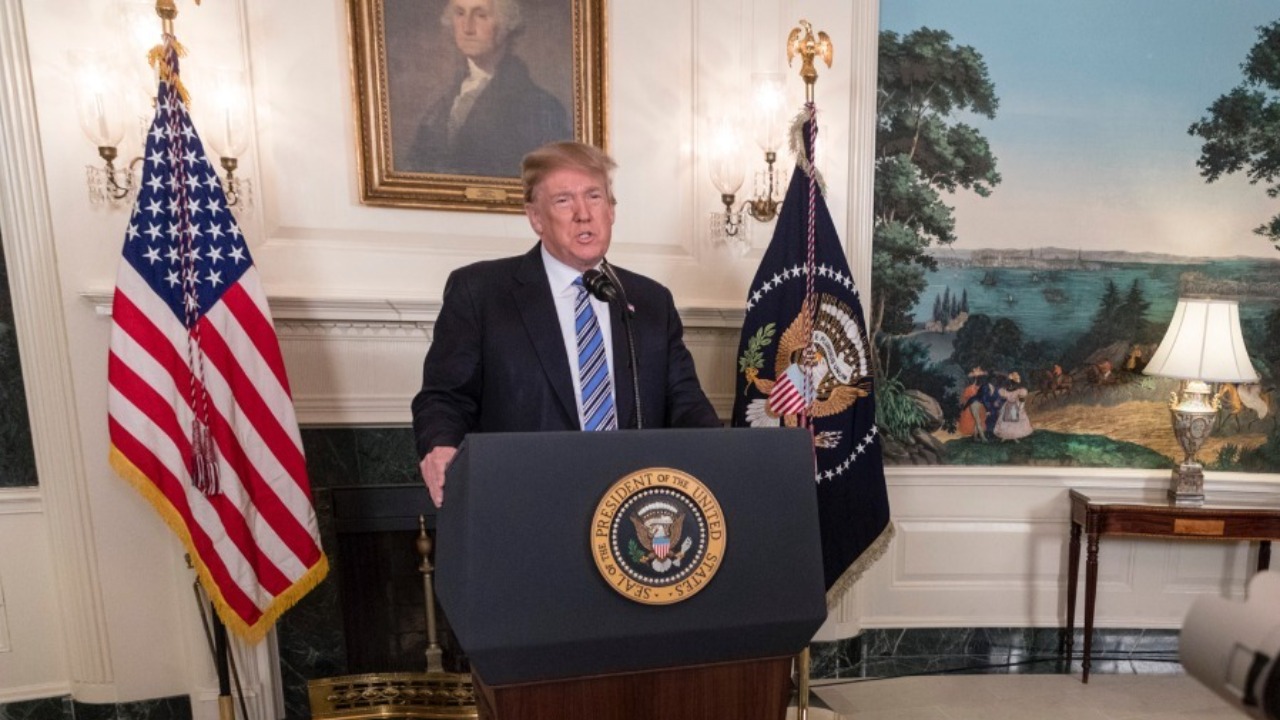
President Trump is promising every household a $2,000 “tariff dividend” check, casting it as a simple way to return trade-war proceeds to the working class. Senate Republicans are instead signaling that the plan is going nowhere fast, treating it as a political gamble that collides with their stated concerns about debt, inflation, and the basic math behind the idea. The clash has turned what was meant to be a headline-grabbing giveaway into a revealing test of how far the party is willing to follow the president on economic populism.
Trump has framed the checks as both a reward for enduring higher import taxes and a fresh round of stimulus ahead of a tough election cycle. His own timeline, laid out in mid-Nov, suggests he wants the $2,000 payments moving quickly, but the resistance from key Republicans shows that even unified control of Washington does not guarantee his latest promise will ever reach voters’ mailboxes.
The $2,000 tariff promise and Trump’s political bet
At the center of the fight is a straightforward-sounding pledge: President Trump says he wants to give households $2,000 funded by tariff revenue, presenting it as a way to turn trade policy into a direct cash benefit. He has been talking up the idea for weeks, and by Nov 19, 2025, he was publicly sketching out a timeframe for when those $2,000 checks might arrive, even as outside analysts questioned whether the numbers add up. According to detailed coverage of his remarks, Trump has described the rebates as a kind of dividend from tariffs that he argues other countries are paying, a framing that glosses over the fact that import taxes are collected from U.S. companies and consumers, not foreign governments, and that total tariff receipts may not match the scale of his promise as he laid out the $2,000 plan in Nov.
President Donald Trump has also leaned into the branding of the proposal, repeatedly describing the payments as “tariff dividend checks” and pitching them as proof that his trade strategy is paying off for ordinary families. Reporting on his recent appearances notes that President Donald Trump has been floating a plan for $2,000 tariff dividend checks for weeks, positioning it as a way to help households cope with higher prices while insisting that tariffs themselves are not to blame for inflation. That narrative, however, runs into the reality that tariffs tend to raise costs on imported goods, and that any rebate scheme would have to be large and sustained to offset those pressures, a tension that has been highlighted in coverage of how Trump and his advisers have tried to calm worries about the broader economic impact of his trade agenda as President Donald Trump promotes the $2,000 dividend idea.
Senate Republicans recoil from the price tag
While Trump has tried to sell the checks as a political and economic win, many Republican Senators are treating the proposal as a fiscal and ideological red line. Earlier in Nov, coverage of internal party discussions described how Senators balked at the cost of sending out $2,000 payments and warned that it would swell the national debt, undercutting years of rhetoric about spending restraint. Those lawmakers have framed their objections in stark terms, arguing that layering a new entitlement-style benefit on top of existing obligations would be irresponsible, especially if the White House cannot clearly show that tariff revenue will fully cover the outlays without borrowing as Senators balk at the $2,000 cost in mid‑Nov.
The pushback has been especially sharp in the Senate, where Republicans have more institutional power to slow or reshape the plan and where budget hawks have long warned about rising deficits. Reporting from Nov 18, 2025, captured the mood among Senate Republicans, describing how Trump’s $2,000 tariff checks were effectively shunned by many in the conference, with some suggesting that if tariff revenue is to be used at all it should go toward deficit reduction or targeted tax relief instead of broad checks. That resistance has turned what Trump hoped would be a unifying populist gesture into a visible rift between the president and Senate Republicans over how to handle the spoils of his trade policy as Trump’s $2,000 checks are shunned by Senate Republicans in Nov.
Ideological fault lines inside the GOP
Beneath the surface fight over one program is a deeper argument about what it means to be a Republican on economic policy in the Trump era. President Trump has repeatedly embraced direct payments and other interventionist tools that older generations of conservatives would have rejected, while many in the Senate still see their role as guarding against new spending and preserving a more traditional small-government brand. Coverage of internal deliberations notes that President Trump’s proposal for $2,000 payments to households, funded by tariffs, has met skepticism from Republicans who question both the policy design and the timing, especially given that the White House has talked about sending the checks before next year’s midterm elections, a schedule that makes the plan look as much like campaign strategy as economic relief as President Trump’s $2,000 tariff rebates face skepticism.
Some of the sharpest criticism has come from Republicans who see the checks as a betrayal of the party’s long-standing message on markets and government. Reporting from mid‑Nov describes how GOP lawmakers have pushed back on the $2K tariff checks by warning that they could fuel inflation and add to national debt risks, arguing that pumping more cash into an already strained economy is the wrong move. Those lawmakers have also suggested that if tariffs are raising prices for consumers, the better answer is to reduce or eliminate those levies rather than create a new federal payment program to offset them, a view that underscores how far apart Trump and parts of the GOP remain on the basic question of how active Washington should be in managing household finances as GOP lawmakers cite inflation and debt in opposing the $2K checks.
Named Republican critics and the “crazy idea” label
The resistance is not just abstract concern about deficits; it is being voiced by specific Republican Senators who are willing to go on the record against the president’s plan. Reporting from Nov 19, 2025, notes that Senators Paul and Thom Tillis (R‑NC) have both rejected the check proposal, with Tillis saying, “I don’t agree with that,” when asked about the idea of sending out tariff-funded payments. Their opposition matters because it signals that even some lawmakers who have backed Trump on other issues are not prepared to endorse a new round of $2,000 working-class checks, and it suggests that the White House cannot count on a quiet rubber stamp from the Senate for this particular experiment in economic populism as Senators Paul and Thom Tillis publicly reject the proposal in Nov.
Other Republicans have gone further, attacking the concept of tariff dividend checks in language that leaves little room for compromise. Coverage from Nov 18, 2025, recounts how some GOP lawmakers have derided the idea of sending out tariff rebates as a “crazy idea,” arguing that it distorts trade policy and turns tariffs into a political slush fund. That kind of rhetoric, captured in reporting that quotes Republicans dismissing the president’s plan in blunt terms, shows how the proposal has become a proxy for broader unease about Trump’s willingness to use federal dollars for direct voter-facing benefits, especially when those benefits are timed to land ahead of an election cycle as Republicans dump on the tariff rebates as a “crazy idea” in Nov.
Why the math and messaging both matter
Even if Trump could win over more Republicans on the politics, the underlying arithmetic of the plan remains a central sticking point. Analysts and lawmakers alike have questioned whether existing and projected tariff revenue is sufficient to fund universal $2,000 checks without blowing a hole in the budget, especially if the payments are meant to recur rather than be a one-time gesture. Reporting from Nov 19, 2025, on Trump’s timeline for the checks notes that some observers say the math is unclear, a polite way of pointing out that the administration has not yet produced a transparent, line-by-line explanation of how much money tariffs are bringing in and how that compares to the total cost of sending checks to every eligible household as Nov coverage of the $2,000 timeline underscores the fuzzy math.
The messaging challenge is just as significant. Trump wants to present the checks as proof that his tariffs are a net positive for ordinary Americans, but Republican critics are effectively arguing that if tariffs are generating enough revenue to fund $2,000 payments, that is itself evidence that consumers have been overpaying at the register. Coverage of President Donald Trump’s weeks-long campaign for tariff dividend checks captures that tension, noting that he has tried to reassure voters that tariffs are not driving inflation even as GOP lawmakers cite inflation and national debt risks as reasons to oppose the plan. The result is a rare public split in which the president is promising cash while members of his own party warn that taking it could worsen the very economic pressures voters are already feeling as detailed in reporting on Trump’s tariff dividend messaging.
For now, the Senate’s chilly reception suggests that Trump’s $2,000 tariff checks are more talking point than imminent policy. The president has staked political capital on the promise, but the combination of fiscal skepticism, ideological resistance, and unresolved questions about the math has given Senate Republicans ample cover to keep their distance. Whether that changes as the next election draws closer will say a lot about which side of the party’s economic identity ultimately wins out: Trump’s cash-forward populism or the old guard’s debt-averse conservatism.
More From TheDailyOverview
- Dave Ramsey warns to stop 401(k) contributions
- 11 night jobs you can do from home (not exciting but steady)
- Small U.S. cities ready to boom next
- 19 things boomers should never sell no matter what

Grant Mercer covers market dynamics, business trends, and the economic forces driving growth across industries. His analysis connects macro movements with real-world implications for investors, entrepreneurs, and professionals. Through his work at The Daily Overview, Grant helps readers understand how markets function and where opportunities may emerge.