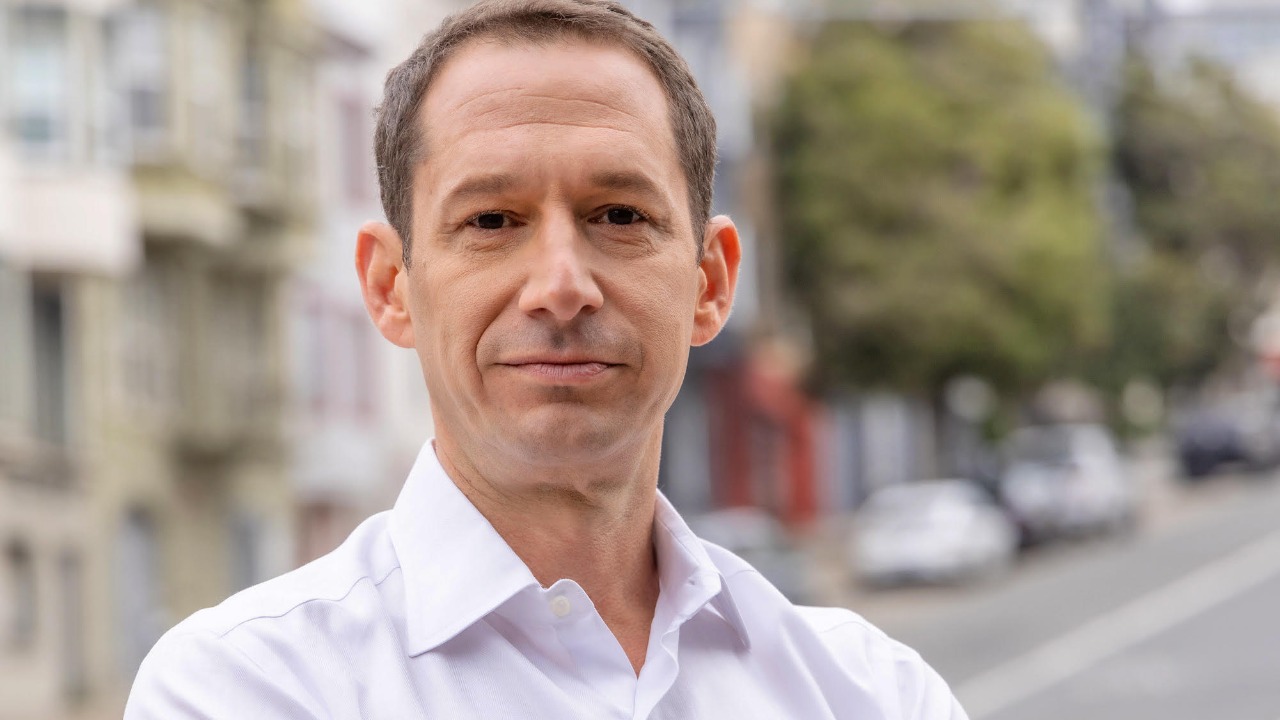
San Francisco has taken one of the most aggressive steps in the national reparations debate, approving a new fund that could eventually deliver up to $5 million per eligible Black resident. The measure, signed quietly by San Francisco Mayor Daniel Lurie, stops far short of cutting checks today, but it locks in a framework that could reshape both the city’s budget politics and the broader conversation over how to repair generations of racial harm.
The move leaves San Fran at the center of a high stakes experiment: a city facing a large deficit has endorsed a headline grabbing promise while admitting it currently lacks the money to fulfill it. I see a test emerging not only of political will, but of whether public and private dollars can be marshaled to match the scale of the commitment.
What the new reparations fund actually does
The ordinance signed by San Francisco Mayor Daniel Lurie creates a formal Reparations Fund, a legal vehicle that can receive public appropriations and private donations and, in theory, pay out up to $5 million per person to qualifying Black residents. Reporting describes how San Francisco Mayor Daniel Lurie quietly approved the measure even as he acknowledged that the city is too broke to finance such large payments on its own, a tension that sits at the heart of the plan’s uncertainty and is underscored in coverage of the San Fran mayor signs bill. The law does not immediately distribute money, but it codifies the city’s intent to pursue a reparations policy on a scale that would be unprecedented in local government.
According to detailed descriptions of the ordinance, San Francisco supervisors have passed a framework that is meant to implement recommendations from the city’s African American Reparations Advisory Committee, which spent years studying how to address harms from slavery’s legacy, discriminatory housing policy, economic exclusion, and community displacement. The new law only sets up the fund, it does not actually include any money for it, and that distinction is central to how the measure is being sold to the public, with one report stressing that, However, the new law only creates the structure and that Money could be allocated or raised later to fulfill the promise of up to $5 million per person for thousands of Black Californians, a point captured in coverage of However, the new law only.
How San Francisco got to a $5 million figure
The eye catching $5 million number did not appear out of thin air, it traces back to a set of draft recommendations that San Francisco’s African American Reparations Advisory Committee released earlier in the debate. Under San Francisco draft guidance, a person would have to be at least 18 years old and have identified as “Black” or “African American” on public documents for a specified period to qualify, and the committee floated a lump sum payment of $5 million per eligible resident as one option, a detail laid out in reporting on how Under San Francisco officials aired those proposals. The committee’s work gave political cover to supervisors who later voted to create the fund, arguing that the dollar figure was grounded in a systematic attempt to quantify lost wealth and opportunity.
Supporters frame the $5 million benchmark as a symbolic and practical attempt to match the scale of damage inflicted by slavery’s aftershocks, redlining, and forced displacement of Black neighborhoods in San Francisco. As 2025 drew to a close, advocates described the new fund as a historic measure for Black San Franciscans, linking it to a broader push to address gaps in housing, economic opportunity, and community displacement that have persisted despite the city’s tech fueled boom, a narrative reflected in accounts of how San Francisco moved from slavery’s shadows to a formal reparations framework. I read the $5 million figure less as a precise calculation and more as a political statement that the status quo is nowhere near enough.
Who could benefit, and how many people are in line
The potential pool of beneficiaries is large enough to reshape the city’s finances if the fund ever pays out at the maximum level. One analysis estimates that over 4,600 Black Californians are likely to qualify under the new law, a group that would be eligible for up to $5 million each if the Reparations Fund is fully financed, a scale that becomes clear in coverage noting that over 4600 black Californians could be in line. If every one of those residents received the full amount, the total obligation would run into the tens of billions of dollars, far beyond what San Francisco currently budgets for any single policy area.
Eligibility rules will ultimately determine how many people actually see money, and those rules are still being refined. The African American Reparations Advisory Committee has already signaled that factors such as age, self identification as Black or African American, and ties to San Francisco will matter, and supervisors have been clear that the fund is intended to implement that committee’s policy blueprint rather than invent a new one from scratch, a connection highlighted in reporting that San Francisco supervisors have passed an ordinance to carry out the committee’s reparations policy recommendations for Black residents, as described in coverage of how San Francisco supervisors moved the plan forward. I expect the eventual criteria to be a flashpoint, with some residents arguing they are too narrow and others warning they are too broad for a city already struggling to balance its books.
The money problem: deficits, donors, and political backlash
The most immediate obstacle is financial reality. San Francisco is already grappling with a roughly $1 billion budget deficit, and Mayor Lurie has conceded that the city cannot afford to fund $5 million payments from its own coffers, a point underscored in reporting that the city’s shortfall is colliding with the reparations promise and that officials are looking to private dollars to fill the gap, as detailed in accounts of how Gov Wes Moore explained his own approach to reparations while San Francisco’s deficit loomed. The ordinance explicitly allows for philanthropic and corporate contributions, effectively betting that donors will step in where taxpayers cannot, but there is no guarantee that such money will materialize at the necessary scale.
Critics argue that city leaders owe San Franciscans a far clearer explanation of how the fund will be financed and what trade offs it will require. One detailed critique points out that the widely reported $5 million lump sum payment to each eligible person is just the beginning of the absurdity involved, warning that residents could be on the hook for new taxes, fees, or even mandatory receipts to the reparations fund if other revenue sources fall short, a concern laid out in a column arguing that city leaders owe San Franciscans answers. I see a political risk here: if the fund is perceived as an unfunded promise, it could fuel backlash not only against reparations but against the broader progressive agenda in a city already wrestling with public safety, housing, and homelessness.
Inside City Hall: quiet signatures, past fights, and what comes next
The path to this ordinance has been anything but straightforward. Earlier efforts to institutionalize reparations ran into resistance, including when Walton, a leading proponent on the Board of Supervisors, previously called for a $50 m Office of Reparations in 2023 but was rebuffed by then mayor London Breed, a clash that is recounted in reporting on how Walton pushed for a $50 million bureaucracy to manage the work. The current ordinance is in some ways a scaled back version of that vision, creating a fund without yet building a large new office, but it still represents a major ideological victory for supervisors who have framed reparations as a moral imperative.
Supporters inside City Hall emphasize that the vote follows years of work by the African American Reparations Advisory Committee, whose members have spoken in deeply personal terms about the harms they are trying to address. Coverage of the board’s deliberations notes that the vote to create the fund for Black residents came after emotional testimony and that lawmakers cast the measure as a first step rather than a final answer, a sequence captured in reporting on how San Francisco lawmakers approved the initial framework. I read the quiet way Mayor Lurie signed the ordinance, highlighted again in coverage by reporter Annie Gaus that notes San Francisco Mayor Daniel Lurie endorsed the fund while conceding the city is too broke to pay without private help, as a sign that even supporters know how politically volatile the issue is, a dynamic that comes through in accounts that begin By Annie Gaus and describe how Published Dec coverage framed his move.
There is also a broader policy backdrop that will shape how this experiment unfolds. Under current federal law, the existing $10 million estate tax exemption is scheduled to revert back to the $5 million exemption amount on January 1, 2026, a shift that could affect how wealthy donors think about large gifts and charitable planning, as tax analysts have noted in discussions that begin with the phrase Under current law and explain how the exemption will fall to a $5 million exemption. If San Francisco is counting on philanthropy to make its Reparations Fund real, the intersection of local policy and federal tax timing could prove as important as any speech at City Hall.
More From TheDailyOverview

Julian Harrow specializes in taxation, IRS rules, and compliance strategy. His work helps readers navigate complex tax codes, deadlines, and reporting requirements while identifying opportunities for efficiency and risk reduction. At The Daily Overview, Julian breaks down tax-related topics with precision and clarity, making a traditionally dense subject easier to understand.

