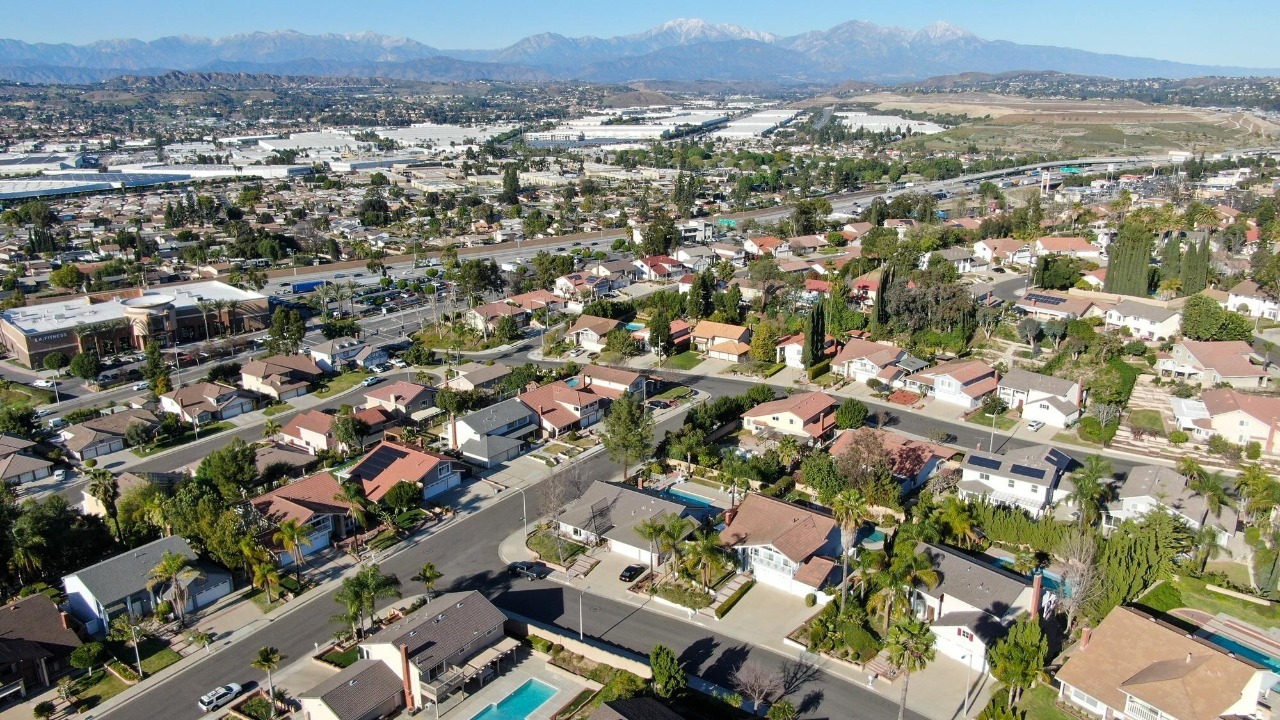
For the first time in years, Los Angeles renters are refreshing listings and seeing numbers move in their favor instead of creeping higher. Median asking prices in the region have fallen to their lowest point in four years, turning what long felt like a landlord’s city into something closer to a renter’s market. The shift is modest but real, and it is colliding with new local rules that further limit how much many landlords can raise the rent.
The result is a rare moment of leverage for tenants who have spent the past decade bracing for hikes, not cuts. I am seeing a market where some Angelenos are not only cheering lower prices but also double checking that the drop is not a typo before they hit “schedule a tour.”
From relentless climb to four-year low
After years of steady increases, median rental prices in the LA metro area dropped to $2,167 in December, the lowest level Angelenos have seen since early 2022, according to regional data on Median asking rents. That figure, repeated across multiple analyses, marks a clear break from the peak of the pandemic era, when typical rents in the L.A. metro climbed to about $2,262 in August 2022, as detailed in separate regional tracking that also cites $2,167 as the new benchmark on But. For a city that has become shorthand for high housing costs, that reversal is striking.
What makes this moment even more notable is that it is not just a blip in one dataset. Multiple summaries now describe Los Angeles rent prices as having fallen to a four year low, signaling a meaningful shift in the city’s housing market rather than a one month anomaly. Another analysis frames the trend as Rent Relief, with prices that Prices Hit Four and a clear Year Low as Power Shifts toward Tenants. For renters who have grown used to bidding wars and waived contingencies, that language alone feels like a plot twist.
Vacancies, population loss and a rare power shift
Behind the headline numbers is a quieter demographic story. L.A. County’s population shrank by about 28,000 people, a relatively small share of the region but enough to loosen a market that had been stretched tight. As residents left or doubled up, vacancy rates climbed to 5.3%, the highest level since 2021, according to county level summaries that describe how the County is changing. In a market as tight as greater Los Angeles, that kind of vacancy increase is enough to push landlords to cut asking rents or offer concessions.
At the same time, the region’s multifamily housing supply has grown, which means more units are competing for each renter. Analysts who track the metro say the county’s apartment inventory has expanded to the point where many one and two bedroom units are now listed for a lot cheaper than they were at the peak, a trend highlighted in the same Angelenos focused analysis that pegs the median at $2,167. Put together, the population dip, higher vacancy and new supply have created a small but meaningful window where tenants can negotiate, walk away from bad deals and, in some cases, move into neighborhoods that were out of reach just a few years ago.
Not every neighborhood is on sale
The relief is real, but it is not evenly distributed across the map. Some of the biggest rent drops are concentrated in specific pockets of The LA region, where new buildings and shifting demand have combined to push prices down. In a detailed breakdown of neighborhood level trends, analysts point to areas that had seen some of the steepest pandemic era increases now giving back a chunk of those gains, while one surprising area, The Pacific Palisades neighborhood, is still seeing a huge increase. That split captures the new reality: some renters are suddenly fielding discounts, while others are still chasing rising prices.
One of the clearest voices explaining this patchwork is Zain Khan, who has laid out how some of the priciest and mid tier neighborhoods are softening while others hold firm. Data from San Fernando Valley show that those subregions are bucking the broader slowdown, with platforms like Zumper flagging neighborhoods like Granada Hills where rents are likely to stay under downward pressure. For renters, that means the story of falling prices is highly local, and the best deals may be a few miles away from long time hot spots.
Policy guardrails: RSO caps and new protections
Market forces are only part of the story. City rules are also shaping how far and how fast rents can move, especially in older buildings. The City of Los Angeles has long regulated many apartments under the City of Los, and officials recently updated the rules for how much landlords can raise rents each year. Under the city’s New RSO Rent, The City Council has amended the annual allowable Rent Stabilization Ordinance RSO rent increase, tightening the guardrails just as the market itself is softening.
For years, emergency rules froze rent hikes in many stabilized units. From March 2020 through January 30, 2026, the allowable increase for rentals covered by the city’s stabilization law was effectively zero, and now the permitted bump through January 30, 2026 is 3%, according to the city’s official ATTN notice to TENANTS and LANDLORDS. That same guidance spells out the Annual limits for units covered by the City of Los, giving renters a clear ceiling on how much their monthly bill can rise even as the broader market cools.
What renters can actually do with this moment
For tenants, the combination of softer prices and tighter rules is not just an abstract trend, it is a set of tools. Advocacy groups that work with low income residents are already spelling out how renters can use the new landscape. Guidance aimed specifically Rent Stabilized Tenants in the City explains how the local Rent Stabilization Ordinance, often shortened to LARSO, applies to units in the city and what landlords can and cannot do through early 2026. Through February 1, 2026, for example, landlords face specific limits on rent increases and restrictions on evictions that are tied to how many tenants or dependents are added to a lease, giving renters more security as they weigh whether to move or stay put.
For those looking to move, the current environment is a chance to comparison shop in a way that was nearly impossible a few years ago. Listings that once drew multiple applications at full price are now sitting long enough that renters can ask for lower rent, free parking or a month of move in credit, especially in buildings where vacancies have climbed. The fact that multiple analyses now describe a four year low in regional rents, from the But framing of a renter’s market to the Los Angeles wide summaries that echo the same point, gives tenants a data backed argument when they push back on high asking prices.
More From The Daily Overview
*This article was researched with the help of AI, with human editors creating the final content.

Elias Broderick specializes in residential and commercial real estate, with a focus on market cycles, property fundamentals, and investment strategy. His writing translates complex housing and development trends into clear insights for both new and experienced investors. At The Daily Overview, Elias explores how real estate fits into long-term wealth planning.

