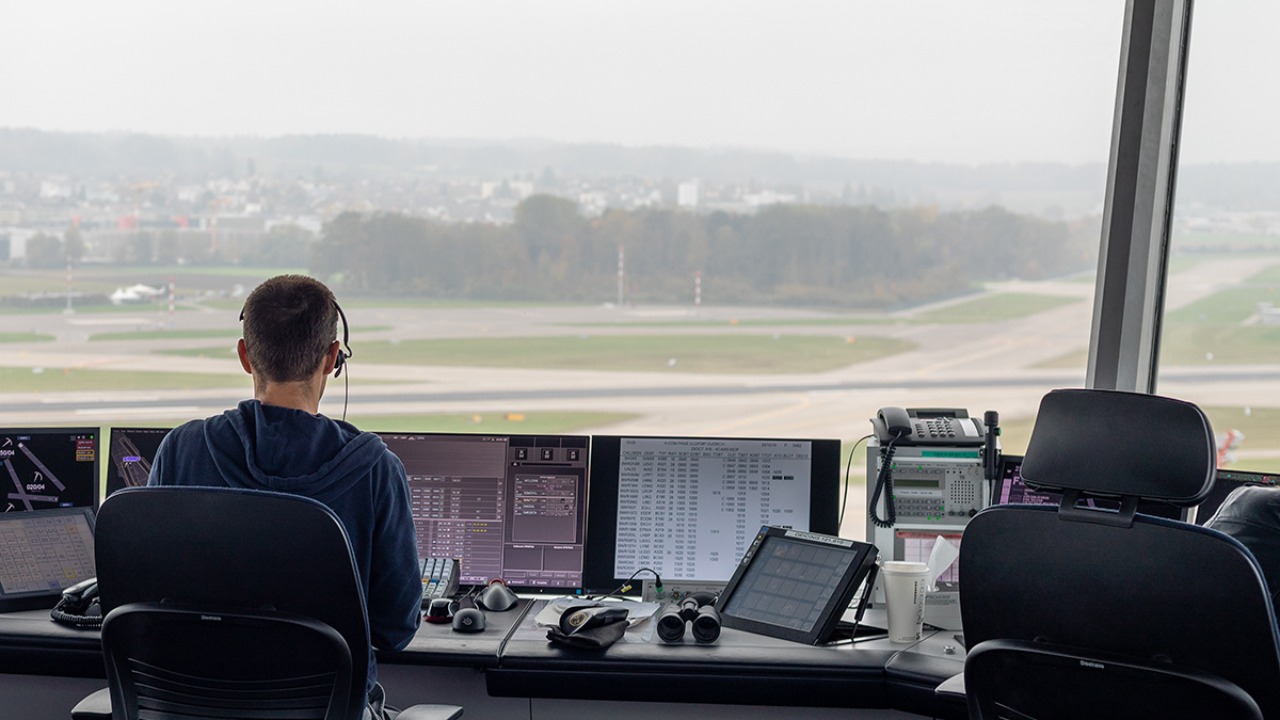
Thousands of air traffic controllers who kept planes moving during the recent federal shutdown are still waiting for money they were explicitly promised, turning what was billed as a “thank you” into a fresh source of anger. Instead of a morale boost, the stalled shutdown bonus has exposed how fragile the system is when the people responsible for the nation’s airspace are left to absorb political brinkmanship in their own paychecks.
As the dispute drags on, the unpaid awards are colliding with an already strained workforce, deepening concerns about safety, staffing and trust in the agencies that oversee aviation. I see a pattern emerging in which controllers are asked to shoulder extraordinary pressure in crises, then told to wait when it is time for the government to honor its side of the bargain.
How a promised shutdown bonus turned into a bureaucratic standoff
The core of the controversy is simple: Congress and the administration agreed to a special payment for air traffic controllers who worked through the shutdown, but the money has not reached thousands of eligible employees. The bonus was framed as recognition for staffing critical facilities without interruption while much of the federal government was partially closed, yet reporting shows that large numbers of controllers have not seen the award in their pay, even though the shutdown itself ended months ago and funding has been restored for other operations. That gap between promise and paycheck is what has fueled talk of a “snub” among controllers and their unions, who argue that the government is effectively using them as an interest-free line of credit while the dispute over implementation drags on.
Behind the scenes, the holdup has been attributed to a mix of administrative delays, disagreements over eligibility rules and conflicting interpretations of how the shutdown bonus language should be applied to different categories of employees. According to detailed accounts in shutdown bonus reporting, thousands of controllers who staffed towers and en route centers during the funding lapse have yet to receive the money, even as a smaller subset has already been paid. That uneven rollout has sharpened frustration, because it suggests the problem is not a lack of appropriated funds but a breakdown in execution and coordination between the Federal Aviation Administration and the agencies that process federal payroll.
Morale, staffing and safety pressures inside the control room
The unpaid awards are landing in a workforce that was already under strain from chronic staffing shortages and rising traffic volumes. Controllers describe working longer stretches with fewer colleagues on position, a trend that predates the shutdown but has become more acute as retirements outpace new hires and training pipelines struggle to keep up. When a promised bonus fails to materialize in that environment, it is not just a missed perk, it is another signal that the system is leaning on a shrinking pool of specialists without fully valuing their time and expertise. Union representatives have warned that the combination of high workload, unpredictable schedules and financial uncertainty can accelerate burnout, which in turn makes it harder to retain experienced controllers who are essential for mentoring trainees and managing complex airspace.
Safety officials have been careful to stress that there is no evidence of an immediate spike in risk tied directly to the missing payments, but they also acknowledge that morale is a critical ingredient in maintaining the margin of safety that passengers take for granted. In interviews cited in the same bonus coverage, controllers describe feeling “taken for granted” and “expendable,” language that should worry any policymaker who depends on their split-second judgment to keep aircraft separated. When a controller is debating whether to bid on another overtime shift or stay in the profession at all, the memory of a promised shutdown award that never arrived can weigh heavily, especially for those working in high-cost cities where every paycheck is already stretched.
What the standoff reveals about shutdown politics and aviation policy
For me, the unresolved bonus fight is less about a single line item and more about how shutdown politics have seeped into the operational core of the aviation system. Each time Washington edges into a funding lapse, air traffic controllers are classified as “essential” and ordered to report to work, often without pay until the government reopens. The shutdown bonus was supposed to acknowledge that asymmetry by compensating those who kept the system running while others were furloughed, yet the current impasse shows how even that limited gesture can be undermined by bureaucratic friction. It sends a message that the political class is comfortable relying on controllers’ professionalism in a crisis but slower to act when it comes to making them whole.
The episode also underscores how aviation policy is increasingly shaped by short-term budget showdowns rather than long-range planning. Instead of focusing on modernizing equipment, expanding training capacity or addressing the documented controller shortage, key stakeholders are now spending time and political capital arguing over a one-time award that should have been straightforward to deliver. As the reporting on the unpaid bonuses makes clear, the cost of the program is modest compared with the broader federal aviation budget, yet the fallout from mishandling it is significant in terms of trust and workforce stability. Until the shutdown bonus is fully paid and the underlying processes are fixed, the episode will stand as a cautionary example of how even small failures in honoring commitments can ripple through a system that depends on human judgment at its most critical points.
More From TheDailyOverview

Nathaniel Cross focuses on retirement planning, employer benefits, and long-term income security. His writing covers pensions, social programs, investment vehicles, and strategies designed to protect financial independence later in life. At The Daily Overview, Nathaniel provides practical insight to help readers plan with confidence and foresight.

