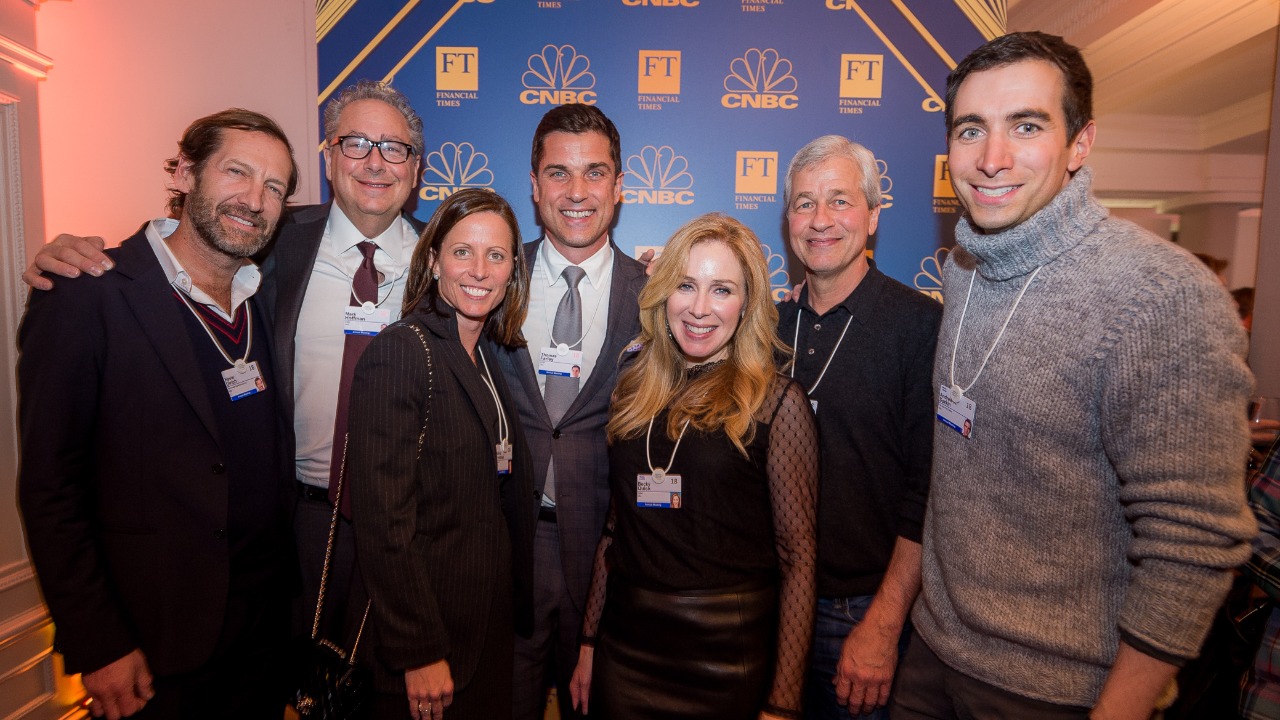
Corporate America is heading into a political and economic storm, and some of its most influential leaders are choosing to sit quietly on the sidelines. Andrew Ross Sorkin has been warning that this mix of rising populism, fragile markets, and CEO silence is not just awkward optics but a genuine risk to the system that made these companies so powerful in the first place.
Instead of the outspoken “corporate statesmen” of earlier eras, many chief executives are now retreating from public debate just as policy decisions on taxes, trade, and democracy itself grow more volatile. I see that retreat as a central thread running through today’s boardrooms, investor calls, and political fundraisers, and it is the thread that ties Sorkin’s alarm to a broader crisis of leadership.
The vacuum where corporate leadership used to be
For years, CEOs cultivated reputations as public figures who would weigh in on big national questions, from trade policy to social issues, because they believed stability and rule of law were good for business. That instinct has not disappeared, but it has been blunted by a new calculation that speaking up on politics is more likely to alienate customers, employees, or regulators than to shape a healthier environment for growth. When Sorkin warns that a crisis is coming, he is pointing to this widening gap between the scale of the challenges and the willingness of corporate leaders to use their influence to address them, even as they continue to benefit from favorable tax treatment, regulatory discretion, and government contracts documented in detailed corporate tax policy and regulatory filings.
I see that vacuum most clearly in the way executives now talk about politics in public versus in private. On earnings calls and at investor conferences, they tend to stick to safe language about “macro uncertainty” and “policy headwinds,” even when their internal memos and closed-door briefings acknowledge that specific legislative proposals or election outcomes could reshape their industries. That split is visible in the contrast between cautious public statements and more candid comments captured in investor transcripts and board minutes, where executives describe concrete risks tied to tariffs, antitrust enforcement, and shifting labor rules.
Why CEOs are retreating from the public square
The retreat is not purely about fear; it is also about incentives. Many CEOs are paid largely in stock, and their boards judge them on quarterly performance metrics, not on whether they helped steer the country away from a constitutional crisis or a trade war. When the reward structure is so tightly linked to short term share price, it is rational for executives to avoid any public stance that could trigger a boycott, a social media campaign, or a hostile tweet that rattles investors. That logic shows up in compensation disclosures and risk-factor language in proxy statements, where companies explicitly warn that political controversy could harm their brands and valuations.
At the same time, the political environment has grown more polarized and punitive, which makes neutrality look safer even when it is not. Companies that spoke out on voting rights, immigration, or public health earlier in the decade found themselves targeted by state-level legislation, regulatory scrutiny, or organized consumer backlash. Those episodes are now case studies in internal corporate risk memos and crisis communications playbooks, and they have convinced many executives that silence is the least bad option. I read Sorkin’s warning as a challenge to that assumption, because the cost of silence rises when the underlying political and economic risks keep building.
The mounting risks Sorkin sees on the horizon
When Sorkin talks about an approaching crisis, he is not describing a single event but a convergence of pressures that could hit markets and institutions at the same time. There is the risk of policy whiplash as President Donald Trump and his opponents push sharply different agendas on taxes, trade, and regulation, leaving companies unsure how to plan capital spending or hiring. There is the risk of financial instability as high debt levels, stretched valuations, and concentrated bets in sectors like technology and private credit collide with any sudden change in interest rates or geopolitical shocks, trends that analysts have been tracking in market stress indicators and corporate debt reports.
Layered on top of that is a deeper institutional risk: the possibility that faith in democratic processes and independent regulators erodes to the point where rules feel negotiable and enforcement becomes explicitly political. For businesses that depend on predictable contract law, stable currency, and impartial courts, that kind of erosion is not an abstract civics concern but a direct threat to their operating environment. I see echoes of that concern in the way companies describe “rule of law” and “governance quality” in their ESG disclosures and in the warnings from global bodies that track governance indicators and capital flows. Sorkin’s point is that if CEOs wait to speak until those foundations crack, their influence may arrive too late to matter.
How corporate silence can deepen the downturn
Silence does not just leave a moral or civic void; it can also make an eventual downturn sharper. When business leaders decline to weigh in on unstable policy, they forfeit a chance to push for clearer rules that would let them invest with more confidence. That hesitation shows up in delayed factory projects, postponed hiring, and cautious inventory planning, all of which can amplify a slowdown once demand starts to wobble. The pattern is visible in capital expenditure trends and hiring plans disclosed in capex guidance and labor outlook surveys, where executives cite “policy uncertainty” as a reason to hold back.
There is also a feedback loop between public confidence and corporate behavior. When households see major employers hedging their bets, cutting back investment, or quietly shifting operations overseas without explaining why, it feeds a sense that the system is rigged and that elites are looking out only for themselves. That sentiment has been documented in trust barometer surveys and in voter research that links economic anxiety to support for more extreme political options. I believe Sorkin is arguing that by staying quiet, CEOs risk accelerating the very populist backlash that makes their operating environment more volatile, which in turn justifies even more caution and silence.
What speaking up could look like in practice
Breaking that cycle does not require CEOs to become full time political commentators or to endorse specific candidates. It does require them to be clearer about the basic conditions they need to invest, hire, and innovate, and to say so in public rather than only in private meetings with policymakers. That could mean using earnings calls, shareholder letters, and industry conferences to spell out how stable rules, credible budgets, and respect for independent institutions support long term growth, a case that is already sketched in many shareholder letters and industry testimony to lawmakers.
I also see room for more collective action, where business leaders speak together on narrow but crucial issues like the integrity of elections, the importance of peaceful transfers of power, or the need for predictable trade frameworks. Joint statements and coordinated lobbying have historically been more effective than isolated comments, and they spread the political risk across a broader group. Recent examples of sector wide commitments on climate disclosure, supply chain standards, and anti corruption practices, documented in business coalition charters and multi company pledges, show that CEOs can still move in concert when they decide the stakes are high enough. Sorkin’s warning is a prompt for them to decide that the stability of the system itself now belongs on that list.
More From TheDailyOverview
- Dave Ramsey says these two simple questions show whether you’re rich or poor
- Retired But Want To Work? Try These 18 Jobs for Seniors That Pay Weekly
- IRS raises capital gains thresholds for 2026 and what’s new
- 12 ways to make $5,000 fast that actually work

Grant Mercer covers market dynamics, business trends, and the economic forces driving growth across industries. His analysis connects macro movements with real-world implications for investors, entrepreneurs, and professionals. Through his work at The Daily Overview, Grant helps readers understand how markets function and where opportunities may emerge.

