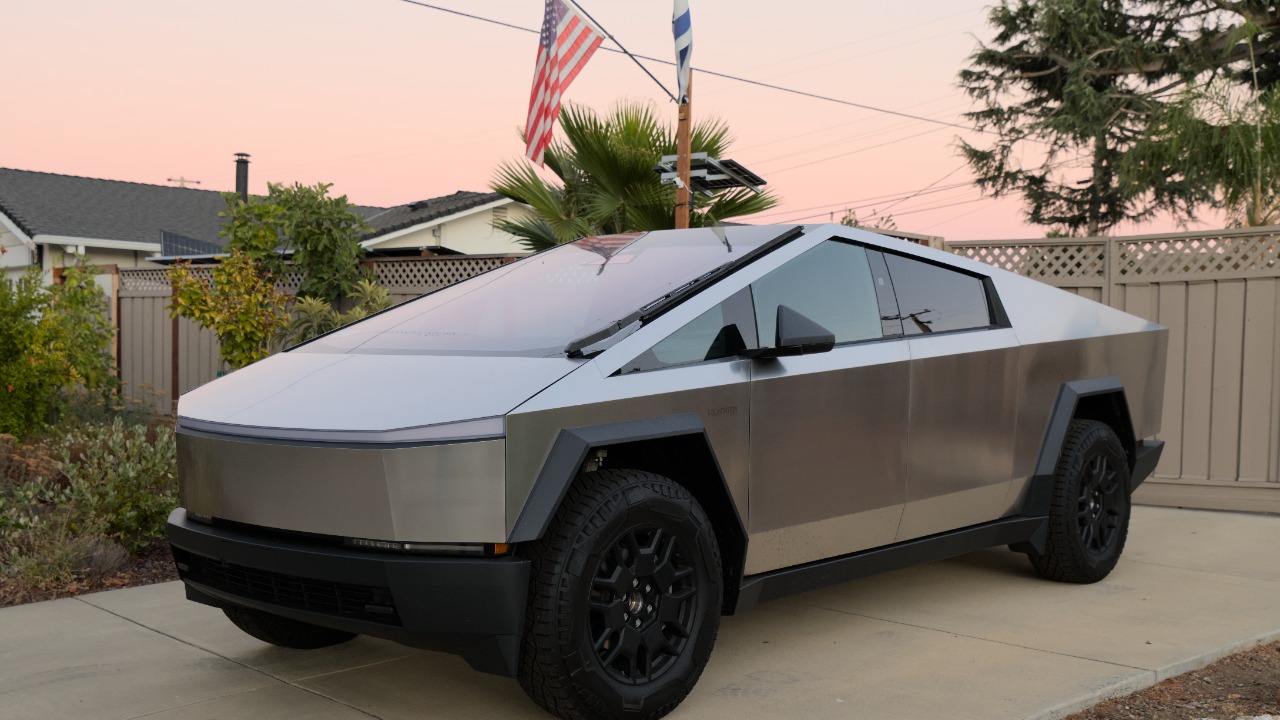
SpaceX is quietly turning Tesla’s most polarizing pickup into a fleet workhorse, ordering well over a thousand Cybertrucks at a moment when retail buyers are pulling back. The scale of those internal purchases is large enough to move Tesla’s sales needle on its own, raising questions about where genuine demand ends and corporate self-dealing begins. At the same time, the trucks are already showing up at launch sites and test facilities, hinting at how Elon Musk intends to fold his stainless-steel pickup into the broader Musk industrial ecosystem.
What looks at first like a quirky branding play is, in practice, a sizable capital deployment that could reshape both Tesla’s balance sheet and SpaceX’s operations. I see a story that sits at the intersection of hype management, logistics planning, and the unusual corporate structure that lets one billionaire route money between his own companies at industrial scale.
SpaceX’s Cybertruck buying spree, by the numbers
The headline figure is stark: reports indicate that Elon Musk’s SpaceX has already committed to more than 1,000 Cybertrucks, instantly making the rocket company one of Tesla’s largest single customers. That volume is not a rounding error for a vehicle that is still ramping production, it is a material chunk of the entire market footprint. When a single buyer so closely tied to the CEO absorbs that many units, it inevitably blurs the line between organic demand and internal subsidy.
Even conservative pricing assumptions turn this into a major transaction. One analysis notes that, Assuming SpaceX bought only the base variant, the outlay would still come to about $80 m, or roughly $80 million, for the initial batch alone. That is before counting any higher-spec trims or follow-on orders, which some reports suggest could push the total value into the “tens of millions of dollars’ worth of Cybertrucks, potentially over a hundred million” range as SpaceX keeps adding vehicles to its roster.
Why Tesla needs a friendly mega-customer right now
The timing of this internal buying binge is not accidental. Registration data show that Tesla sold just 5,385 Cybertrucks in the United States in the third quarter, a precipitous drop of 62 percent from earlier in the year. For a halo product that was supposed to energize the brand and draw new buyers into showrooms, that kind of slide is a warning light on the dashboard. It suggests that the initial wave of enthusiasts has already been served and that mainstream truck buyers remain skeptical of the angular EV.
That slump lands against a backdrop of much loftier ambitions. When the Cybertruck first went on sale, Tesla CEO Elon Musk told investors that by 2025 he expected annual sales to reach 250,000 units, a target that now looks distant given the current trajectory. With demand softening and production lines already tooled up, Tesla has a powerful incentive to find alternative outlets for unsold inventory. In that context, a captive buyer like SpaceX, which can absorb hundreds of vehicles at a time, becomes a financial pressure valve as much as a logistics solution.
From “Hundreds of Tesla Cybertrucks” to a full-blown fleet
The scale of SpaceX’s appetite did not emerge overnight. Earlier in the year, observers spotted Hundreds of Tesla Cybertrucks being delivered to Elon Musk’s private companies, SpaceX and xAI, as Tesla was having issues selling the electric pickup truck into the broader market. Those early shipments looked like opportunistic transfers of unsold stock, a way to clear storage lots while giving Musk’s other ventures some eye-catching hardware for their campuses. The trucks quickly became a familiar sight around Starbase and other facilities, parked alongside Starlink dishes and Falcon hardware.
What has changed more recently is the formalization and expansion of those purchases into something closer to a dedicated fleet program. Reports now describe SpaceX buying tens of millions of dollars’ worth of Cybertrucks, with some estimates suggesting the total could climb to over a hundred million as additional batches are ordered. In other words, what started as Hundreds of Tesla Cybertrucks trickling into private compounds has evolved into a structured pipeline of vehicles flowing from Tesla’s factories to SpaceX’s launch sites and test ranges.
How SpaceX plans to use a thousand stainless-steel pickups
On the ground, the Cybertruck is less a status symbol and more a rolling tool chest for a company that builds and launches rockets in remote locations. SpaceX operates sprawling sites in South Texas and Florida where crews need to move people, equipment, and Starlink hardware across rough, often unpaved terrain. A large fleet of electric pickups can shuttle engineers between pads, tow small trailers, and serve as mobile power sources for field gear, all while cutting fuel costs and tailpipe emissions compared with traditional diesel trucks.
According to one detailed account, many of the new vehicles are being concentrated at SpaceX’s facilities in South Texas, where the company is scaling up Starship launches and related infrastructure. There, Cybertrucks can double as both transport and marketing props, lining access roads and staging areas in a way that visually fuses Tesla’s design language with SpaceX’s stainless-steel rockets. The trucks also give SpaceX a testbed for operating electric vehicles in harsh coastal environments, data that could feed back into Tesla’s understanding of durability and maintenance needs.
The accounting optics: “Cybertrucks selling like hotcakes to Elon himself”
From a distance, the arrangement looks like a classic case of a company buying its own product to keep the sales chart pointing up. One sharp commentary described Cybertrucks selling like hotcakes to Elon himself, calling it “the most expensive version of buying one’s own book to make the bestseller list.” The analogy captures the core concern: that internal purchases can inflate demand metrics in ways that are technically accurate but misleading about the underlying consumer appetite.
Critics argue that this kind of intra-empire dealmaking risks crossing from savvy inventory management into what one writer bluntly labeled book-cooking. With a base price that still positions the Cybertruck as a premium vehicle in Tesla’s most important market, shifting hundreds or thousands of units to related parties can make quarterly numbers look healthier than they would if the company relied solely on independent buyers. The fact that these deals involve Elon, wearing different corporate hats, only heightens scrutiny of how revenue is recognized and how sustainable the apparent growth really is.
SpaceX’s orders as a lifeline for slumping demand
For Tesla’s income statement, the SpaceX orders are more than a curiosity, they are a meaningful revenue stream at a fragile moment. One analysis framed the situation bluntly, noting that Elon Musk’s SpaceX purchases over 1,000 Cybertrucks as demand plummets, and adding the pointed aside, “You have to wonder what other tricks they pulled.” That framing underscores how closely investors are watching for any sign that Tesla is leaning on related-party transactions to smooth out a bumpy product launch.
Even so, the cash is real. Making a small dent in Tesla’s broader revenue base still translates into tens of millions of dollars in sales for Tesla from these internal deals alone. For a company that has heavily reduced Cybertruck production in response to weaker-than-expected retail interest, being able to redirect output into a guaranteed buyer like SpaceX helps keep factories running and suppliers engaged. The open question is how long that lifeline can be extended before markets demand a clearer picture of independent demand.
Inside the “tens of millions” bet on Cybertrucks
On the SpaceX side of the ledger, the decision to allocate such a large budget to Cybertrucks is a strategic bet on electrified logistics. Detailed reporting indicates that Elon Musk’s SpaceX bought tens of millions worth of Cybertrucks, with the total potentially rising to more than a hundred million as additional orders are placed. For a private company that already spends heavily on rockets, satellites, and launch infrastructure, that is still a significant slice of capital to park in a vehicle fleet, especially one that is effectively a first-generation product.
Supporters of the move argue that the trucks will pay for themselves over time through lower operating costs, reduced maintenance on internal combustion vehicles, and the branding synergy of having SpaceX crews roll up to launch pads in futuristic EVs instead of aging pickups. Detractors counter that the same functional needs could have been met with cheaper, proven work trucks from other manufacturers, and that the premium is effectively a transfer payment to Tesla at a moment when it needs the help. Both views can be true at once: the fleet may well be useful, and the timing still conveniently props up a sibling company.
The Musk ecosystem and blurred corporate boundaries
None of this would be possible without the unusual corporate constellation that orbits around Elon Musk. He simultaneously leads Tesla, SpaceX, and xAI, and has wide latitude to steer procurement decisions inside each. That is how Hundreds of Tesla Cybertrucks ended up at SpaceX and xAI sites just as Tesla was having issues selling the electric pickup truck to the broader public. The same overlapping leadership that enables rapid coordination on engineering also makes it easy to route large purchases between entities with minimal friction.
From a governance perspective, that overlap raises familiar questions about conflicts of interest and the adequacy of internal controls. When Elon Musk, as head of SpaceX, signs off on a massive order of Cybertrucks from Tesla, where he is also the central decision-maker, traditional arm’s-length safeguards are inherently weaker. Regulators and investors typically expect robust disclosure of such related-party transactions so they can judge whether the terms are fair and whether the deals are being used to mask deeper demand or liquidity problems. The current Cybertruck wave will likely become a case study in how far a modern tech empire can push those boundaries.
What the Cybertruck fleet signals about Tesla’s next chapter
Stepping back, the spectacle of SpaceX scooping up a jaw-dropping number of Cybertrucks is less about stainless steel and more about narrative control. Tesla entered this phase with bold promises, including the projection that annual Cybertruck sales would reach 250,000 units, and the reality so far has fallen short. In that gap, internal buyers like SpaceX and xAI provide a bridge, keeping production lines humming and headlines focused on impressive fleet photos rather than on softening retail demand.
At the same time, the trucks are not mere props. They are already embedded in daily operations at SpaceX’s facilities in South Texas and other sites, hauling gear and personnel in a way that genuinely supports the rocket business. The dual role of the Cybertruck as both a practical work vehicle and a financial shock absorber captures the essence of the Musk playbook: use one company’s products to solve another’s problems, and trust that scale, spectacle, and time will eventually make the numbers add up.
More From TheDailyOverview

Grant Mercer covers market dynamics, business trends, and the economic forces driving growth across industries. His analysis connects macro movements with real-world implications for investors, entrepreneurs, and professionals. Through his work at The Daily Overview, Grant helps readers understand how markets function and where opportunities may emerge.