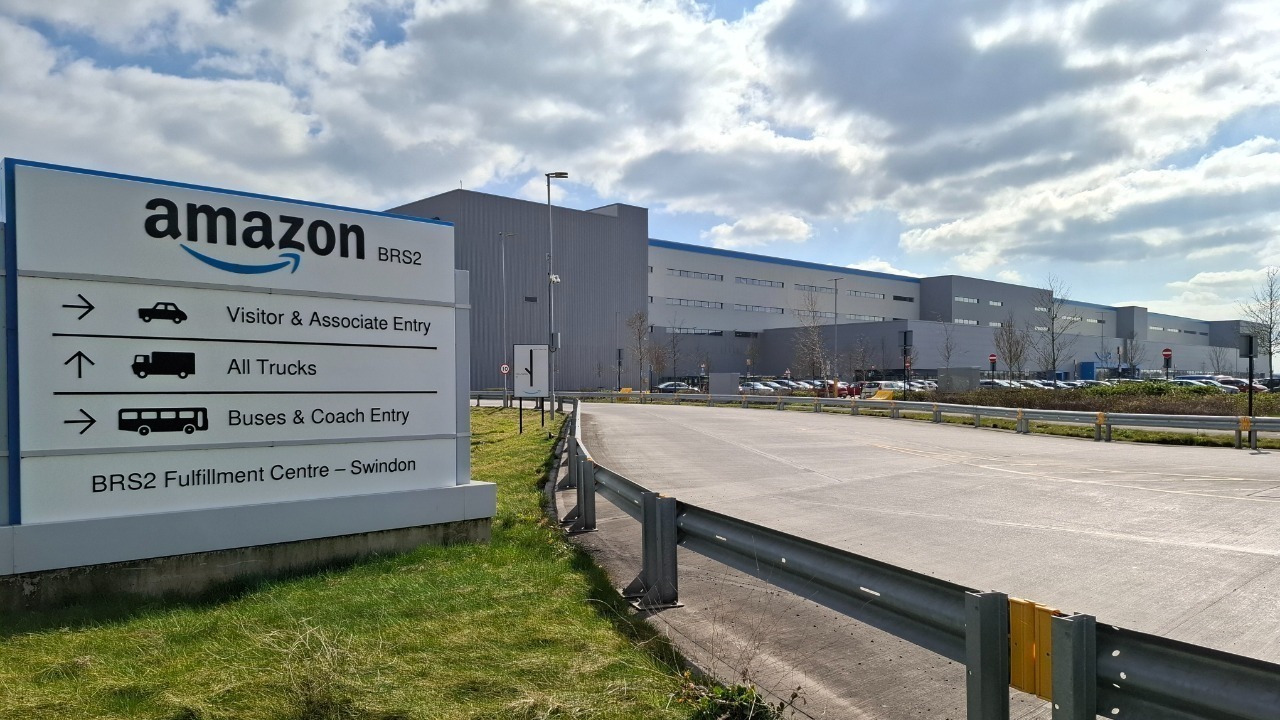
Amazon is preparing a logistics shakeup that could pull a $6 billion revenue stream away from the U.S. Postal Service and force as many as 6.3 billion packages a year onto new routes. The potential breakup would unwind a decades long alliance that helped both sides dominate American e‑commerce delivery and everyday mail service. I see it as a stress test for how far one company can bend the nation’s delivery infrastructure around its own growth plans.
If Amazon follows through, the shift will not just change who drops boxes on doorsteps, it will also reshape how the Postal Service funds its universal network and how competitors price the last mile. The stakes are unusually clear: a single contract decision could reorder the balance of power in U.S. shipping, from big coastal cities to the most remote rural routes.
The $6 billion question behind Amazon’s USPS rethink
At the center of this standoff is a customer relationship that has quietly become existential for the Postal Service. Amazon has long been the Postal Service’s top customer, providing more than $6 billion in annual revenue as of this year, a lifeline at a time when traditional mail volume continues to decline and package delivery has become the growth engine that keeps letter carriers on the road. That dependence cuts both ways, because Amazon still leans on the Postal Service for dense coverage in suburbs and rural areas where its own vans and contractors are thinner.
Now Amazon is weighing whether that $6 billion should stay inside a government network or be redirected into its own trucks, planes, and third party carriers. Reporting indicates the online retail giant is preparing to end its last mile partnership and is actively modeling how to reroute its flow of parcels away from USPS facilities and into an expanded in house system, a move that would reshape how millions get packages and could accelerate the decline in Postal Service mail volume that is already under way, according to one detailed analysis of Amazon’s impact.
How a 30‑year alliance reached a breaking point
The relationship between Amazon and USPS was not always this fraught. For roughly three decades, the Postal Service functioned as the quiet backbone of Amazon’s rise, carrying packages the “last mile” from regional hubs to front doors while Amazon focused on building fulfillment centers and software. That alliance allowed Amazon to promise fast shipping in every ZIP code without owning a national fleet on day one, and it gave USPS a way to replace shrinking letter mail with a river of parcels that kept carriers busy six and seven days a week.
Over time, though, the balance of power shifted as Amazon built its own planes, sort centers, and branded vans, then used that leverage to push for lower Postal Service rates and more flexible terms. By this year, Amazon Logistics was already handling a massive share of its own volume, and the current contract with the U.S. Postal Service is now set to expire on Oct. 1, 2026, a deadline that has intensified rumors that the partnership could end altogether and that the entire US package delivery landscape could be reshaped if the two sides walk away, as one Quick Summary of the negotiations put it.
Inside the stalled negotiations and contract brinkmanship
Negotiations over the next phase of the deal have reportedly stalled, and the sticking points go to the heart of how each side sees its future. Amazon wants more control over pricing and service levels so it can keep promising fast, cheap delivery to Prime members even as labor and fuel costs rise. USPS, under pressure to improve its own finances, is less willing to subsidize any single customer with below market rates, particularly one that is also building a competing network and could siphon away even more volume in the years ahead.
Those tensions have spilled into public view as reports describe how talks over the Amazon contract renewal have become a high stakes game of brinkmanship. One account of the discussions notes that USPS is now preparing to open bidding on last mile delivery work that had been closely associated with Amazon, signaling that postal leaders are planning for the absence of a new agreement and want other carriers to compete for that volume if Amazon walks, a shift captured in detail in a report on USPS plans to Open Bidding on Last Mile Delivery.
Amazon’s 6.3 billion package pivot and logistics ambitions
Amazon’s calculus is shaped by the sheer scale of its own network, which now rivals the legacy carriers. Last year, Amazon Logistics handled 6.3 billion parcels, just behind top player USPS’ 6.9 billion, according to figures attributed to Pitney Bowes that underscore how quickly Amazon has closed the gap with a government agency that once dominated the category. Those numbers show that Amazon is no longer a customer dabbling in delivery, it is a full scale carrier in its own right, with the volume to justify more planes, more regional hubs, and more direct control over routes.
That is why the company is evaluating plans to handle a larger portion of its estimated 6.3 billion annual packages through its own infrastructure instead of relying on USPS for the final handoff. One recent overview described this as a significant strategic shift that appears aimed at boosting margins and potentially driving a reacceleration in revenue growth by keeping more of the shipping economics inside Amazon’s ecosystem, a pivot that was framed as a broader logistics shift away from USPS in a detailed Dec overview of Amazon’s logistics shift.
What a $6 billion split means for USPS finances and service
For USPS, losing Amazon’s business would not just be a symbolic blow, it would punch a hole in the budget that supports universal service. The Postal Service has long relied on large commercial shippers to help cover the fixed costs of delivering to every address in the country, from dense apartment towers to remote rural roads. If a top customer that currently provides more than $6 billion in annual revenue walks away, postal leaders will have to decide whether to raise prices, cut service, or lean even harder on other big mailers to fill the gap, all while letter mail continues to decline.
The risk is that a sudden drop in volume could undermine the economics of routes that are already marginal, particularly in rural communities where Amazon packages have helped justify daily delivery. Analysts who follow the sector warn that pulling billions of parcels out of the postal network could rewrite U.S. last mile logistics and force USPS to rethink everything from carrier schedules to how it allocates trucks and sorting capacity, a scenario explored in depth in one assessment of how a $6 billion breakup could rewrite last mile delivery.
The biggest reroute in package history
The raw scale of the potential reroute is what sets this dispute apart from a typical contract fight. Reports describe how Amazon eyes a $6B USPS split as 6.3 billion packages risk the biggest reroute in history, a phrase that captures both the financial stakes and the operational shock that would ripple through sorting centers, highways, and neighborhood streets if that many parcels suddenly changed hands. No modern carrier has ever tried to shift that volume in such a compressed window, and even for a company that thrives on logistics, the execution risk is enormous.
From my perspective, the reroute would touch almost every link in the chain, from how fulfillment centers sequence outbound trailers to which carriers handle overflow during peak shopping seasons. If Amazon diverts those 6.3 billion packages into its own vans and partner networks, USPS will have to backfill the lost density on its routes or accept higher per piece costs, while competitors like UPS and regional players jockey for whatever share of the flow Amazon does not internalize. The prospect of that kind of upheaval is why one widely cited slideshow framed the situation as Amazon and USPS facing a crossroads where billions in revenue and the daily delivery experience of households nationwide are on the line, a view reflected in coverage of how Amazon eyes a $6B USPS split.
How Amazon is building a rival to the Postal Service
Amazon’s willingness to contemplate such a break is rooted in its confidence that it can stand up a rival network to the Postal Service. Over the past several years, the company has rolled out Amazon branded vans, expanded its air cargo fleet, and leaned on independent contractors to cover suburban and exurban routes that once belonged almost entirely to USPS. One social media post that captured the mood around the talks noted that Amazon Eyes Deliveries and is considering launching a competitor to the US Postal Service, with the implication that the company sees itself not just as a customer but as a direct alternative to the Postal Service’s role in everyday package delivery.
That ambition is now colliding with the reality of contract negotiations, where the same post pointed to a key sticking point in the negotiations that has made it harder for the two sides to find common ground. From my vantage point, Amazon’s strategy is clear: use the threat of taking its volume elsewhere to secure better terms, while simultaneously investing so heavily in its own infrastructure that it can follow through if USPS calls its bluff. The idea that Amazon could become a full fledged competitor to the Postal Service, rather than its largest client, is no longer hypothetical, as the Amazon Eyes Deliveries post made explicit.
Competitive fallout for UPS, regional carriers, and 3PLs
If Amazon and USPS part ways, the shock will not be contained to those two organizations. Private carriers like UPS and a growing ecosystem of regional delivery firms and third party logistics providers would see both opportunity and risk. On one hand, any volume that Amazon does not absorb into its own network could be put out to bid, giving nimble players a chance to win contracts in specific regions or for specialized services. On the other, a more vertically integrated Amazon that controls even more of its own last mile could squeeze margins for everyone else by setting aggressive delivery expectations that smaller carriers struggle to match.
Industry observers who focus on Simplifying US Logistics with Smart 3PL Services have argued that a $6 billion split between Amazon and USPS could open the door for new partnerships and technology driven routing models, particularly in urban areas where congestion and labor costs are highest. At the same time, they warn that the largest players will be best positioned to capitalize on the disruption, potentially accelerating consolidation in a sector where scale already confers major advantages, a dynamic that was highlighted in a detailed look at how Simplifying US Logistics with Smart Services might play out if Amazon shifts course.
Political pressure and the Trump era backdrop
The contract drama is unfolding against a political backdrop that adds another layer of complexity. President Donald Trump, now in his second term, has long been a vocal critic of how USPS prices its services for large shippers, and his administration has pushed for reforms that would put the Postal Service on a more commercially oriented footing. That context matters because it shapes how postal leadership approaches negotiations with Amazon, balancing the need to retain a crucial customer with pressure from Washington to avoid deals that look like subsidies.
One detailed report on the current talks noted that With Amazon’s current contract with the U.S. Postal Service set to expire in 2026, rumblings about a potential breakup have grown louder as the deadline gets closer to its end and as policymakers debate how much flexibility USPS should have in setting rates. From my perspective, the political scrutiny makes it harder for either side to quietly compromise, since any perceived giveaway could trigger backlash, a tension that was captured in coverage that framed the situation as breakup rumors intensifying as the contract end approaches.
What shoppers and small businesses should expect next
For consumers and small businesses, the most immediate question is whether a split would mean slower deliveries or higher shipping costs. Amazon has strong incentives to shield shoppers from any disruption, especially around Prime, and its track record suggests it will throw money and capacity at the problem to keep two day and next day promises intact. The bigger risk is for sellers who rely on USPS for their own direct shipments and for communities where the Postal Service’s ability to maintain daily routes depends on the extra density that Amazon packages provide.
Some reporting has already framed the situation in terms of how Amazon plans to end USPS partnership and expand its delivery network, with one summary noting that Amazon plans to end USPS partnership, expand delivery network and that Amazon has long been the Postal Service’s top customer, providing more than $6 billion in annual revenue in 2025. Another account pointed out that last year, Amazon Logistics handled 6.3 billion parcels, just behind top player USPS’ 6.9 billion, and warned that the impact of a breakup could hit sooner if the tie up ends abruptly, a scenario that would force small merchants to rethink which carriers they use and how they price shipping, as described in a report on how Last year, Amazon Logistics handled 6.3 billion parcels.
Why this fight will define the next era of U.S. delivery
Stepping back, I see the Amazon USPS standoff as a defining moment for how the United States organizes the mundane but critical task of moving packages from warehouses to doorsteps. The outcome will determine whether a public network built around universal service remains central to e commerce, or whether private giants like Amazon and UPS become the default carriers for most parcels while USPS retreats toward a narrower role. It will also test whether regulators and policymakers are comfortable with a single company controlling such a large share of the nation’s delivery infrastructure, especially when that company is also a dominant retailer and cloud provider.
For now, both sides are still talking, and there is room for a compromise that preserves some version of the partnership even as Amazon continues to expand its own fleet. Industry voices have noted that there is still a lot to work through, with one trade publication highlighting how Credit, Getty Images, Charles McClintock Wilson and By Toni McQuilken framed the situation as a complex negotiation where neither side can easily walk away without consequences. As shoppers click “buy” and small businesses print labels, the real test will be whether the eventual deal, or breakup, keeps packages moving smoothly without eroding the fragile economics that keep mailboxes full in every corner of the country, a balance that was underscored in coverage of Amazon considering cutting ties with USPS.
More From TheDailyOverview

Grant Mercer covers market dynamics, business trends, and the economic forces driving growth across industries. His analysis connects macro movements with real-world implications for investors, entrepreneurs, and professionals. Through his work at The Daily Overview, Grant helps readers understand how markets function and where opportunities may emerge.