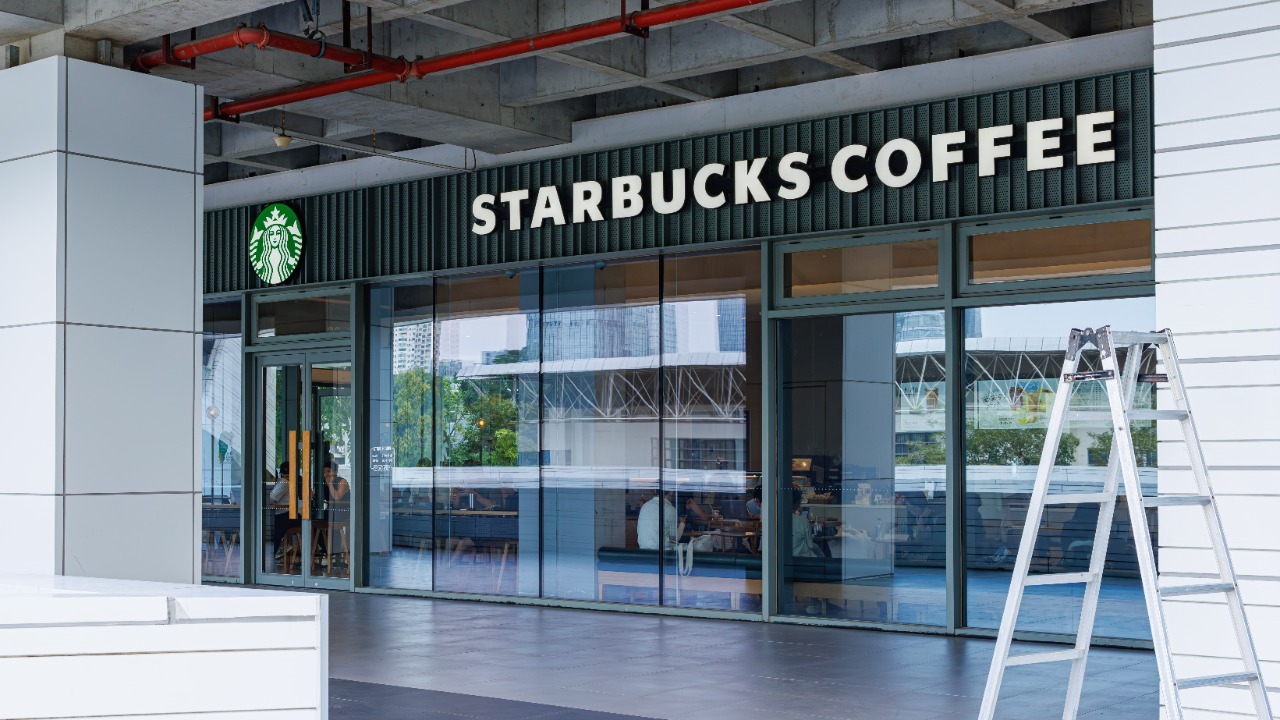
Starbucks has agreed to a sweeping labor settlement in New York that will cost the company $38.9M and expose years of scheduling abuses affecting baristas across the city. The deal, tied to more than 500,000 alleged violations of local worker protection rules, signals that predictable hours and fair pay are no longer optional line items in the service industry.
At its core, the payout is a rebuke of how a flagship brand handled basic workplace standards for thousands of hourly employees. It also lands at a moment when Starbucks is already under intense pressure from organizers, politicians, and customers who see scheduling as the frontline issue in the broader fight over low wage work.
The scale of the $38.9M New York settlement
The headline figure is striking on its own: Starbucks has agreed to a $38.9 m settlement in New York after city officials accused the company of widespread violations of local labor rules. The agreement is described as an unprecedented $38.9 million package that combines direct payments to workers with civil penalties, a scale that underscores how seriously regulators viewed the pattern of misconduct. For a company that has long marketed itself as a progressive employer, the size of the payout is a public acknowledgment that its scheduling practices fell far short of the standards New York expects.
According to the settlement terms, the company will provide compensation to about 15,000 current and former employees in New York who were affected by the violations, along with millions in additional penalties tied to the city’s enforcement powers. The structure of the deal reflects a dual goal: make workers whole for lost income and missed premiums, and send a clear deterrent signal to other large chains that might be tempted to treat scheduling rules as a suggestion rather than a requirement. The scope of the payout is detailed in a summary of the $38.9 million settlement that outlines both the worker compensation and the civil penalties involved.
What 500,000+ Fair Workweek violations actually mean
The raw number behind the settlement is even more jarring than the dollar figure. New York City officials accused Starbucks of more than 500,000 violations of the local Fair Workweek law between 2021 and 2024, a tally that suggests systemic problems rather than isolated mistakes. When a company racks up that many infractions in just a few years, it points to scheduling systems and management incentives that were fundamentally misaligned with the law’s requirements.
The Fair Workweek rules in New York City are designed to give hourly workers predictable schedules, advance notice of shifts, and compensation when employers make last minute changes. Allegations that Starbucks repeatedly ignored those protections, including claims that the company illegally altered schedules and failed to provide required premiums, cut to the heart of what the law was meant to prevent. A widely shared update on the case highlighted that STARBUCKS was set to PAY for New York City allegations of 500,000+ Fair Workweek violations from 2021–2024, framing the case as a test of whether a global brand can be forced to respect local labor standards. That framing is captured in an Oct social media reel that calls out STARBUCKS, PAY, New York City, Fair Workweek and the 500,000 figure directly.
How the Fair Workweek law is supposed to protect baristas
To understand why this settlement matters, I need to start with what the Fair Workweek law is designed to do. In New York City, the law requires large fast food and retail employers to post schedules in advance, limit last minute changes, and pay premiums when they do adjust shifts on short notice. It also restricts practices like “clopening,” where a worker closes late at night and then opens early the next morning, unless the worker consents and receives extra pay. These protections are meant to give hourly employees a measure of stability so they can plan child care, second jobs, or school around their work schedules.
When a company like Starbucks repeatedly violates those rules, the impact goes far beyond a few missed hours of pay. Workers can lose access to predictable income, face sudden cuts in weekly compensation, and struggle to manage basic life logistics. The settlement materials describe how Starbucks will now have to align its scheduling systems with New York’s requirements, including providing weekly compensation adjustments and paying millions in civil penalties for past violations. The legal analysis of the case, summarized in a Labor & Employment Law Daily Wrap Up, LITIGATION, NEWS, TRENDS report, emphasizes that Starbucks agreed to an unprecedented $38.9 settlement after repeatedly violating New York City’s Fair Workweek Law, a sign that regulators see these protections as central to the modern service economy.
Why New York’s enforcement strategy matters nationally
New York’s aggressive enforcement of its Fair Workweek rules against Starbucks is likely to reverberate far beyond city limits. When a jurisdiction secures a $38.9 million settlement from a marquee brand, other cities and states take notice, especially those that have adopted or are considering similar scheduling laws. Regulators now have a concrete example of how to document violations at scale, quantify harm, and negotiate remedies that combine restitution with meaningful penalties.
For national chains, the message is that compliance cannot be treated as a patchwork afterthought. If Starbucks can be held accountable for hundreds of thousands of violations in one city, other employers with similar scheduling models may face scrutiny in their own high profile markets. Legal observers have already pointed to the Starbucks case as a template for future enforcement, noting that the combination of worker payments and civil fines in New York reflects a more muscular approach to labor regulation. The detailed breakdown of how Starbucks repeatedly violated New York City’s Fair Workweek Law, and then agreed to an unprecedented $38.9 settlement, is laid out in the same Labor & Employment Law Daily Wrap Up, LITIGATION, NEWS, TRENDS analysis that labor lawyers are now reading closely.
How this fits into Starbucks’ wider labor battles
The New York settlement does not exist in a vacuum. Starbucks has been facing a wave of organizing and public pressure across the United States, with baristas pushing for better pay, benefits, and above all, more stable schedules. Earlier this year, a continuing strike by the company’s union at dozens of locations around the country highlighted how central scheduling is to workers’ demands. Employees on those picket lines have repeatedly said they want better hours and more predictable shifts, not just higher hourly wages.
That broader context matters because it shows that the Fair Workweek violations in New York were not just a local paperwork problem, but part of a national debate over how Starbucks manages its workforce. The same corporate systems that generated unstable schedules in New York likely shaped staffing patterns in other cities, even if local laws differ. Reporting on the ongoing strike notes that the development of the New York settlement came amid a continuing work stoppage at dozens of locations, where workers are demanding better hours and pointing back to early efforts to unionize at a Buffalo store as a turning point. Those dynamics are captured in coverage of how the development came amid a continuing strike and how workers want better hours as part of their push to unionize.
The earlier $35M deal and what changed
Before the $38.9M package came into focus, Starbucks had already agreed to pay $35M to New York City workers in a separate settlement tied to scheduling and labor concerns. That earlier deal signaled that the company was willing to put real money on the table to resolve disputes over how it treated baristas, but it did not fully address the scope of alleged Fair Workweek violations that later emerged. The progression from $35M to $38.9M reflects both the deepening of the legal case and the city’s insistence on a more comprehensive remedy.
In that prior agreement, Starbucks committed to pay $35 million to workers and to move toward more stable schedules, a pledge that was framed as a significant step for a company that had long relied on flexible staffing to match customer demand. The details of that commitment, including the promise to shift toward stable schedules for workers, are laid out in a report explaining how Starbucks has agreed to pay $35 million and what that means for scheduling practices. Taken together, the $35M and $38.9M settlements show a company being pushed, step by step, into a new model of compliance and predictability.
What the payout means for the 15,000 affected workers
For the roughly 15,000 workers covered by the New York settlement, the money is more than a headline figure. Many of these employees endured years of erratic schedules, last minute changes, and missed premiums that made it difficult to budget or plan their lives. The settlement’s structure, which directs a significant portion of the $38.9 million toward direct payments, is meant to compensate for that instability and the financial stress it created.
In practical terms, the payout will likely translate into varying amounts depending on how long each worker was employed, how many scheduling violations they experienced, and how the city’s formula allocates compensation. Some baristas may receive modest checks that help cover past shortfalls, while others who bore the brunt of repeated violations could see more substantial payments. The settlement summary notes that Starbucks will pay about 15,000 workers in New York through this $38.9 million agreement, combining weekly compensation adjustments with millions in civil penalties. Those specifics are detailed in the description of how Starbucks will pay about 15,000 workers as part of the $38.9 million settlement.
Corporate risk, from snowstorms to scheduling lawsuits
From a corporate risk perspective, the Starbucks case is a reminder that labor compliance now sits alongside more traditional operational threats like weather disruptions and supply chain shocks. Companies already track how events such as Heavy Snow Pushes Northeast From NYC, Raising Risk of Traffic and Air Delays, or Thailand’s Record Floods Paralyze Key Hubs for logistics, can affect their bottom line. Labor law violations, especially when they accumulate into hundreds of thousands of infractions, belong in the same risk conversation.
Investors and insurers increasingly expect large employers to manage these exposures proactively, whether through better scheduling software, stronger training for managers, or more robust internal audits. The Starbucks settlement shows what happens when those systems fail and regulators step in to fill the gap. A corporate profile that lists issues like Heavy Snow Pushes Northeast From NYC, Raising Risk of Traffic and Air Delays and Thailand, Record Floods Paralyze Key Hubs for as key operational concerns illustrates how companies already think about physical and logistical risk, and it is not hard to imagine labor compliance being added to that list. That broader risk lens is reflected in the company card for United Software Developers, Inc. (USD), where weather and infrastructure disruptions are flagged as critical factors, a framework that can easily extend to large scale labor disputes.
What comes next for Starbucks and worker protections
Looking ahead, the real test will be whether Starbucks treats the $38.9M payout as a one time cost of doing business or as a catalyst for deeper change. The company has already faced public scrutiny, union campaigns, and multiple settlements over its scheduling practices. If it fails to overhaul the systems and incentives that produced more than 500,000 Fair Workweek violations in New York City, it risks further legal action and reputational damage in other jurisdictions that are watching closely.
For workers and advocates, the settlement is both a victory and a starting point. It proves that local laws can be enforced against powerful employers, and that regulators are willing to pursue large scale remedies when companies fall short. At the same time, it highlights how much depends on sustained oversight and organizing to ensure that new scheduling commitments translate into real stability on the ground. As I see it, the Starbucks case will be studied not only as a major labor law enforcement action, but as a blueprint for how cities can push global brands toward fairer, more predictable work in an economy built on service jobs.
More From TheDailyOverview

Grant Mercer covers market dynamics, business trends, and the economic forces driving growth across industries. His analysis connects macro movements with real-world implications for investors, entrepreneurs, and professionals. Through his work at The Daily Overview, Grant helps readers understand how markets function and where opportunities may emerge.