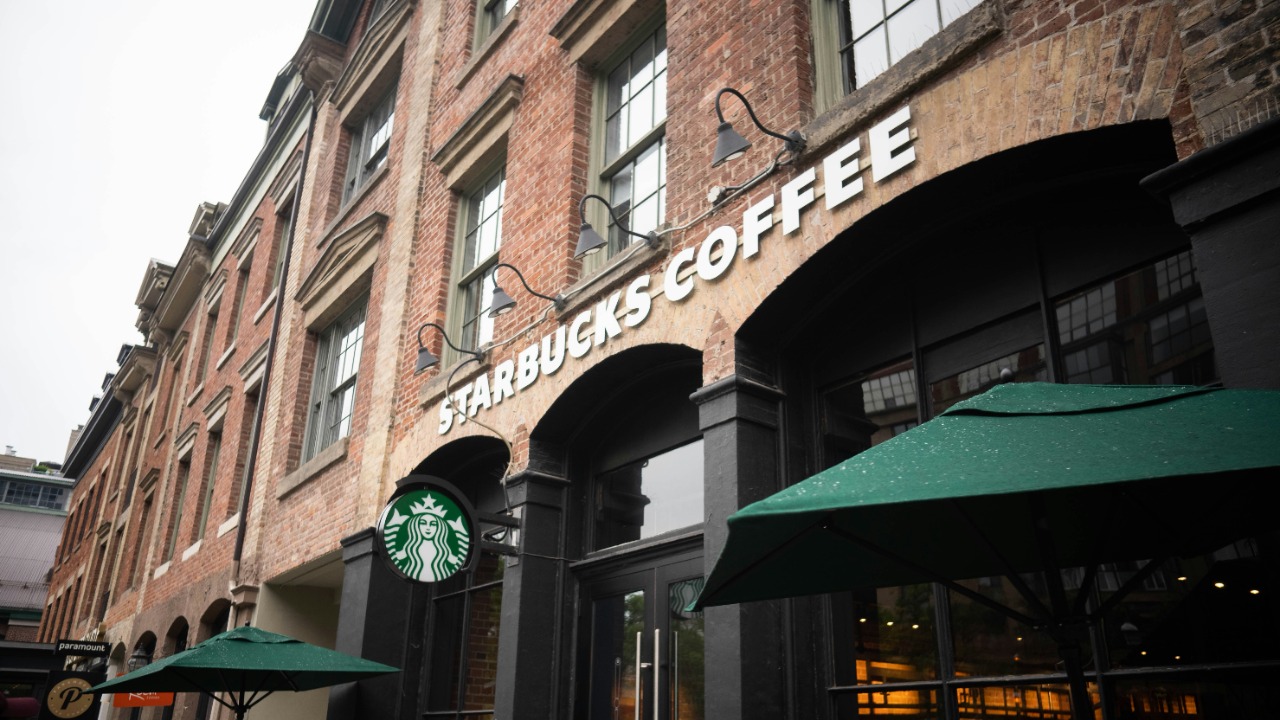
Starbucks has agreed to pay tens of millions of dollars to New York City baristas and shift supervisors after investigators concluded the company violated local labor protections, even as a growing strike keeps hundreds of its cafes under pressure. The payout, which will send roughly $35 million directly to workers, lands at the same moment organizers say they are waging the longest work stoppage in the company’s history, turning a local enforcement case into a national test of how far a global brand will go to reset its relationship with its own workforce.
As the settlement lands and the walkout widens, I see a collision between two forces that have been building for years: aggressive city-level enforcement of scheduling and wage rules, and a union campaign that has turned baristas into some of the most visible frontline workers in the country. The result is a rare moment when legal accountability, political scrutiny, and shop-floor organizing are all converging on the same company at once.
The largest worker protection case NYC has ever brought
New York City officials are treating the Starbucks case as a watershed in their effort to police how big employers treat hourly staff. City Hall has framed the agreement as a $38 Million resolution that ranks as the Largest Worker Protection Settlement in city history, a label that underscores how sweeping the alleged violations were. In that framing, Starbucks is not just another employer caught cutting corners, it is the marquee example Mayor Adams and the city’s Department of Consumer and Worker Protection, or DCWP, now point to when they argue that local law has real teeth.
Within that broader $38 M package, roughly $35 million is earmarked for current and former baristas and shift supervisors across NYC, with the remainder covering civil penalties and related costs. City investigators concluded that Starbucks failed to comply with local scheduling and wage rules, and the scale of the payout signals that the violations were not isolated to a handful of stores but instead touched a large share of the company’s footprint in the five boroughs. For a brand that has long marketed itself as a progressive employer, being at the center of what officials call the Largest Worker Protection Settlement is a reputational blow as well as a financial one.
How the $35 million will reach baristas and shift supervisors
The most immediate question for workers is how much money will actually land in their pockets. City officials say Most of the affected employees held hourly positions, and the payout formula is designed to reflect how long they spent on the job during the violation period. According to the enforcement documents, those hourly workers will receive $50 for each week they worked from mid 2021 through mid 2024, a structure that can add up quickly for anyone who has been behind the bar for several years.
That per week formula means a barista who has worked steadily since the summer of 2021 could see a payout in the low four figures, while a colleague who joined more recently would receive a smaller but still meaningful check. The city’s breakdown indicates that roughly $35 million of the total $38 Million package is reserved for these direct payments, with the balance going to penalties and administrative costs. For Starbucks, the structure avoids a drawn out trial and gives the company a predictable bill, but for workers it is a rare instance in which alleged violations of scheduling and wage rules translate into a clear, line item payment tied to every week they spent on the floor.
A growing strike and a union that says it is making history
The settlement is landing in the middle of a labor confrontation that Starbucks has not been able to contain. Starbucks Workers United, the union that has organized hundreds of stores, says its current walkout has become the longest strike in company history, a claim that reflects how sustained the pressure has become across the chain’s U.S. footprint. Organizers describe a rolling series of pickets and store shutdowns that have stretched from college towns to dense urban corridors, and they argue that the New York settlement only validates what they have been saying about working conditions all along.
Union leaders have framed the strike as a direct response to what they describe as chronic understaffing, unpredictable schedules, and stalled contract talks, and they have seized on the city’s findings as fresh evidence that Starbucks has not lived up to its own rhetoric. Reporting on the walkout notes that Starbucks Workers United is now using the phrase “longest in company history” as a rallying cry, a way to signal to both customers and investors that this is not a one day protest but a sustained campaign. The timing, with a record sized city settlement arriving just as the strike peaks, gives the union a powerful narrative: regulators and workers, in their telling, are finally catching up to the same set of problems.
Political pressure and the optics of a $35M payout
Labor disputes rarely stay confined to the shop floor once they reach this scale, and the Starbucks fight is no exception. Elected officials have begun appearing at picket lines, lending political cover to baristas who are risking paychecks to keep the strike going. Coverage of the settlement notes that the ongoing walkout has drawn local and national figures to the sidewalks outside stores, turning what might have been a technical enforcement story into a broader debate about corporate responsibility and the future of service sector work.
At the same time, the company is trying to reassure investors that it can absorb the cost of the settlement while keeping its growth story intact. Reports on the agreement point out that The Seattle based chain has recently reported its first increase in same store sales in nearly two years, a metric that suggests customers are still coming in even as the labor fight escalates. For politicians, that combination of strong sales and a $35 million payout is an easy way to argue that Starbucks can afford to do more, while for the company it is a reminder that every quarterly earnings call is now shadowed by questions about how it treats the people who make the drinks.
What this means for Starbucks and the wider labor landscape
For Starbucks, the New York settlement is more than a one off legal bill, it is a signal that local regulators are willing to scrutinize its labor practices store by store and city by city. The fact that Mayor Adams and DCWP chose to highlight the case as a Million Settlement With Starbucks and to emphasize that it ranks as the Largest Worker Protection Settlement in city history sends a clear message to other large employers that similar investigations could be coming. In that sense, Starbucks has become a test case for how aggressively cities can enforce fair workweek and wage laws against national brands that rely on part time, hourly labor.
The union campaign, meanwhile, is using the moment to argue that legal enforcement and collective action are complementary, not competing, strategies. Starbucks Workers United can now point to a concrete, city backed finding that workers were underpaid or improperly scheduled, and it can tie that directly to its own decision to launch what it calls the longest strike in company history. International coverage of the agreement notes that the company has agreed to pay $35m to New York City workers after alleged labor law violations, and that Last month employees represented by Starbucks Workers United walked off the job at hundreds of locations across the city, a pairing of facts that makes it harder for the company to dismiss the organizing drive as a fringe effort.
Looking ahead, I expect other cities with similar scheduling and wage laws to study the New York case closely, both for its legal arguments and for its political choreography. A settlement of this size, combined with a high profile strike, shows that local enforcement agencies, unions, and elected officials can align in ways that materially change how a global company does business in a single market. Whether Starbucks treats the $35 million payout as a turning point or simply a cost of doing business will shape not only its own labor relations, but also the playbook that other service sector workers reach for when they decide it is time to push back.
More From TheDailyOverview
- Tennessee loses $2.6B megafactory and faces major layoffs
- Retired But Want To Work? Try These 18 Jobs for Seniors That Pay Weekly
- What to do with your pennies after the U.S. stops minting them
- Home Depot CEO warns of a troubling customer trend in stores

Grant Mercer covers market dynamics, business trends, and the economic forces driving growth across industries. His analysis connects macro movements with real-world implications for investors, entrepreneurs, and professionals. Through his work at The Daily Overview, Grant helps readers understand how markets function and where opportunities may emerge.

