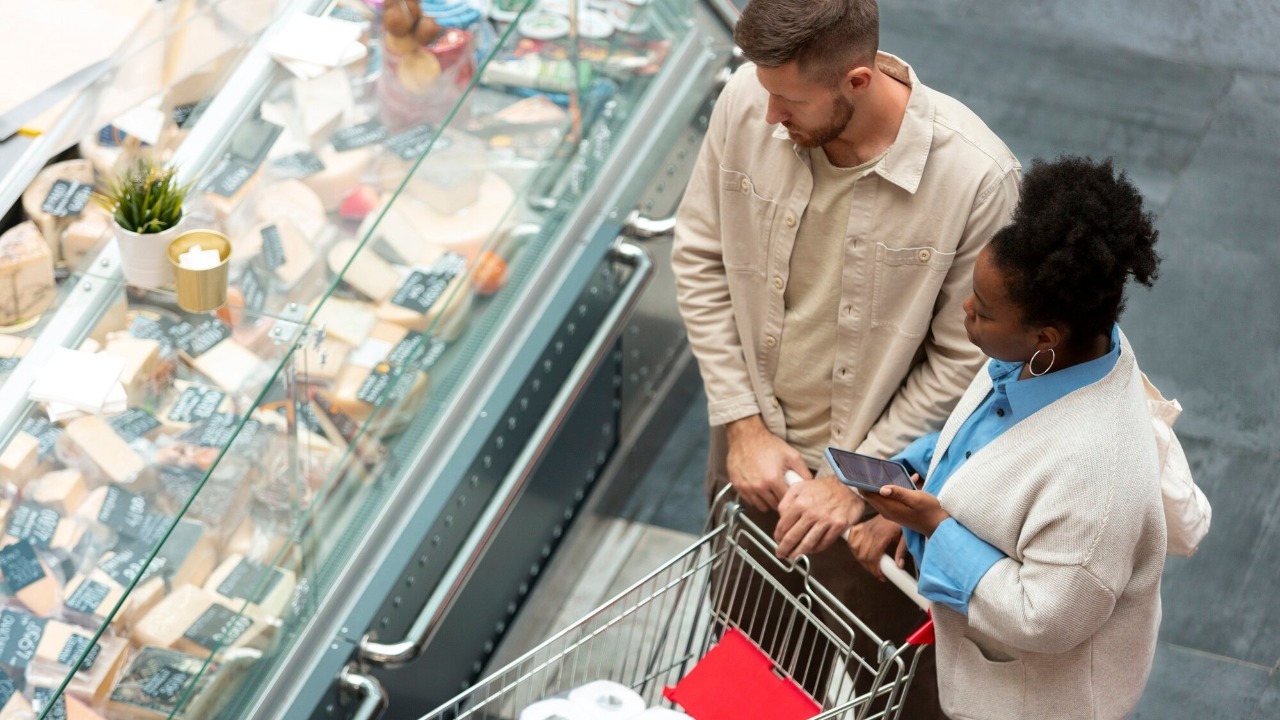
American shoppers are discovering that the worst of inflation may be over on paper, yet their grocery carts still tell a different story. Food in the United States now costs nearly one fifth more than it did in 2022, a jump that has turned routine supermarket runs into a monthly budgeting crisis for many households. The headline inflation rate has cooled, but the cumulative surge in food costs is still sitting in family bank statements and on every receipt.
That disconnect between official statistics and lived experience is what gives today’s sticker shock its sting. Even as the pace of price increases slows, the new baseline is far higher, and there is no sign that prices will simply roll back to pre‑2022 levels. Instead, the data show a grinding climb in both grocery and restaurant tabs, layered on top of the earlier spike.
The numbers behind a 20% jump
To understand why the shock feels so intense, it helps to separate the rate of inflation from the level of prices. Over the past few years, food costs rose faster than the overall consumer price index, and by early 2026 they were sitting about 19 percent higher than in 2022, a cumulative increase that does not disappear just because monthly inflation has cooled. In the government’s own data, the category that tracks meals and snacks purchased outside the home, known as “food away from home,” was still rising at an annual rate of 4.1% in the most recent report from The Labor Department, underscoring how persistent the pressure remains on restaurant tabs.
Grocery prices, the “food at home” side of the ledger, have also kept climbing, even if the pace has moderated. According to federal agriculture data, Average annual food‑at‑home prices were 1.2 percent higher in 2024 than in 2023, a smaller increase than the earlier spikes but still another step up from an already elevated base. When I look at the broader inflation report, the index for Food rose 0.7 percent in a single month, and the index for food at home also rose 0.7 percent, with Five of the six major grocery store food groups posting increases, a reminder that even modest monthly moves compound quickly when households are already stretched.
Why food inflation feels worse than the averages
Part of the reason this surge feels so punishing is psychological as much as mathematical. People encounter food prices constantly, whether they are grabbing a coffee, ordering takeout, or pushing a cart down the cereal aisle, so every uptick is a fresh reminder of how far their paychecks have to stretch. As one economist put it in an interview with CBS News, “We come into contact with food prices much more than we do other prices in the economy,” and that constant exposure magnifies the frustration when wages do not seem to keep up.
The pain is also unevenly distributed. Lower‑income families spend a larger share of their budgets on groceries and fast food, so a 19 percent jump in the cost of staples hits them far harder than it does higher‑income households that can more easily absorb the increase or trade up and down between brands. When I talk to shoppers who have cut back on fresh produce, meat, or school snacks, they describe a sense that the basics of a decent diet are slipping out of reach, even if the official inflation rate looks tame compared with the worst months of the pandemic era.
Beyond inflation: supply chains, profits and policy
It is tempting to blame the entire run‑up on broad inflation, but the story behind food prices is more complicated. A federal watchdog review of the pandemic period found that disruptions in shipping, labor shortages in meatpacking and farm work, and spikes in input costs like fertilizer all contributed to higher grocery bills. That analysis, published under the heading Inflation Wasnt the Only Reason Food Prices Increased, emphasized that Last year, U.S. consumers saw a mix of higher production costs and market concentration in certain sectors feed directly into what they paid at the Grocery Store.
Policy choices have also played a role, particularly in the most recent leg of the price climb. In December, food at home costs jumped at the fastest monthly pace since the early pandemic, with the category rising at a rate of 2.4 percent, and some analysts have zeroed in on new trade barriers as a culprit. One report framed the debate under the line Economists Blame Trump, arguing that Tariffs on key imports have raised costs for ingredients and equipment, which then ripple through to supermarket shelves and restaurant menus For the average household that has no control over global supply chains or tariff policy, the result is the same: higher prices at checkout.
What the forecasts say about 2025 and beyond
Even with the recent spike, the official outlook suggests that grocery inflation will slow from the breakneck pace of the past few years, but not reverse. The Department of Agriculture’s economists expect food‑at‑home prices to rise by 3.3 percent in 2025, a forecast that pegs grocery inflation at 3.3, roughly in line with the longer‑term historical average but still another increase on top of the nearly 20 percent jump since 2022. In other words, the experts are not predicting a return to the old price level, only a slower climb from here.
For families, that means the new normal is a world where a typical cart of basics simply costs more, and will likely keep edging higher. Some households are responding by trading down from national brands to store labels, buying more frozen vegetables instead of fresh, or shifting from beef to cheaper proteins like chicken and beans. Others are cutting back on restaurant meals, even as the “food away from home” index continues to rise at that 4.1% annual rate, because the gap between cooking at home and eating out has widened to the point where a family pizza night can feel like a luxury.
How households are coping with sticker shock
The cumulative effect of these increases shows up in monthly budgets in ways that are both obvious and subtle. One analysis of household spending patterns found that the typical family is now paying about 100 dollars a month more for groceries than it did before the recent surge, a figure that aligns with the idea that Sticker Shock over Food Prices Are Nearly 20 percent Higher Than They Were has become a defining feature of the current economy. For a middle‑class household, that extra 100 dollars might mean postponing a vacation or cutting back on streaming subscriptions; for a lower‑income family, it can be the difference between paying the utility bill on time and falling behind.
In conversations with shoppers, I hear a mix of resignation and quiet anger. People are downloading coupon apps, timing their trips around weekly sales, and driving to discount chains like Aldi or Dollar General to stretch their dollars, yet they still walk out feeling that their money does not go as far as it used to. Food banks report higher demand even in communities where unemployment is low, a sign that paychecks are being eaten away by necessities rather than discretionary splurges. Until the combination of slower inflation, stronger wage growth, and policy changes around issues like tariffs and market concentration start to ease that pressure, the sense of sticker shock at the supermarket is likely to remain a central, and painful, part of American economic life.
More From The Daily Overview

Grant Mercer covers market dynamics, business trends, and the economic forces driving growth across industries. His analysis connects macro movements with real-world implications for investors, entrepreneurs, and professionals. Through his work at The Daily Overview, Grant helps readers understand how markets function and where opportunities may emerge.

