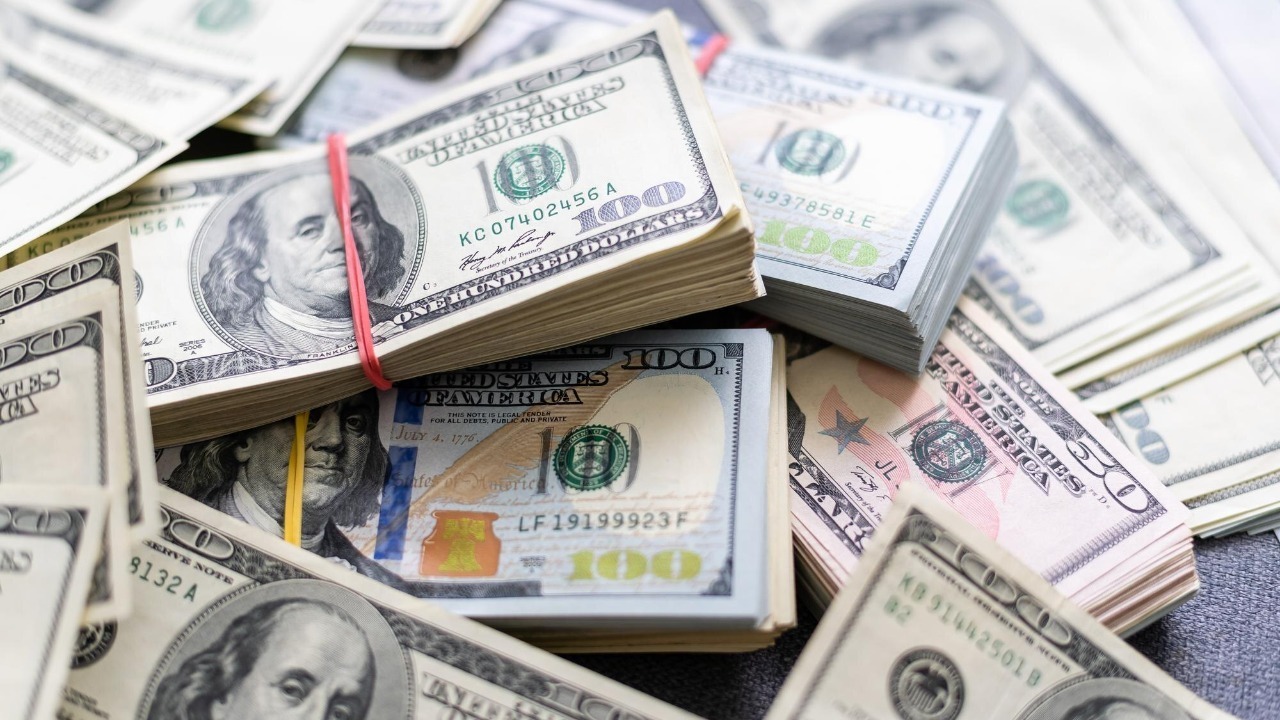
The United States dollar still anchors the global financial system, but its dominance is no longer uncontested. From Beijing to the BRICS capitals, policymakers are building alternatives that could slowly chip away at the greenback’s central role in trade, reserves, and cross‑border payments. I see three contenders emerging as the most serious challengers: the euro, the Chinese yuan, and a proposed BRICS trade currency.
None of these rivals is poised to dethrone the dollar overnight, and the latest reserve data still show a wide gap. Yet each is backed by a distinct economic and political project, and together they sketch a future in which the world’s monetary power is more fragmented, more regional, and more contested than at any point since the end of the Cold War.
The euro: the established challenger with structural limits
When I look at the current hierarchy of money, the euro is still the only currency that can plausibly be called a peer competitor to the dollar. In global foreign exchange reserves, the common European unit is firmly in second place, with data on Dollar Still Dominates showing that no other major currency comes close to its share of total holdings. Central banks hold the euro because it is backed by a large, advanced economy, deep capital markets, and a long record of low inflation, all of which make it a natural hedge against dollar risk. The euro’s role in trade invoicing, especially within Europe and in energy contracts with nearby suppliers, reinforces that status.
Yet the same structure that gives the euro its weight also constrains its ability to fully rival the dollar. The currency is issued by a monetary union that lacks a single fiscal authority, which means there is no eurozone equivalent of the United States Treasury market as a unified, safe asset. Investors must navigate a patchwork of sovereign bonds from countries such as Germany, France, and Italy, each with different risk profiles and political dynamics. That fragmentation limits the euro’s appeal as a universal store of value, even as it remains the default alternative for reserve managers who want to diversify away from the greenback without venturing into more experimental territory.
The Chinese yuan: industrial power meets financial ambition
The Chinese yuan is the most visible rising challenger, and its trajectory is tightly linked to China’s industrial and trade clout. As China has moved up the value chain, the country’s export machine has shifted from low‑cost manufacturing to higher‑tech products and services, a change that has strengthened its leverage in global supply chains. Reporting on the internationalization of yuan links this industrial competitiveness to a broader push to settle more trade in the Chinese currency and to make yuan‑denominated assets more attractive to foreign investors. In practice, that means encouraging exporters and importers to invoice in yuan, expanding swap lines with partner central banks, and gradually opening domestic bond markets.
From my perspective, the yuan’s greatest strength is that it is embedded in real economic relationships, from infrastructure projects to technology partnerships, rather than being sold purely as a financial product. However, its advance is constrained by capital controls, questions about legal transparency, and the central role of the state in China’s financial system. Even as more contracts are written in yuan and more central banks add it to their reserves, the currency still lacks the full convertibility and institutional trust that underpin the dollar and, to a lesser extent, the euro. The result is a steady but cautious rise: the yuan is clearly gunning for a larger share of global finance, yet it is doing so within a framework that prioritizes domestic stability over rapid liberalization.
The BRICS trade currency: a political project with technical momentum
The most ambitious attempt to build a direct counterweight to the dollar is emerging from BRICS, the grouping that brings together Brazil, Russia, India, China, and South Africa. Members have signaled that they want a shared instrument for cross‑border transactions, and reporting on the planned BRICS currency describes a project aimed at launching a new unit for trade by 2026. Unlike the euro, this would not replace national currencies at home. Instead, it is conceived as a parallel medium for settling trade and investment flows among BRICS members and potentially with aligned partners, reducing exposure to US sanctions and dollar funding shocks.
For such a currency to matter, it needs a robust payment backbone, and that is where the group is quietly making progress. Analysts tracking a dedicated BRICS payment system describe work on interoperable platforms that can rival SWIFT by harmonizing messaging protocols and cybersecurity frameworks. Earlier tests of a prototype have focused on ensuring that banks in different BRICS countries can communicate and clear transactions without routing everything through Western infrastructure. In my view, this plumbing is at least as important as the unit of account itself, because it determines whether companies and banks can actually use the new currency at scale rather than treating it as a symbolic gesture.
Gold‑linked designs and the search for trust
Beyond the political symbolism, the architects of a BRICS trade unit are experimenting with ways to make it credible to markets that are used to the legal and institutional backing of the dollar. One of the most concrete steps so far has come from the Institute for Economic Strategies of the Russian Academy of Sciences, which, according to recent reporting, has developed a prototype for a trade currency that would be backed 60 percent by a basket of BRICS national currencies and 40 percent by physical gold. I see this hybrid design as an attempt to blend the flexibility of fiat money with the perceived stability of a tangible reserve asset, while also anchoring the unit in the economic weight of the member states.
The gold component is not just a technical detail, it is central to the political pitch. A separate initiative described as an international group making a bold move to simplify gold‑backed trade shows how some policymakers and financiers are trying to build settlement systems that rely on bullion rather than on the liabilities of any single central bank. By tying a portion of the BRICS unit to physical gold, its designers hope to reassure users that its value cannot be unilaterally diluted by one government’s monetary policy. At the same time, this approach introduces its own challenges, from the logistics of storing and auditing reserves to the risk that gold price volatility could transmit instability into the currency’s value.
Why “strongest” does not always mean “most influential”
Whenever the future of the dollar is debated, lists of the “strongest” currencies tend to circulate, often highlighting units like the Kuwaiti dinar that trade at a high price against the US dollar. A recent ranking of the Top Strongest Currencies in the World in 2026, for example, puts the Kuwaiti Dinar at the top, ahead of other tightly managed Gulf currencies. These rankings are useful reminders that exchange rates reflect local economic structures, such as oil wealth and currency pegs, rather than global influence alone. A dinar that buys more dollars than a euro does not automatically become a reserve currency, because it lacks the deep markets, legal infrastructure, and geopolitical reach that underpin the dollar’s role.
For a currency to truly challenge the US unit, it needs more than a favorable conversion rate. It must be widely used in trade invoicing, held in significant quantities by central banks, and supported by large, liquid markets in government and corporate debt. That is why the euro, the Chinese yuan, and a potential BRICS trade currency matter far more to the global balance of monetary power than the headline‑grabbing “strongest” units. Each of these three is embedded in a broader economic and political project, from European integration to China’s industrial ascent and the BRICS effort to build alternatives to Western‑dominated systems. The dollar still sits at the center of that system, but the contest is no longer about whether it will face rivals, only about how quickly those rivals can turn ambition into usable, trusted money.
More From The Daily Overview

Grant Mercer covers market dynamics, business trends, and the economic forces driving growth across industries. His analysis connects macro movements with real-world implications for investors, entrepreneurs, and professionals. Through his work at The Daily Overview, Grant helps readers understand how markets function and where opportunities may emerge.

