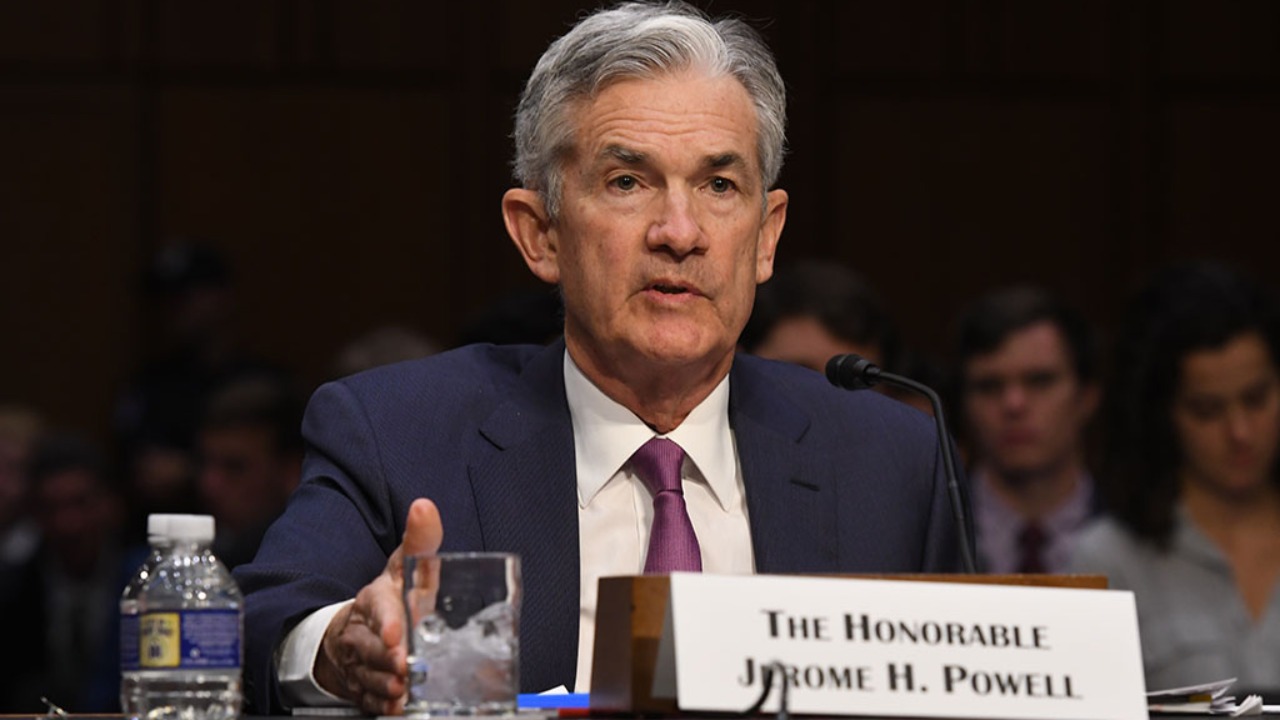
Investors entered 2026 riding a powerful bull market and a wave of optimism about earnings, but that confidence is colliding with a stark warning from Federal Reserve Chair Jerome Powell. After a year in which major indexes surged and valuations stretched, Powell has signaled that equity prices look expensive and that policy makers are in no rush to rescue markets from any correction. The question hanging over Wall Street is not just whether a stock market crash is coming, but how prepared investors really are if the cycle finally turns.
The tension is clear: economic data point to solid growth and a “firm footing,” yet the central bank is openly uneasy about how far asset prices have run ahead of fundamentals. That disconnect is what I see rattling traders more than any single rate decision, because it suggests the Fed is willing to tolerate more market volatility than investors have grown used to over the past decade.
Powell’s valuation warning collides with a euphoric bull market
At the heart of the anxiety is Powell’s own assessment of the market. In September, Federal Reserve Chair Jerome Powell warned that equity prices were “fairly expensive by many metrics,” a message that has been amplified in fresh coverage of a potential Stock Market Crash and framed as an Urgent Warning for Investors. That caution has been repeated in analysis highlighting how the S&P 500, tracked by the SNPINDEX: GSPC, has added substantial gains even as valuations climb further above historical norms. When the central bank chief effectively tells investors that stocks look pricey, it undercuts the assumption that policymakers will always lean against sharp drawdowns.
That warning lands in a market many strategists still describe as “all gas, no brakes.” Earlier this year, Jan commentary from Hardika Singh, an economic strategist at Fundstrat, captured the mood by saying the bull market was running hot and broad, even as some pockets looked stretched. Analysts cited in that same discussion noted that forward price-to-earnings ratios on the S&P 500 had pushed above 22, a level that does not guarantee an imminent crash but has historically preceded periods of weaker returns. When I weigh Powell’s language against that backdrop, it reads less like a market call and more like a reminder that the Fed’s job is price stability, not protecting portfolios.
Fed policy: steady rates, firmer growth, and less of a safety net
Monetary policy itself is not flashing red, which is part of what makes the current moment so tricky to read. The Board of Governors of the Federal Reserve System voted unanimously to maintain the existing target range for the federal funds rate, according to its latest note on Decisions Regarding Monetary. That decision was paired with language that the U.S. economy is expanding at a solid pace, suggesting policymakers see little need to either slam the brakes or rush into cuts. The Federal Reserve’s stance effectively keeps financial conditions tight enough to lean against inflation, but not so restrictive that growth is choked off.
In its latest rate decision, the Fed held its key interest rate steady in a range that officials still consider appropriate, while acknowledging that the economy is expanding at a. Powell reinforced that message in his press conference, saying the economy is on a “firm footing” as it comes into 2026, a point underscored in live updates that quoted Powell directly. From my perspective, that combination of steady rates and solid growth is exactly what unnerves some investors: it implies the Fed has room to prioritize inflation and financial stability over cushioning any equity selloff, especially if it believes asset prices have run ahead of fundamentals.
Optimistic forecasts meet stretched valuations
Wall Street’s base case for 2026 is still upbeat, which is why Powell’s caution feels so jarring. A prominent Investment Outlook framed U.S. equities as the main engine of global growth, arguing that Stocks Shine in the Spotlight of Favorable Conditions and that Risk assets are poised for a strong year. That view leans heavily on expectations of resilient consumer demand, moderating inflation, and eventual rate cuts that could support higher multiples. In that scenario, a pullback would be a buying opportunity rather than the start of a prolonged bear market.
Other strategists echo that constructive tone but flag the same valuation concerns Powell has raised. A Jan note on the 2026 Market Outlook argued that, in their view, the outlook for equities remains positive, with earnings growth expected to support further gains in the year ahead, while also stressing that these are subjective judgments rather than guarantees of performance, as highlighted in the Jan commentary. Meanwhile, a separate 2026 stock market outlook noted that the bull market is still charging but narrower than it looks, with Inflation and the dominance of a few mega-cap tech names doing much of the heavy lifting, a dynamic captured in the Key takeaway that Inflation and the concentration of leadership could make the next leg higher more fragile. When I line up those forecasts with Powell’s warning, the picture that emerges is not of an inevitable crash, but of a market that has very little margin for disappointment.
Earnings expectations and the high-wire act of 2026
If there is a single pressure point that could turn a healthy correction into something more severe, it is earnings. At the heart of investor optimism is a highly bullish forecast that Analysts are projecting 14% to 16% annual earnings-per-share, or EPS, growth for 2026 compared with 2025, according to a detailed look at how At the moment, those projections are driving much of the enthusiasm for cyclical and growth stocks. If companies deliver on that EPS trajectory, today’s valuations will look more reasonable in hindsight, and Powell’s warning will be remembered as a prudent reminder rather than a harbinger of crisis.
The risk, of course, is that those earnings do not materialize. One analysis of whether the market will struggle in 2026 pointed out that a forward P/E above 22 on the S&P 500 has always eventually reverted closer to historical norms, even if it did not trigger an immediate collapse, a pattern highlighted in the discussion that began with the phrase Here. Another breakdown of Key Points around Powell’s September comments noted that In September, Federal Reserve Chair Jerome Powell was already flagging that valuations for 2025 earnings looked stretched, with consensus estimates for one year forward (2025) earnings, according to LSEG, embedded in the Key Points summary. From my vantage point, that means 2026 is shaping up as a high-wire act: if Analysts are right about EPS, the market can keep its balance, but any wobble in profits could quickly test how much risk investors are really willing to hold.
Global turbulence, local shocks, and what investors can control
Even if U.S. earnings hold up, the backdrop is hardly tranquil. At the Annual Meeting in Davos, the World Economic Forum used its Global Risks report to warn that Communities and local economies will be tested by overlapping shocks, from geopolitical tensions to climate-related disruptions, and that even well-prepared regions can be knocked off course, a theme laid out in detail in the Communities and analysis. Those kinds of global tremors can feed directly into corporate earnings, supply chains, and investor sentiment, especially in sectors like energy, semiconductors, and industrials that are deeply tied to cross-border flows. For a market already priced for perfection, any external shock could be the catalyst that exposes how dependent current valuations are on smooth macro conditions.
More From TheDailyOverview
*This article was researched with the help of AI, with human editors creating the final content.

Grant Mercer covers market dynamics, business trends, and the economic forces driving growth across industries. His analysis connects macro movements with real-world implications for investors, entrepreneurs, and professionals. Through his work at The Daily Overview, Grant helps readers understand how markets function and where opportunities may emerge.