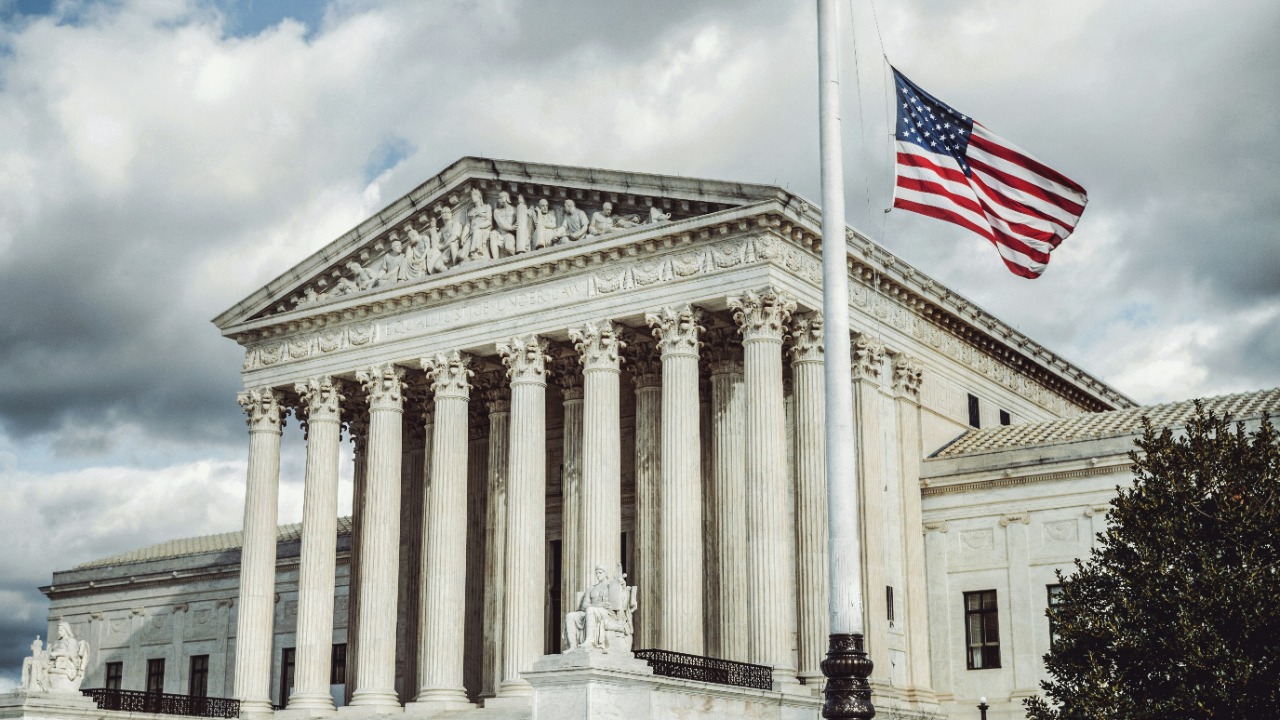
The Supreme Court ruled 6-3 on February 20, 2026, that President Trump exceeded his authority by using the International Emergency Economic Powers Act to impose sweeping tariffs, a decision that now puts more than $175 billion in collected customs revenue on a potential refund track. The ruling validated a legal challenge led by California and immediately triggered calls from state leaders for the federal government to return money already paid by importers. The fiscal fallout could punch a significant hole in federal revenue at a time when the administration had been counting tariff receipts as a budget centerpiece.
A 6-3 Ruling That Dismantles the IEEPA Tariff Framework
The Court’s decision confirmed that the president lacked the legal authority to use emergency powers for broad-based trade levies, siding with arguments California officials first raised when the state became the earliest challenger to the tariffs. The ruling strikes at the legal foundation of a tariff regime that had been in effect for roughly a year. During that time, the administration expanded its reach well beyond headline import duties. Over the summer of 2025, the White House issued an executive order ending de minimis exemptions, tying even small postal packages and low-value shipments to the effective IEEPA tariff rate. That move illustrates how deeply the emergency-powers framework had been woven into everyday commerce before the Court pulled the thread.
The practical effect of the ruling is that every dollar collected under IEEPA tariff authority is now legally suspect. Importers who paid duties on goods from key trading partners, across categories including electronics, apparel, and consumer goods, may have grounds to demand their money back. The Court has settled the question of legality, but it has not resolved how the federal government will unwind a system that touched virtually every segment of the import economy. The decision also sends a broader signal about the limits of emergency economic powers, warning future administrations that Congress, not the White House, must authorize sweeping changes to the tariff code.
$175 Billion in Revenue Now Subject to Refund Claims
Economists at the Penn Wharton Budget Model at the University of Pennsylvania moved quickly to quantify the damage. According to their February 20 analysis, up to $175 billion in potential refunds could result from the reversal of IEEPA tariffs. The estimate draws on tariff rates by product and country, Customs and Border Protection assessment snapshots, and Treasury receipts extrapolation, a methodology described in outside reporting on the study. The sheer size of the number reflects how aggressively the tariff regime was applied, not just to large commercial shipments but to the full spectrum of imports once de minimis exemptions were eliminated.
That $175 billion figure should be understood as the ceiling of exposure, not a guaranteed outflow. The actual refund total depends on how many importers filed formal protests during the liquidation process, a procedural step that the Penn Wharton team identifies as the primary refund pathway. Companies that did not protest within required windows may forfeit their claims, and some firms could decide that the administrative burden of pressing smaller refunds is not worth the cost. Still, major importers and their customs brokers routinely file protective protests as standard practice, meaning a substantial share of the collected revenue is likely contested. For the federal budget, even a fraction of $175 billion returning to importers would represent a serious fiscal event, especially given how central tariff revenue had become to the administration’s spending math.
The Revenue the Government Already Spent
The administration did not treat tariff collections as provisional. By the end of June 2025, the Department of Homeland Security publicly celebrated more than $100 billion in customs receipts, attributing the haul directly to President Trump’s trade policies and presenting it as proof that the aggressive tariff strategy was paying off. That announcement framed the tariffs as a financial success story, one that justified continued escalation. Customs duties continued climbing through the fall and into 2026, with the Treasury’s monthly receipts data for January 2026 reflecting the full weight of the expanded tariff regime, including the de minimis suspension and broader IEEPA-based surcharges.
The problem is that revenue already booked and spent does not simply vanish from the ledger when a court declares it was collected without legal authority. If importers successfully claim refunds, the Treasury will need to find the money elsewhere or add it to the deficit, effectively converting what had been treated as a revenue source into a retroactive liability. The administration had built a budget strategy on a legal theory the Supreme Court has now rejected, using tariff inflows to offset other priorities and to argue that its trade agenda supported domestic programs. Unwinding that stream while the government has already allocated the funds creates a mismatch that Congress will eventually need to address, either through new revenue measures, spending cuts, or a willingness to tolerate wider deficits at a moment when interest costs are already consuming a larger share of the federal budget.
California’s Legal Gamble and the Refund Push
California’s leadership wasted no time pressing the advantage. Hours after the ruling, Governor Gavin Newsom called for immediate tariff refund checks, arguing that the Court’s decision confirmed what state lawyers had asserted from the outset: that the tariffs were illegal, economically reckless, and unconstitutional. California was the first state to sue over the IEEPA-based duties, framing the case not only as a defense of state ports and logistics hubs but also as a challenge to what it saw as an overreach of presidential power into Congress’s authority over trade. The Supreme Court’s 6-3 ruling effectively vindicates that strategy, turning a once-lonely lawsuit into the template for a nationwide refund campaign.
Newsom has now urged federal agencies to move quickly in processing claims and signaled that California is prepared to help coordinate outreach to affected businesses, particularly small and mid-sized importers that may lack in-house legal teams. State officials are also exploring whether they can recover indirect harms, such as lost jobs or reduced investment at West Coast ports. Those ports saw traffic diverted during the tariff period. While those broader damages are unlikely to be addressed through the customs refund process, the governor’s aggressive posture underscores how politically salient the issue has become. For California, the case is no longer just about checking presidential power; it is about delivering tangible cash back to companies that form a key part of the state’s trade-dependent economy.
What Comes Next for Trade Policy and the Budget
The Supreme Court’s decision leaves the administration with few easy options. Rebuilding a tariff program on firmer legal ground would require Congress to pass new legislation explicitly authorizing the kinds of broad, across-the-board duties the White House had imposed through IEEPA. That is a heavy lift in a closely divided legislature, particularly after importers, retailers, and consumer advocates have spent a year documenting higher prices and supply-chain disruptions. In the short term, the ruling is likely to push the administration toward more targeted trade remedies that rely on existing statutes, such as antidumping and countervailing duty laws, even as it publicly defends the broader goals of its tariff agenda.
On the fiscal side, the ruling arrives just as budget writers were counting on continued customs inflows to help narrow the deficit. If refund claims materialize anywhere near the upper-bound estimates, the Treasury could face a double hit, losing a future revenue stream while also paying out large sums to importers. That combination will sharpen debates in Washington over how to replace the lost money, whether through higher taxes elsewhere, additional borrowing, or spending cuts that could themselves slow growth. For now, the only certainty is that a legal gambit to stretch emergency economic powers into a de facto tariff code has failed—and that the bill for that experiment, potentially running into the tens or even hundreds of billions of dollars, is only beginning to come due.
More From The Daily Overview
*This article was researched with the help of AI, with human editors creating the final content.

Grant Mercer covers market dynamics, business trends, and the economic forces driving growth across industries. His analysis connects macro movements with real-world implications for investors, entrepreneurs, and professionals. Through his work at The Daily Overview, Grant helps readers understand how markets function and where opportunities may emerge.

