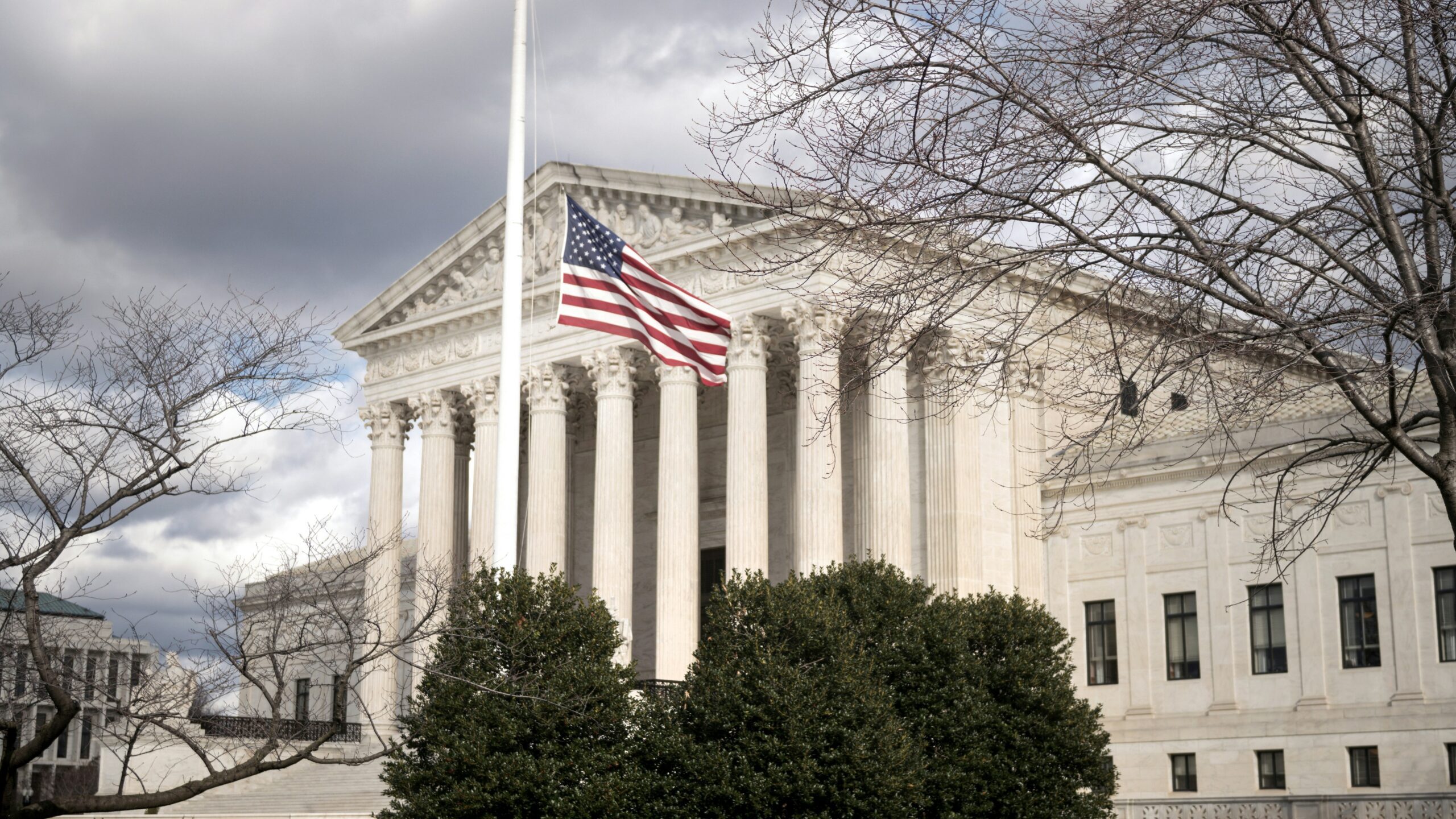
The Supreme Court is weighing whether President Trump’s tariffs imposed under the International Emergency Economic Powers Act (IEEPA) are legal, and the outcome could rip a massive hole in the federal budget. The case, Learning Resources, Inc. v. Trump (docket 24-1287), has already drawn sharp analysis from economists and legal scholars who warn that striking down the tariffs would eliminate a revenue stream the administration has baked into its fiscal plans. With the Congressional Budget Office already projecting ballooning deficits, the loss of tariff income would force Washington into painful choices about spending and taxes.
What the Court Is Actually Deciding
The legal question is narrow but the fiscal consequences are enormous. Importers challenged the president’s authority to levy tariffs through IEEPA, a statute originally designed to let the executive branch freeze assets and restrict transactions during national emergencies. The challengers argue Congress never intended IEEPA to serve as a backdoor tariff tool, and lower courts agreed. The Supreme Court heard oral arguments in the case, and a ruling is expected before the term ends.
Analysts at the Brookings Institution concluded that “on balance, the lower courts have acted appropriately” in blocking the IEEPA tariffs. Their review examined both the legal framework and the economic stakes, finding that the statute’s text does not support the broad trade powers the administration claims. If the justices agree, every dollar collected under these tariffs becomes legally suspect, and the government could face demands for refunds on duties already paid by importers.
A $2 Trillion Fiscal Hole
The budget math gets ugly fast. Bloomberg reported that a tariff ruling against the administration threatens a $2 trillion fiscal hole in Trump’s broader economic plan, reflecting not just the direct loss of customs revenue but also the downstream effects on trade policy, domestic manufacturing incentives, and the administration’s ability to use tariff threats as negotiating tools with trading partners. Losing the legal authority to impose these levies would strip away a pillar of the president’s economic strategy at a moment when deficit pressures are already intensifying.
The scale of the problem becomes clearer when set against actual revenue data. The Monthly Treasury Statement, published by the Bureau of the Fiscal Service, tracks customs duties as a distinct revenue category and shows that tariff collections surged after the IEEPA levies took effect. The detailed revenue collections dataset provides daily breakdowns of federal income by category, including customs duties, making it possible to trace exactly how much money flowed in under the disputed tariffs. If those collections are ruled illegal, the Treasury would need to account for potential refund liabilities while simultaneously losing a future revenue stream.
Deficit Projections Were Already Grim
Even before the Supreme Court case threatened tariff revenue, the fiscal outlook was deteriorating. The Congressional Budget Office’s latest projections show cumulative deficits climbing sharply, driven primarily by mandatory spending on entitlement programs. A Cato Institute assessment of those numbers warns that the projections assume neither the administration nor Congress will reduce spending rates, and without action, analysts predict “a slow decline culminating in a sudden, severe, and painful crisis.” In other words, the baseline path is already unstable, even if every current revenue source remains intact.
Stripping tariff revenue out of this picture makes the deficit trajectory significantly worse. Federal spending data published on the Treasury’s spending portal show that outlays continue to outpace receipts by wide margins, while the government’s deficit tracker confirms that this gap has been widening. Losing a major customs revenue source would accelerate the imbalance, putting additional pressure on lawmakers who are already struggling to find consensus on spending restraint. The CBO’s projections, grim as they are, do not fully account for a scenario in which the Supreme Court invalidates one of the administration’s primary revenue tools.
What Happens If the Tariffs Fall
The administration is not without options if the Court rules against it. Reporting from Bloomberg notes that alternative legislation exists that Trump could use to reimpose tariffs through different legal channels. Other statutes grant the president trade authority under specific conditions, though none offer the sweeping flexibility that IEEPA provided. The transition from one legal framework to another would take time, create uncertainty for importers, and likely face its own legal challenges.
The gap between losing IEEPA authority and establishing tariffs under a different statute is where the real fiscal damage would occur. Importers who paid duties under the invalidated tariffs would have strong legal claims for refunds, and any new tariffs imposed under alternative authority would need to survive their own court challenges before generating stable revenue. During that transition period, the federal government would be collecting less in customs duties while potentially paying out billions in refund claims. The public spending database maintained by the Treasury Department would reflect these outflows in real time, giving markets and lawmakers a running tally of the fiscal hit.
The National Debt Pressure Point
The tariff case lands at a moment when the national debt is already a source of serious concern among fiscal analysts. Data from the Treasury’s debt tracker show the total outstanding obligations continuing to climb, with no clear path to stabilization under current policies. Every dollar of lost tariff revenue that is not offset by spending cuts or new taxes adds directly to that total. Interest payments on the debt are themselves becoming one of the largest line items in the federal budget, creating a compounding effect where borrowing to cover lost revenue increases future borrowing costs.
This dynamic is what makes the Supreme Court case so consequential for ordinary Americans. Higher deficits typically translate into higher interest rates as the government competes with private borrowers for capital, leading to more expensive mortgages, car loans, and credit card balances for consumers. It also means less fiscal room for the government to respond to future economic downturns or emergencies. The Treasury Department publishes regular updates on borrowing needs and debt management, and a loss in the tariff case would almost certainly force revisions to those plans, potentially reshaping auction schedules, maturity profiles, and the overall cost of servicing the debt.
A Blind Spot in Budget Forecasting
One of the most striking aspects of the current situation is how poorly existing budget models account for legal risk. The CBO’s deficit projections, as outside analyses emphasize, are built on a “current law” baseline that assumes statutes like IEEPA remain unchanged and fully effective. They do not model scenarios in which courts invalidate major revenue sources or limit executive discretion in ways that alter the flow of money into the Treasury. This means the official budget forecasts that Congress relies on for spending decisions may significantly understate the true deficit risk when legal challenges are pending.
Most coverage of the tariff case has focused on trade policy and international relations, treating the fiscal implications as secondary. That framing misses the larger story. The administration built its budget assumptions around tariff revenue that may not survive judicial review, effectively betting that the courts would uphold a broad reading of IEEPA. Regardless of whether one supports or opposes the tariffs on policy grounds, the budget math does not work without them, and no credible replacement revenue source has been identified at comparable scale. Congress would face a choice between deep spending cuts, new taxes, or simply accepting larger deficits and more debt, and each path carries political and economic costs that will linger long after the Court issues its ruling.
More From The Daily Overview
*This article was researched with the help of AI, with human editors creating the final content.

Grant Mercer covers market dynamics, business trends, and the economic forces driving growth across industries. His analysis connects macro movements with real-world implications for investors, entrepreneurs, and professionals. Through his work at The Daily Overview, Grant helps readers understand how markets function and where opportunities may emerge.

