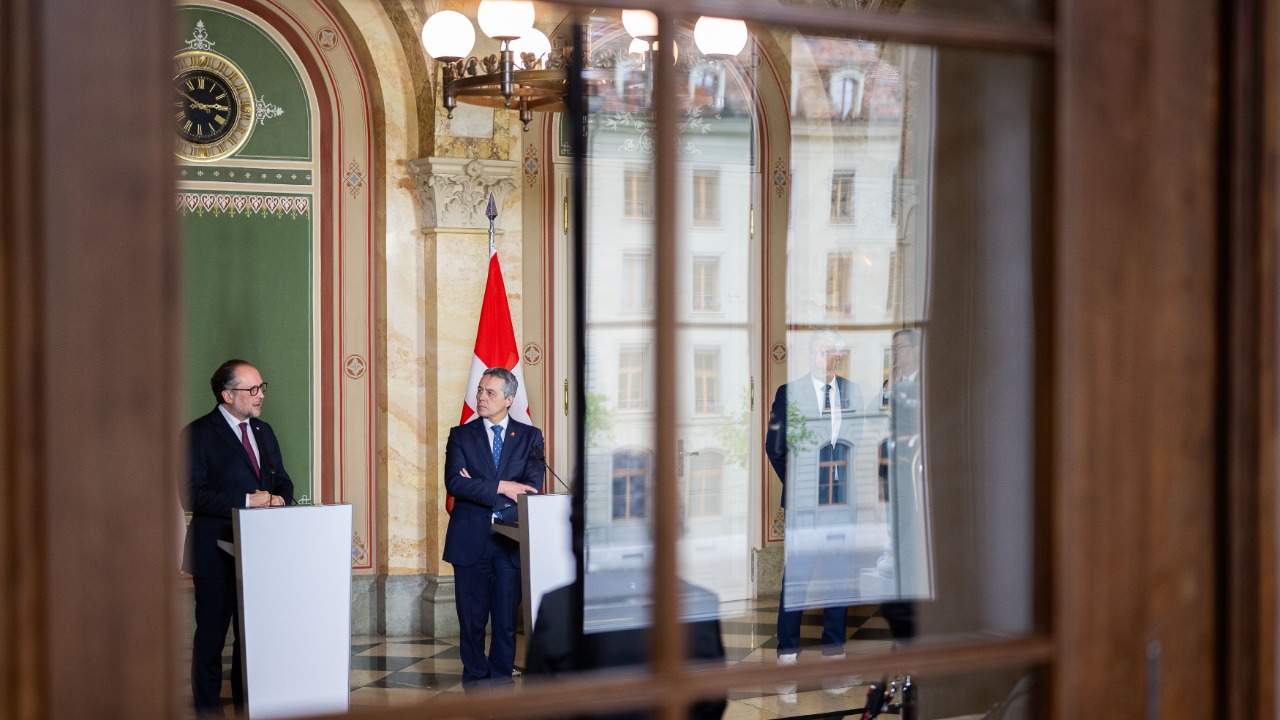
Swiss voters have decisively turned down a sweeping new inheritance levy on multimillionaires, choosing to protect the country’s role as a magnet for global wealth rather than test how many rich residents might walk away. The result leaves the existing patchwork of cantonal rules intact and signals that fears of a millionaire exodus carried more weight at the ballot box than arguments about inequality or fiscal fairness.
The rejected plan would have targeted only a tiny slice of the population, yet it ignited an outsized debate about how far a small, open economy can go in taxing capital without undermining its own model. By siding with continuity, voters have drawn a clear line in the global fight over taxing large inheritances, and I see that choice reverberating far beyond Switzerland’s borders.
How a radical inheritance tax proposal landed on the Swiss ballot
The inheritance tax initiative that just failed did not emerge from technocrats in a finance ministry, but from a political push to make the ultra wealthy shoulder more of the burden. The proposal sought to impose a steep levy on very large estates, effectively creating a national framework that would sit on top of existing cantonal rules and focus squarely on the richest households. Earlier this year, coverage of the campaign made clear that the measure was framed as a way to capture more revenue from fortunes that had grown rapidly in a low interest rate, high asset price era, especially in a country that has long marketed itself as a safe home for private wealth in Switzerland.
In practice, the measure would have applied only to a narrow group of very rich residents, but it was designed to be symbolically powerful. Reporting on the campaign noted that the plan was calibrated so that roughly 2,500 people, 0.03 per cent of the population, would have been directly affected, a figure that underlined how concentrated the country’s largest inheritances really are. That narrow scope was supposed to reassure the middle class that their family assets were not in the crosshairs, yet it also made it easier for opponents to argue that the initiative was a punitive gesture aimed at a tiny minority whose mobility gives them outsized leverage.
What exactly voters rejected at the ballot box
At the heart of the vote was a simple but stark question: should the state claim half of very large inheritances left by the richest residents. The initiative’s architects wanted a 50% rate on qualifying estates, a level that would have put Switzerland among the most aggressive countries in the world when it comes to taxing inherited wealth. That headline number became the defining feature of the campaign, used by supporters to show they were serious about redistribution and by critics to warn that the country was flirting with confiscatory taxation.
Voters did not just edge away from that idea, they repudiated it by a wide margin. Estimates from the national broadcaster indicated that the proposal was rejected with 79% of ballots cast against it, a scale of defeat that surprised even some opponents. That figure, reported after polls closed on Nov 29, 2025, suggests that skepticism about such a high rate cut across traditional party lines and that many citizens who might favor more modest wealth taxes balked at the scale of this particular plan.
Why fears of a millionaire exodus dominated the campaign
From the moment the initiative qualified for a vote, the most potent argument against it was not about administrative complexity or even ideology, but about the risk that the richest residents would simply leave. Opponents warned that in a world where wealthy individuals can move capital and residency with relative ease, a sharp hike in inheritance taxation would push them to relocate to rival hubs, taking jobs, investment and tax revenue with them. That narrative was reinforced by reports that some of the targeted 2,500 people, 0.03 per cent had already threatened to change domicile if the measure passed, a warning that resonated in a country acutely aware of its dependence on mobile capital.
Those concerns were not confined to business lobbies. Political leaders in the governing center and right argued that the proposal risked undermining a finely balanced tax system that has helped attract multinational headquarters and high net worth families. Coverage of the debate highlighted how the specter of a millionaire exodus became the central theme of the “no” campaign, overshadowing more technical discussions about revenue projections or intergenerational equity. In a small, export oriented economy, the idea that a few thousand wealthy households could vote with their feet was enough to tilt the political calculus decisively.
The scale of the defeat and what it says about Swiss political instincts
The margin of rejection matters because it reveals more than a narrow policy disagreement, it exposes a deep instinct in the electorate to err on the side of stability when the country’s economic model is perceived to be at stake. When nearly 79% of voters line up against a measure, it suggests that skepticism ran well beyond the traditional base of pro business parties. Many citizens who might sympathize with calls to tax wealth more heavily appear to have concluded that this particular instrument was too blunt, too risky, or both.
The timing also matters. The vote took place as global debates about taxing the rich have intensified, with proposals for wealth levies and higher top rates surfacing across Europe and in other advanced economies. Yet on Nov 29, 2025, Switzerland chose to reaffirm a more cautious path, signaling that while it is not immune to concerns about inequality, it remains wary of measures that could be seen as hostile to capital. That choice fits a long pattern in which voters have often endorsed incremental adjustments but balked at sweeping overhauls of the tax system.
How the proposal fit into Switzerland’s unique inheritance tax landscape
To understand why the initiative was so contentious, it helps to look at how inheritance is taxed today. Unlike many countries that rely on a single national regime, Swiss rules are largely set at the cantonal level, with no overarching federal inheritance tax. That means the burden on heirs can vary significantly depending on where they live and how closely related they are to the deceased, and it also means that cantons compete, subtly or explicitly, to attract wealthy residents with more favorable regimes.
Guides aimed at foreign residents underscore how complex this landscape can be. One widely cited overview published on Nov 2, 2025 invites readers to Discover the details of inheritance tax in Switzerland, explaining who pays, how to calculate liabilities and what exemptions apply. That kind of granular, canton by canton guidance reflects a system that has evolved through local politics rather than top down national design, and it helps explain why a federal level initiative that would have overridden parts of that mosaic was always going to be a hard sell.
Existing inheritance law and why many families felt shielded already
Another reason the initiative struggled is that many ordinary families do not currently feel heavily exposed to inheritance taxation. Under existing law, close relatives often benefit from generous allowances or full exemptions, especially for family homes and small businesses. An explainer updated on Sep 30, 2025 walks readers through Inheritance law, detailing how legal heirs are assigned fixed portions of an estate and noting that in many cantons spouses and direct descendants are exempt from inheritance tax altogether.
In that context, the initiative’s backers had to persuade voters who already perceive the system as relatively lenient toward family transfers that a new, much higher federal levy on the ultra rich was necessary and would not eventually creep downward. For many, the existing framework, with its mix of protected shares for children and spouses and targeted taxes on more distant heirs, seemed adequate. The fact that the proposal was framed as hitting only the top tier of fortunes did not fully dispel concerns that once a federal inheritance tax was in place, future majorities might be tempted to broaden its reach.
The broader package of votes and what else was on the table
The inheritance tax initiative did not go to voters in isolation. It was part of a broader set of ballots that also included proposals touching on civic obligations and labor rules, reflecting the way direct democracy in Swiss politics often bundles multiple issues on the same weekend. Reporting ahead of the vote on Nov 29, 2025 suggested that both the inheritance tax and a separate civic duty initiative were headed for defeat, an early sign that voters were in no mood for sweeping changes to long standing arrangements.
On the social policy front, citizens were also asked to weigh in on measures related to working conditions and time off. Coverage of the results noted that in a separate ballot, voters rejected a plan that would have granted more mandatory vacation days, with that proposal garnering only 14% support according to a summary of the separate ballot. Taken together, these outcomes paint a picture of an electorate that is cautious about reforms that could be seen as undermining competitiveness, whether by raising taxes on capital or by significantly expanding mandated benefits.
Who pushed for the tax and why their case fell flat
The driving force behind the inheritance tax initiative came from the left of the political spectrum, particularly younger activists who see concentrated wealth as a threat to social cohesion. The youth wing of the leftist Social Democratic camp argued that a steep levy on the largest estates was a necessary corrective in a country where property prices in cities like Zurich and Geneva have soared and where younger generations often feel locked out of asset ownership. Reporting on the campaign noted that the youth wing of the leftist Social Democrats saw the measure as a way to fund public services and reduce intergenerational inequality without touching the incomes of ordinary workers.
Yet their case struggled to gain traction beyond core supporters. Opponents successfully framed the initiative as an attack on entrepreneurial families and a threat to the country’s attractiveness, while also questioning whether the projected revenues justified the potential fallout. Analysts quoted in coverage of the campaign argued that a 50% rate on the super rich risked sending a hostile signal to investors, a concern echoed by leading financial experts. In the end, the initiative’s backers were unable to convince a skeptical middle that the benefits of such a dramatic move outweighed the risks.
What the result means for Switzerland’s future as a wealth hub
The immediate effect of the vote is to preserve the status quo, but the political signal is more far reaching. By rejecting a 50% inheritance tax on the super rich, voters have reassured wealthy residents and potential newcomers that the country remains committed to a relatively light touch approach to taxing large fortunes. That reassurance matters in a competitive landscape where other jurisdictions are tightening rules on offshore accounts and considering new levies on capital, and it helps explain why business groups and many political leaders greeted the result as a validation of the existing model.
At the same time, the debate is unlikely to disappear. Coverage of the campaign on Nov 27, 2025 emphasized that Swiss society is still wrestling with questions about how to balance its role as a haven for the wealthy with domestic concerns about housing costs, wage pressures and generational fairness. For now, the electorate has chosen continuity over experimentation, but the scale of the fortunes at stake and the visibility of inequality in major cities ensure that the politics of inheritance and wealth will remain a live issue, even if future proposals are likely to be more modest than the one just rejected.
More From TheDailyOverview
- Tennessee loses $2.6B megafactory and faces major layoffs
- Retired But Want To Work? Try These 18 Jobs for Seniors That Pay Weekly
- What to do with your pennies after the U.S. stops minting them
- Home Depot CEO warns of a troubling customer trend in stores

Julian Harrow specializes in taxation, IRS rules, and compliance strategy. His work helps readers navigate complex tax codes, deadlines, and reporting requirements while identifying opportunities for efficiency and risk reduction. At The Daily Overview, Julian breaks down tax-related topics with precision and clarity, making a traditionally dense subject easier to understand.


