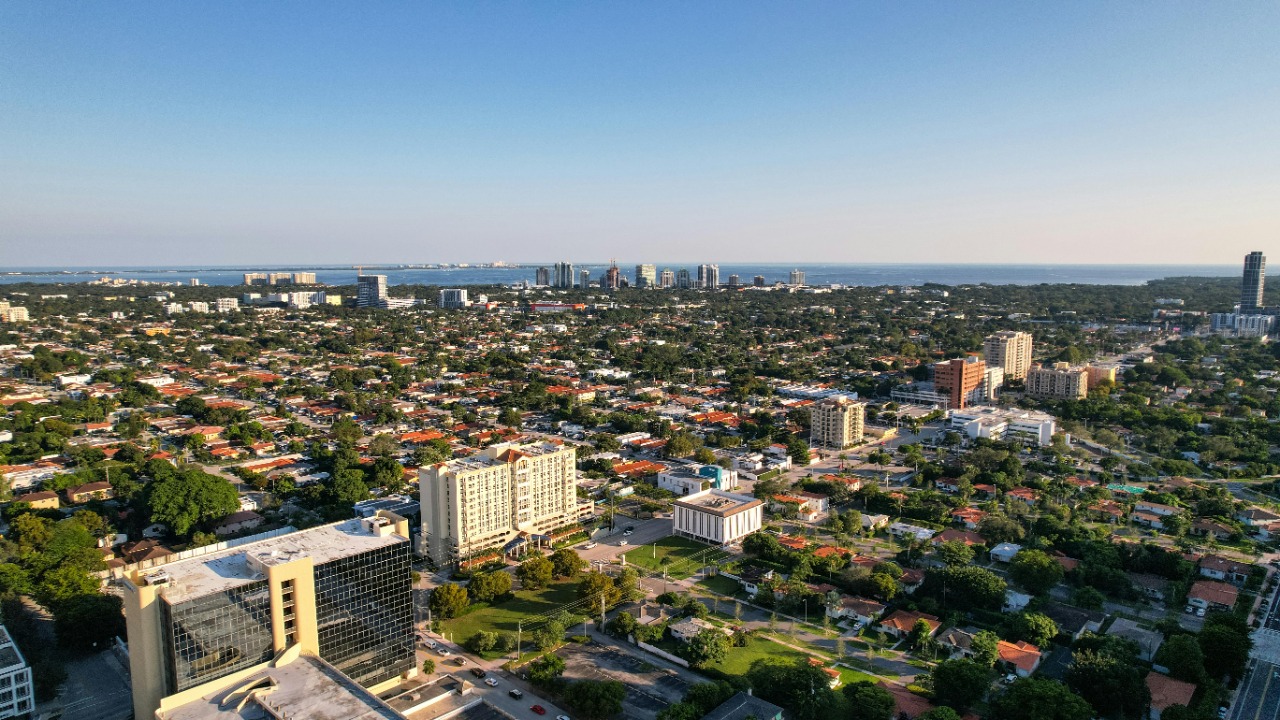
By 2040, climate pressures that Scientists currently project over much longer timelines could collide with local vulnerabilities to make parts of several U.S. cities effectively unlivable. As global temperatures race toward 1.5 degrees Celsius above preindustrial levels by 2040, the combination of extreme heat, flooding, and rising seas raises the risk that daily life in these places will be defined by disruption, danger, and displacement.
1) Miami
Miami is already a frontline city for sea level rise, and Scientists have warned that a group of 11 major cities could become unlivable within 80 years if warming continues unchecked. In that research, coastal hubs like Miami are flagged because even modest additional sea level rise dramatically increases chronic flooding, saltwater intrusion into drinking water, and storm surge damage. As global temperatures approach 1.5 degrees Celsius by 2040, a threshold highlighted in climate science discussions of tipping points, the city’s low elevation and porous limestone base mean that traditional defenses such as seawalls cannot fully keep water out. The risk is not only dramatic hurricanes but also routine “sunny day” flooding that can shut down streets, corrode infrastructure, and undermine housing.
Those long range warnings about major cities becoming unlivable within 80 years take on new urgency when I consider how quickly extreme weather is intensifying. For residents, that could mean insurance becoming unaffordable, frequent evacuations, and neighborhoods where power, transport, and emergency services are repeatedly knocked offline. Tourism and real estate, two pillars of Miami’s economy, are especially exposed to these trends, which is why local planners are already debating which areas can realistically be defended and which may face managed retreat well before 2040.
2) New York
New York appears alongside other global hubs in the same group of 11 major cities that Scientists say could become unlivable within 80 years, and the city’s experience with storms like Sandy shows why. A relatively small amount of additional sea level rise dramatically increases the reach of storm surge into subway tunnels, power substations, and dense residential neighborhoods. As the planet moves toward 1.5 degrees Celsius of warming by 2040, the odds of compound events, for example heavy rain coinciding with high tide, rise sharply. That combination can overwhelm drainage systems, flood basement apartments, and trap vulnerable residents in place.
Climate researchers have also warned that flooding from surging seas is likely to inundate thousands of coastal properties worldwide, and New York’s extensive waterfront makes it a prime example of that risk. By 2040, more frequent “potentially fatal” heat waves layered on top of flood threats could strain hospitals, disrupt transit, and make outdoor work dangerous for large parts of the year. For a city that anchors global finance and media, the stakes include not only physical safety but also whether key economic functions can continue operating reliably as climate shocks become a regular feature of urban life.
3) New Orleans
New Orleans is one of the clearest U.S. examples of a city where subsidence and sea level rise intersect, and a chilling report on 13 cities that could be underwater by 2050 underscores how exposed it is. Large portions of the metro area already sit at or below sea level, protected by levees and pumps that must work perfectly to keep neighborhoods dry. When I map those vulnerabilities onto projections that some coastal cities could be effectively underwater by mid century, it becomes plausible that parts of New Orleans could face unlivable conditions by 2040, long before the most extreme scenarios arrive. The combination of sinking land, stronger hurricanes, and higher baseline seas leaves very little margin for error.
Separate travel reporting has gone further, stating that Experts say that by 2030, large portions of New Orleans could be permanently underwater. That same piece frames “Why It” is “Failing” in terms of “Flooding, hurricanes, sinking land,” a concise summary of the forces converging on the city. For residents, this trajectory raises hard questions about long term mortgages, infrastructure investments, and cultural preservation. By 2040, even if the city remains inhabited, repeated inundation could make basic services unreliable in some districts, pushing people and businesses to relocate to higher ground.
4) Houston
Houston, a sprawling energy and shipping hub on the Gulf Coast, also appears among the 13 cities that a chilling report says could be underwater by 2050, and its recent history of catastrophic flooding shows why the timeline for unlivable conditions may be much shorter. The city’s flat topography, extensive paving, and bayou network mean that heavy rainfall has nowhere to go, turning highways into rivers and inundating entire subdivisions. When I factor in sea level rise pushing storm surge farther inland, the risk is not only from hurricanes but also from slow moving rain events that stall over the region. By 2040, those compound threats could make some neighborhoods effectively uninsurable and repeatedly uninhabitable.
The same analysis of cities that could be underwater by 2050 highlights how critical infrastructure, including ports and petrochemical facilities, sits in low lying zones. For Houston, that means climate impacts are not just a local housing issue but a national economic risk, given the city’s role in fuel, plastics, and shipping. Residents who work outdoors in construction, refining, or logistics also face rising heat stress as global temperatures climb, compounding the dangers from flooding. By 2040, the combination of physical exposure and economic volatility could push parts of the metro area toward conditions that many families simply decide are not worth enduring.
5) Tampa
Tampa’s position on Florida’s Gulf Coast leaves it highly exposed to storm surge and tidal flooding, and the same chilling report that lists 13 cities at risk of being underwater by 2050 includes low lying coastal communities like this one. The city’s bay funnels water toward downtown and surrounding neighborhoods during hurricanes, amplifying surge heights and flooding streets, hospitals, and power infrastructure. As seas rise, even weaker storms can produce damaging floods, while high tides alone begin to seep into storm drains and low roads. By 2040, that pattern could translate into frequent disruptions that make daily commuting, schooling, and business operations unpredictable.
Climate researchers have repeatedly warned that extreme weather is becoming the new normal, and one analysis of rising temperatures that threaten global hubs notes that cities could see more severe, “potentially fatal” weather conditions. For Tampa, that means hotter, more humid summers that strain the power grid as air conditioning demand spikes, just as flood risks are climbing. Tourism, a major employer, is vulnerable when beaches erode and storm seasons lengthen, while lower income residents in inland suburbs may lack the resources to repeatedly rebuild. By 2040, the cumulative effect could be a city where only those with significant means can adapt, leaving others to face increasingly unlivable conditions.
6) Charleston
Charleston, with its historic core and rapidly growing suburbs, is already grappling with erosion and high tide flooding that send seawater bubbling up through drains on clear days. The report that identifies 13 cities which could be underwater by 2050 points to coastal communities where rising seas intersect with vulnerable infrastructure, and Charleston fits that description closely. Much of its charm lies in low lying waterfront districts, but those same areas are now routinely disrupted by king tides that flood streets and damage foundations. If global temperatures continue toward 1.5 degrees Celsius by 2040, the frequency and depth of such flooding are expected to increase, pushing some properties toward chronic inundation.
Regional assessments of climate risk, such as a report from the Climate Change Committee that forecasts more severe and potentially fatal weather conditions, underscore how coastal cities like Charleston face a double burden of heat and flooding. For residents, that could mean more days when outdoor work is unsafe, higher insurance premiums, and historic buildings that become too costly to maintain. The tourism economy, which depends on walkable streets and preserved architecture, is at particular risk if frequent flooding deters visitors. By 2040, some neighborhoods may find that the cost of defending against the sea outweighs the value of staying put.
7) Norfolk
Norfolk, home to a major naval base and dense residential neighborhoods, is another U.S. city that aligns with the 13 global locations flagged as potentially underwater by 2050. Its waterfront is already experiencing regular nuisance flooding, and the combination of land subsidence and sea level rise is steadily raising the baseline for storm surge. The presence of critical military infrastructure adds a strategic dimension to the risk, since encroaching waters can disrupt operations, damage piers, and complicate logistics. By 2040, even if the city is not literally underwater, the frequency of disruptive floods could make some areas functionally unlivable for families and businesses.
Broader climate research has emphasized that rising temperatures are causing extreme weather swings in major cities, and Norfolk is no exception. Hotter summers increase the risk of heat related illness, especially in neighborhoods without ample tree cover or access to cooling centers, while heavier downpours overwhelm drainage systems. For service members and civilians alike, that means more frequent disruptions to commutes, schooling, and healthcare access. The city’s experience will likely influence how other coastal military hubs plan for climate resilience, since unlivable conditions in Norfolk would have national security implications as well as local human costs.
8) Atlantic City
Atlantic City sits on a barrier island, a landform that is inherently dynamic and vulnerable to erosion, and it appears in analyses of 13 cities that could be underwater by 2050 because of that geography. The famous boardwalk and casino district are only a short distance from the ocean on one side and the bay on the other, leaving little room for retreat as seas rise. Storms can cut new inlets through the island, while high tides and nor’easters flood streets and damage utilities. By 2040, repeated flooding could render some blocks effectively uninhabitable, even if the city as a whole remains occupied.
Climate scientists have warned that record heat and rising extremes are increasing the risk of surpassing key warming thresholds, which would accelerate sea level rise and intensify coastal storms. For Atlantic City, that means not only more frequent evacuations but also chronic maintenance problems as saltwater corrodes roads, bridges, and building foundations. The local economy, heavily dependent on tourism and gaming, is sensitive to perceptions of risk, and a reputation for constant flooding could drive visitors elsewhere. Residents who work in hotels, restaurants, and casinos may find their livelihoods increasingly precarious as climate impacts mount.
9) Galveston
Galveston, an island city off the Texas coast, rounds out the list of U.S. examples that match the 13 cities highlighted as potentially underwater by 2050. Its low elevation and exposure to the Gulf of Mexico make it highly vulnerable to storm surge, as history has already shown, and rising seas reduce the buffer that beaches and dunes provide. As global temperatures trend toward 1.5 degrees Celsius by 2040, the intensity of hurricanes and heavy rain events is expected to increase, raising the odds that protective infrastructure will be overtopped or damaged. Even on calm days, higher tides can erode shorelines and seep into low lying neighborhoods.
Analyses of global climate risk, including discussions in climate change forums that cite Scientists warning 11 major cities could become unlivable within 80 years, underscore how quickly conditions can deteriorate once thresholds are crossed. For Galveston, the implications include more frequent road closures, strain on emergency services, and growing pressure on residents to relocate to the mainland. Tourism and port activities, central to the local economy, are both sensitive to weather disruptions and perceptions of safety. By 2040, the cumulative effect of these pressures could make year round life on the island a risky proposition for many households, even if short visits remain possible.
More From TheDailyOverview
- Tennessee loses $2.6B megafactory and faces major layoffs
- Retired But Want To Work? Try These 18 Jobs for Seniors That Pay Weekly
- What to do with your pennies after the U.S. stops minting them
- Home Depot CEO warns of a troubling customer trend in stores

Grant Mercer covers market dynamics, business trends, and the economic forces driving growth across industries. His analysis connects macro movements with real-world implications for investors, entrepreneurs, and professionals. Through his work at The Daily Overview, Grant helps readers understand how markets function and where opportunities may emerge.