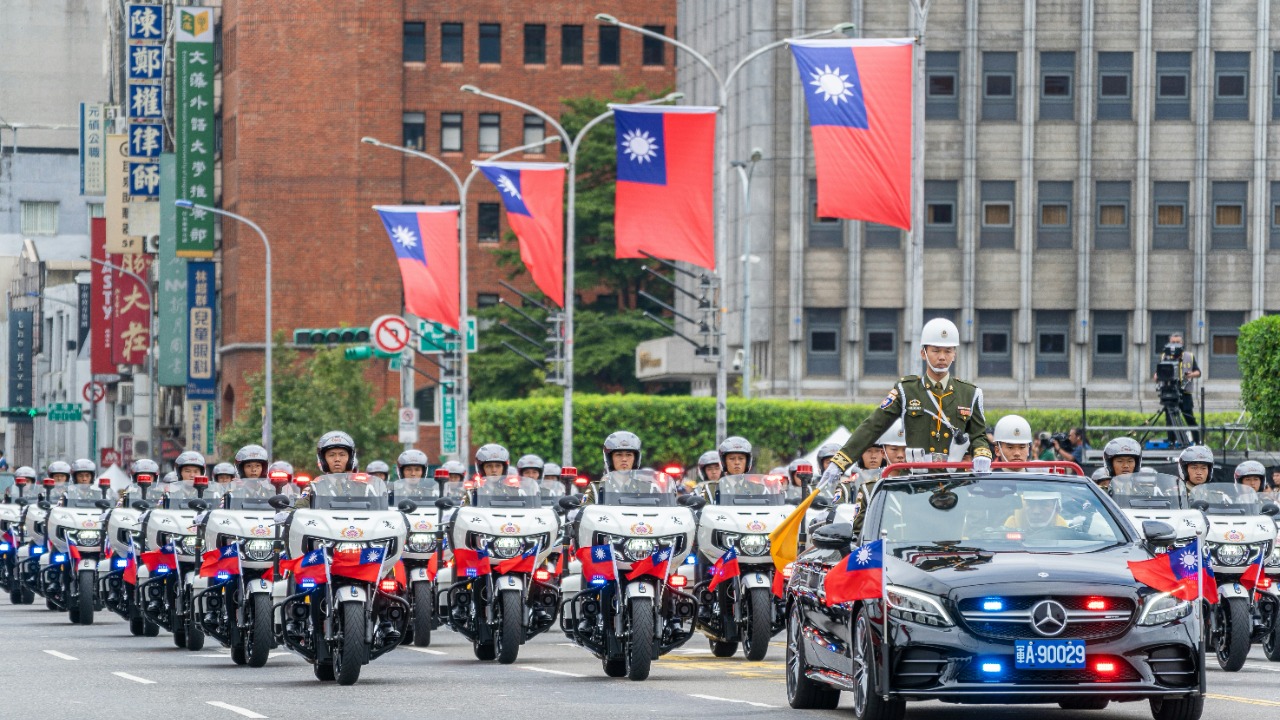
The United States has signed off on a record-setting weapons package for Taiwan, a deal valued at $11.1 billion that Taipei is already framing as a turning point in its long campaign to harden the island’s defenses. Taiwan’s government says Washington is moving quickly to operationalize the package, even as Beijing warns that the move raises the risk of conflict in one of the world’s most volatile flashpoints.
As the details emerge, what stands out is not only the unprecedented size of the package but also its focus on long-range fires, air and missile defense, and stockpiles that could sustain a drawn-out fight. The deal is already rippling through Taiwan’s domestic politics, China’s military planning, and debates in Washington about how far to go in backing a partner that Beijing insists is part of its territory.
Historic scale of the $11.1 billion package
I see three numbers that define this moment: $11.1 billion, eight separate arms packages, and a multi‑year delivery horizon that stretches into the next decade. The United States has approved $11.1 billion in arms sales to Taiwan, the largest single set of weapons deals Washington has ever cleared for the island, a scale that underscores how central Taiwan has become to American security planning in Asia. Reports describe The United States approving $11.1 billion in arms-sales packages for Taiwan, a step that signals long term backing for the island’s defense rather than a one off gesture, and that figure of $11.1 billion is now the benchmark against which future deals will be measured.
Taipei is treating the decision as both a military and political milestone. Officials there have highlighted that the package is not a single platform but a suite of capabilities, and they have emphasized that the total value of $11.1 billion reflects a deliberate effort to close gaps in firepower, air defense, and munitions stockpiles. In parallel, Taiwan’s ruling camp is pressing its legislature to pass a special defense budget of NT$1.25 trillion (reported locally as $1.25 trillion in New Taiwan dollars) to ensure it can absorb and sustain the incoming systems, a push that The DPP caucus has framed as the NEXT STEP for the Cabinet’s broader defense overhaul, according to local coverage of the $1.25 budget debate.
What Taiwan is actually buying
Behind the headline figure, the composition of the package tells me more about how Washington and Taipei expect a future conflict to unfold. Rather than centering on flashy fighter jets or ships, Five of the eight arms packages focus on artillery, rockets, and anti armor weapons that could blunt an amphibious landing or punish Chinese forces massing across the Taiwan Strait. The list includes M109A7 howitzers, HIMARS rocket systems, TOW 2B anti tank missiles, and other anti armor munitions, all geared toward making any invasion attempt far more costly, as detailed in breakdowns of how Five of the packages are structured.
There is also a clear emphasis on integrated air and missile defense. The package is designed to reinforce Taiwan’s “T‑Dome” concept, a layered air defense network that President Lai has promoted as the backbone of the island’s survival strategy. Reporting notes that the deal aims to strengthen Taiwan’s defense capabilities, particularly the Dome air defense system that Lai announced as part of a broader plan to lift defense spending toward 2.5 percent of GDP by 2030, a trajectory that aligns with the new weapons’ delivery schedule and is highlighted in analyses of how Taiwan is reshaping its military.
How the deal fits into Trump administration strategy
From Washington’s perspective, the package is as much about signaling as it is about hardware. The Trump administration has approved the potential sale of eight arms packages worth about $11 billion to Taiwan the authorities have said, a move that fits a broader pattern of tightening security ties with Taipei while challenging Beijing’s red lines. In public messaging, officials have framed the decision as consistent with long standing U.S. commitments under domestic law to provide Taiwan with defensive weapons, but the scale and content of this package go beyond routine support and reflect a deliberate choice by The Trump team to accelerate Taiwan’s shift toward asymmetric defense.
That strategic intent is reinforced by the way the deal has been rolled out. The State Department’s approval, highlighted in coverage of how the Trump administration has moved to greenlight the eight packages, came alongside statements that the goal is to bolster Taiwan’s self defense and deter coercion rather than provoke conflict. In a video segment summarizing the decision, officials stressed that Trump views Taiwan the island as a critical partner in a contested region, and that the administration is prepared to accept sharper friction with Beijing to ensure the arms flow, a stance captured in reporting on how Trump officials describe the package.
China’s backlash and warnings of rising war risk
Beijing’s reaction has been swift and predictably harsh, but the language this time is sharper than in many past episodes. Chinese officials have condemned the package as a violation of what they see as their sovereignty over Taiwan and have warned that the deal increases the risk of war in the region. One senior figure has been quoted warning of a rising war risk after the historic sale, arguing that the United States is undermining stability and that China will respond with unspecified countermeasures, a message that Chinese diplomats have echoed in multiple capitals and that is summarized in accounts of how China is framing the deal.
Those warnings are not occurring in a vacuum. Chinese military aircraft and ships have already been operating closer to Taiwan in recent years, and Beijing has used previous, smaller arms sales as justification for new exercises and sanctions on U.S. defense firms. The rhetoric about rising war risk suggests that China may again pair diplomatic protests with more aggressive patrols or drills around the island, and it also serves a domestic purpose by portraying the leadership as standing firm against what it calls foreign interference. For Taiwan, the message is clear: every new tranche of weapons will be met with pressure, but the alternative, in Taipei’s view, is to leave the island exposed.
Taiwan’s domestic response and budget politics
Inside Taiwan, the deal is already reshaping political debates about defense spending and national resilience. The ruling party has seized on the package to argue that the island must move faster to fund and absorb new capabilities, urging lawmakers to pass the Cabinet’s NT$1.25 trillion special defense budget that local reports have described as $1.25 trillion in New Taiwan dollars. The DPP caucus has framed the arms deal as the NEXT STEP in a broader modernization drive, pressing the legislature to align domestic funding with the incoming U.S. systems, a linkage that has been spelled out in coverage of how The DPP is selling the Cabinet plan.
Opposition parties, while generally supportive of closer security ties with Washington, are pressing for more transparency on costs and timelines. They have raised questions about whether Taiwan’s armed forces can train enough personnel, build sufficient infrastructure, and reform reserve mobilization fast enough to make full use of the new weapons. That debate is not just about numbers on a spreadsheet. It goes to the heart of how Taiwanese society views the threat from China and the sacrifices it is willing to make to deter it, from longer conscription terms to higher taxes. The arms package has become a catalyst for that conversation, forcing politicians to move beyond slogans and confront the practical demands of deterrence.
Regional and global reactions beyond Beijing
While China’s anger has dominated headlines, other regional players are quietly recalibrating their own positions. In Southeast Asia and the wider Indo Pacific, governments are weighing how the deal affects the balance of power and their own ties with both Washington and Beijing. Some see the package as a necessary counterweight to China’s growing military reach, while others worry it could trigger a spiral of action and reaction that makes crisis management harder. The fact that WASHINGTON has chosen to move ahead despite predictable Chinese protests is being read in many capitals as a sign that U.S. policy is hardening, a perception reinforced by reporting that the United States announced a massive package of arms sales to Taiwan valued at more than $10 billion, a move that has clearly angered China.
Beyond Asia, the deal is also resonating in places that might seem far removed from the Taiwan Strait. A Bolivian foreign minister, for example, has publicly detailed that nation’s pivot toward the US and away from China, a shift that underscores how competition between Washington and Beijing is playing out even in Latin America. That same official has linked the Taiwan arms sale to a broader pattern of U.S. efforts to rally partners and counter Chinese influence, a narrative that appears in accounts of how the Bolivian government is repositioning itself and how Bolivian leaders describe their new alignment.
Why Washington calls it defensive
U.S. officials are at pains to describe the package as purely defensive, and the specific systems involved support that framing. The focus on howitzers, HIMARS, TOW missiles, and air defense networks is meant to show that the goal is to help Taiwan absorb and repel an attack, not to give it tools for offensive operations against the mainland. In formal notifications, The United States has emphasized that the arms are intended to strengthen Taiwan’s self defense and contribute to regional stability, a line that appears in multiple summaries of how The United States has approved the massive $11.1 package and that is echoed in descriptions of the UPI notification.
At the same time, Washington is not hiding the deterrent logic behind the deal. Analyses of the package stress that it is designed to raise the costs and risks of any Chinese attempt to seize the island by force, making planners in Beijing think twice about whether they can achieve a quick victory. Commentaries on the deal note that the Trump administration has greenlit an $11.1 billion arms sale to Taiwan centered on systems like HIMARS and additional Javelin anti armor missiles, weapons that would be central to any effort to blunt an invasion, a point underscored in technical write ups of how Taiwan could use them.
Long term delivery timelines and readiness
One of the less discussed but crucial aspects of the package is timing. Many of the systems involved, particularly complex launchers and integrated air defense components, will take years to produce, ship, and integrate into Taiwan’s force structure. Some reporting notes that the record $11.1 billion arms package is structured as a long term program running from 2026 to 2033, a schedule that reflects both industrial capacity constraints and the need for phased training and infrastructure upgrades, as outlined in briefings on the Largest Ever deal.
That timeline cuts both ways. On one hand, it gives Taiwan time to expand training pipelines, harden bases, and adapt doctrine to make full use of the new capabilities. On the other, it means that the most potent elements of the package will not be fully in place for several years, a lag that could tempt Beijing to test the island’s defenses before the upgrades are complete. Taiwanese planners are acutely aware of this window and are moving to plug gaps with domestic production and interim purchases, but the reality is that deterrence in the near term will still rely heavily on existing systems, U.S. signaling, and the credibility of Washington’s broader regional posture.
What “largest ever” really signals for the Taiwan Strait
Calling the package the largest ever is not just a matter of accounting, it is a political statement. The Record $11.1 billion figure has been highlighted repeatedly in analyses that describe the deal as a turning point in U.S. Taiwan security ties, with some characterizing it as the moment Washington moved from incremental support to a more comprehensive effort to arm the island for a high intensity conflict. One assessment framed it as a Largest Ever U.S. Sends Billion Weapons Package to Taiwan, underscoring that the Record scale is meant to send a message not only to Beijing but also to allies and partners watching how seriously Washington takes the defense of Taiwan.
For all the symbolism, the practical impact will depend on execution. The United States approved $11.1 billion in arms sales packages for Taiwan, irking China and signaling continued security support for the island, but that support will only translate into real deterrent power if training, logistics, and political will keep pace. Taiwan’s leaders are betting that the combination of new hardware, higher defense spending, and closer coordination with Washington will be enough to dissuade Beijing from a military gamble. Chinese leaders, for their part, are signaling that no amount of foreign arms will change their claim that Taiwan is part of their territory, a position Taipei rejects and that is spelled out in reporting on how Taiwan and China frame the issue.
More From TheDailyOverview

Grant Mercer covers market dynamics, business trends, and the economic forces driving growth across industries. His analysis connects macro movements with real-world implications for investors, entrepreneurs, and professionals. Through his work at The Daily Overview, Grant helps readers understand how markets function and where opportunities may emerge.

