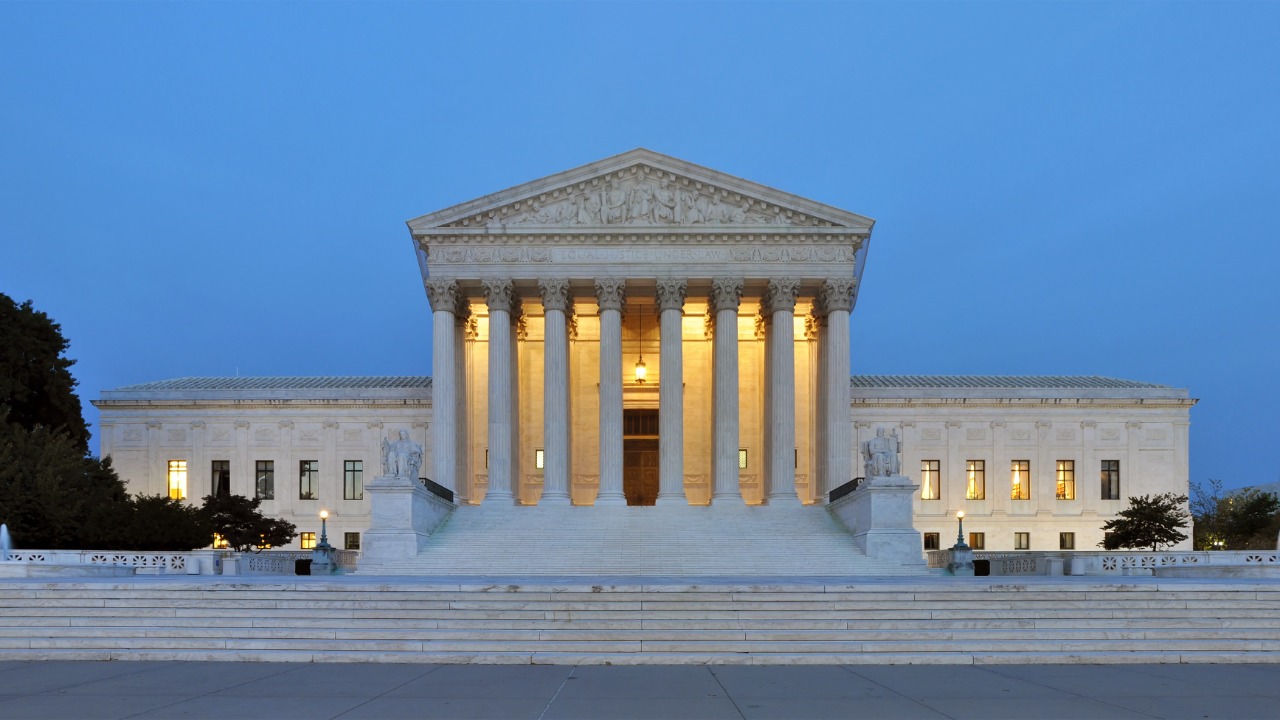
The United States is waiting on a single court decision that could either cement President Donald Trump’s tariff strategy or trigger a sprawling fight over who gets billions of dollars back. As the justices hold off, companies, markets and the White House are all trying to game out whether the delay points to a political win for Trump or a looming refund mess that could snarl trade for years.
The longer the uncertainty drags on, the more it shapes behavior in advance. Importers are adjusting contracts, investors are repricing risk and the administration is already folding potential outcomes into its broader economic agenda, from new tariff threats to talk of direct payments tied to trade policy.
The Supreme Court’s silence and what it signals
The US Supreme Court has now twice put off a decision on the legality of President Donald Trump’s global tariffs, a silence that has become its own market event. The US Supreme Court first delayed a ruling on Trump Tariffs, and then, as highlighted in Trump Tariffs US, The US Supreme Court put off the decision again, keeping President Donald Trump’s signature trade tool in limbo. In a separate segment on Trump Tariffs Row, the second postponement in a week was described as leaving importers and their advisers guessing how to price goods that may or may not be subject to duties in the near future.
For markets, the delay is not neutral. Analysts tracking the decision argue that the longer the justices wait, the more likely they are to uphold at least part of Trump’s authority, a view echoed in commentary that the longer Supreme Court its tariff decision, the more investors lean toward a Trump-friendly outcome. At the same time, others warn that the same silence keeps legal risk alive, with one Market Overview noting that Supreme Court Silence Keeps Trump Tariff Risk Alive and that traders are being forced to price in the possibility that rules could change abruptly.
Why a ruling could unleash refund chaos
Behind the legal drama sits a very practical question: if the tariffs fall, who gets paid back, and how. Trade lawyers have been blunt that, as one analysis framed it under the heading Why This Decision, If the Supreme Court invalidates the tariffs, the immediate question will be whether refunds are owed and to whom. That is not a theoretical issue: Morning Reads on SCOTUSblog highlighted that More Than 1,000 Companies Are Suing Trump Over His Tariffs, underscoring how many firms are already in court seeking refunds.
The operational side is just as fraught. An executive order signed in March charged U.S. Customs and Border Protection with modernizing its manual payment system, a move described in detail in coverage of Customs and Border and how it would handle a surge of refund claims. Yet even with that modernization push, the same report on the Supreme Court Trump tariff ruling and refunds warned that a sudden obligation to return years of duties could overwhelm systems that were built for routine collections, not mass repayments.
Importers, lawsuits and the Treasury’s exposure
For importers, the delay is not just an abstract legal puzzle, it is a line item on the balance sheet. Thousands of companies have already filed suits, and the Morning Reads reference to More Than 1,000 Companies Are Suing Trump Over His Tariffs shows how widespread the litigation has become, as noted in the Morning Reads digest. Many of those plaintiffs are large retailers and manufacturers that have been paying duties on everything from auto parts to consumer electronics, and they are now effectively treating potential refunds as contingent assets that may or may not materialize depending on how the justices read Trump’s authority.
The federal government, meanwhile, is sitting on a sizable pot of tariff cash. A new Treasury report released Tuesday showed the US government brought in $27.89 billion in tariff revenue in December to end a year of record customs duties collected that month, according to the Treasury report cited in live updates. Supporters of the tariffs argue that this cushion means the Treasury can cover any tariff refunds, while critics counter that large repayments could still widen the fiscal deficit, a concern flagged in market analysis of What It Means.
Trump’s political calculus: tariffs, checks and Iran
President Donald Trump is not waiting for the justices to define the politics of tariffs. Earlier this week, President Donald Trump announced he would impose a new tariff of 25% on any country trading with Iran, a move that tied trade policy directly to pressure on Iran and signaled that he sees tariffs as a flexible geopolitical tool. Analysts noted that this kind of announcement, coming while the Supreme Court is still weighing his existing global tariffs, reinforces the perception that the Court’s eventual ruling will either validate or sharply constrain a central plank of his foreign and economic policy.
At the same time, Trump has floated using tariff revenue to send direct payments to households. In coverage of his latest comments, Trump signals delay on $2,000 tariff stimulus checks, with reports explaining that Trump has proposed using tariff proceeds to fund $2,000 payments and that he has now signaled a later rollout, as detailed in the piece that noted $2,000 tariff stimulus checks. That proposal, first floated in his previous term and revived as geopolitical pressures continue to build, underscores how deeply tariffs are now woven into Trump’s domestic political agenda as well as his international strategy.
Customs, compliance and the risk of a messy unwind
Even before the Supreme Court rules, the bureaucracy is bracing for impact. On January 2, U.S. Customs and Border Protection published an interim final rule, mandating that, with limited exceptions, importers use electronic systems for payments and filings, a shift described in the On January update that tracked how Customs and Border Protection, or CBP, is modernizing. A broader Trump Tariff Tracker noted that CBP has been under pressure from the House Ways and Means Committee to ensure it can handle both ongoing collections and any potential refund obligations that might flow from the Court’s decision.
Compliance officers are already treating the case as a live risk scenario. Legal guidance framed under the question of future trade and compliance risk has urged companies to map out which entries are covered by the challenged tariffs, how they documented payments and whether they have preserved rights to refunds. If the Court ultimately sides against Trump on key aspects of his global tariffs, the combination of high volumes, evolving CBP systems and a patchwork of lawsuits could produce exactly the kind of refund headache that market commentators, including those warning that Supreme Court Silence, have been flagging.
More From The Daily Overview

Silas Redman writes about the structure of modern banking, financial regulations, and the rules that govern money movement. His work examines how institutions, policies, and compliance frameworks affect individuals and businesses alike. At The Daily Overview, Silas aims to help readers better understand the systems operating behind everyday financial decisions.