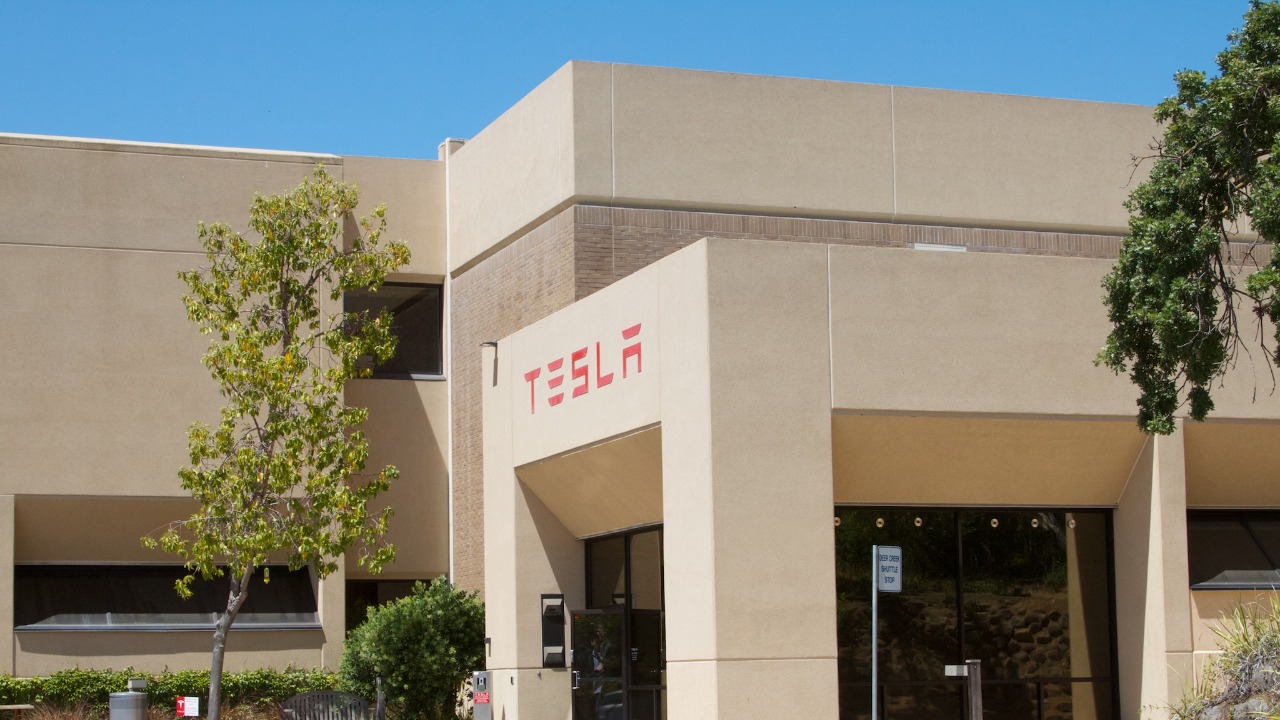
Tesla’s stock is once again at the center of a fierce tug-of-war, with some on Wall Street warning that the shares could ultimately sink toward levels that would have seemed unthinkable during the pandemic boom. The idea that Tesla might eventually trade closer to a traditional automaker multiple, potentially even near $80, reflects a growing belief that its fundamentals no longer justify a premium at any price. At the same time, a rival camp still sees a high-growth technology platform that could be worth many times more if its most ambitious bets pay off.
That split view is widening as Tesla’s growth slows, its margins compress, and its narrative shifts from hypergrowth to hard execution. The brutal scenario in which the stock collapses toward a double-digit handle is not tied to a single published price target, but rather to a broader thesis that the market must reprice Tesla to match more modest realities on vehicle sales, profitability, and competitive pressure.
The bearish repricing thesis behind an $80 scenario
The core of the bearish case is simple: if Tesla is valued like a car company instead of a high-margin software platform, its current market capitalization looks stretched, and a much lower share price becomes plausible. That view has gained traction as Tesla has reported a challenging quarter for vehicle production and deliveries, with Tesla Operations highlighting lackluster vehicle sales and a downgrade that explicitly calls for the shares to “reprice” to weaker fundamentals. In that framework, an $80 outcome is not a formal target but a stress-test level that assumes Tesla ultimately trades at a modest earnings multiple more in line with legacy manufacturers.
Under this lens, the stock’s vulnerability stems from the gap between earlier growth promises and current delivery trends. If Tesla’s volume growth continues to slow while price cuts erode margins, the market may decide that the company deserves only a small premium to peers, especially if new models like the Cybertruck or updated Model 3 and Model Y fail to reignite demand. In that scenario, the “brutal” call is not that Tesla is doomed, but that its equity value could compress sharply as investors shift from paying for distant optionality to focusing on near-term cash flows and the realities of the auto cycle.
Volatility, leverage, and the risk of a sharp downside break
Even without a single analyst planting a flag at $80, the trading dynamics around Tesla make a deep drawdown more than a theoretical exercise. Tesla shares are currently under huge volatility and downward pressure, a pattern that has been amplified by weak United States consumer spending, tariff uncertainty, and a slowdown in delivery volume growth, according to one market strategist quoted on Tesla. When a stock with that profile is heavily traded through leveraged exchange traded funds and options, small shifts in sentiment can trigger outsized price swings in both directions.
In practice, that means any disappointment on deliveries, margins, or product timelines can cascade through stop-loss orders, margin calls, and leveraged products that are forced to rebalance into weakness. The same feedback loops that once helped propel Tesla higher now threaten to accelerate declines if the narrative sours. For investors contemplating whether an $80 print is possible, the combination of fundamental repricing pressure and mechanical selling from high leverage is what makes a seemingly extreme downside level feel uncomfortably within reach.
Why some analysts still see $800 instead of $80
Set against that grim scenario is a very different vision of Tesla’s future, one that still imagines the stock quadrupling from here rather than collapsing. According to Wedbush, Tesla is expected to successfully roll out robotaxi services in more than 30 cities in 2026 while continuing to expand its energy storage and software businesses. In that bullish framework, the company is not just an automaker but a vertically integrated artificial intelligence and mobility platform, and the stock could plausibly trade near $800 if those initiatives scale.
Another Analyst has similarly predicted a $800 Tesla stock price target for 2026, arguing that Tesla (NASDAQ: TSLA) has gained a lot of steam over the past year as investors refocus on its long-term technology roadmap. These optimistic projections assume that autonomous driving, subscription-based software, and high-margin energy products will eventually dominate the earnings mix, justifying a valuation multiple far above traditional carmakers. For believers in that story, any pullback is an opportunity to buy a transformative company at a discount, not a warning sign of structural decline.
ARK’s Simulation and the ultra-bull case
At the far end of the optimism spectrum sits ARK, which has laid out a detailed framework for Tesla’s potential value in 2026. In its analysis of Expected outcomes, ARK presents Base, Bear, and Bull Case Tesla Per Share Price Targets derived from extensive Simulation Outputs that model dozens of variables, from vehicle adoption to autonomous ride-hailing economics. The headline number in that work is an expected value of $4,600 per share, a figure that dwarfs both the $80 bear scenario and the $800 bullish targets from more conventional analysts.
ARK’s Simulation is built on the premise that Tesla will capture a significant share of global robotaxi markets, monetize its software stack at scale, and maintain a strong lead in battery technology and manufacturing efficiency. In that world, today’s debates about whether the stock should trade closer to $80 or $800 look almost quaint, because the company’s earnings power would be transformed by entirely new business lines. The risk, of course, is that if those ambitious assumptions fail to materialize, the market may eventually revert to valuing Tesla primarily as a carmaker, which is precisely the logic behind the harsher downside calls.
How investors should navigate such extreme dispersion
For individual investors, the spread between an $80 stress-test level, a $800 optimistic target, and a $4,600 Simulation-based bull case underscores just how uncertain Tesla’s future remains. I see three broad paths that can help frame decisions. First, those who believe Tesla will remain primarily an automaker with some ancillary software and energy revenue should focus on traditional metrics like price to earnings, free cash flow, and unit growth, which tend to support lower valuation multiples. Second, investors who buy into the robotaxi and AI thesis need to be comfortable with long timelines, regulatory risk, and the possibility that even credible execution might still fall short of the most aggressive forecasts.
Third, and perhaps most importantly, position sizing becomes critical when the range of plausible outcomes is this wide. Rather than betting the portfolio on any single narrative, I would treat Tesla as a high-volatility exposure where downside scenarios like an $80 share price are not impossible, even if they are not anyone’s official target. Balancing that risk against the upside cases, and revisiting the thesis as new data on deliveries, margins, and technology milestones emerge, is the only way to navigate a stock where the distance between brutal and euphoric outcomes is measured in thousands of dollars per share.
More From The Daily Overview

Elias Broderick specializes in residential and commercial real estate, with a focus on market cycles, property fundamentals, and investment strategy. His writing translates complex housing and development trends into clear insights for both new and experienced investors. At The Daily Overview, Elias explores how real estate fits into long-term wealth planning.

