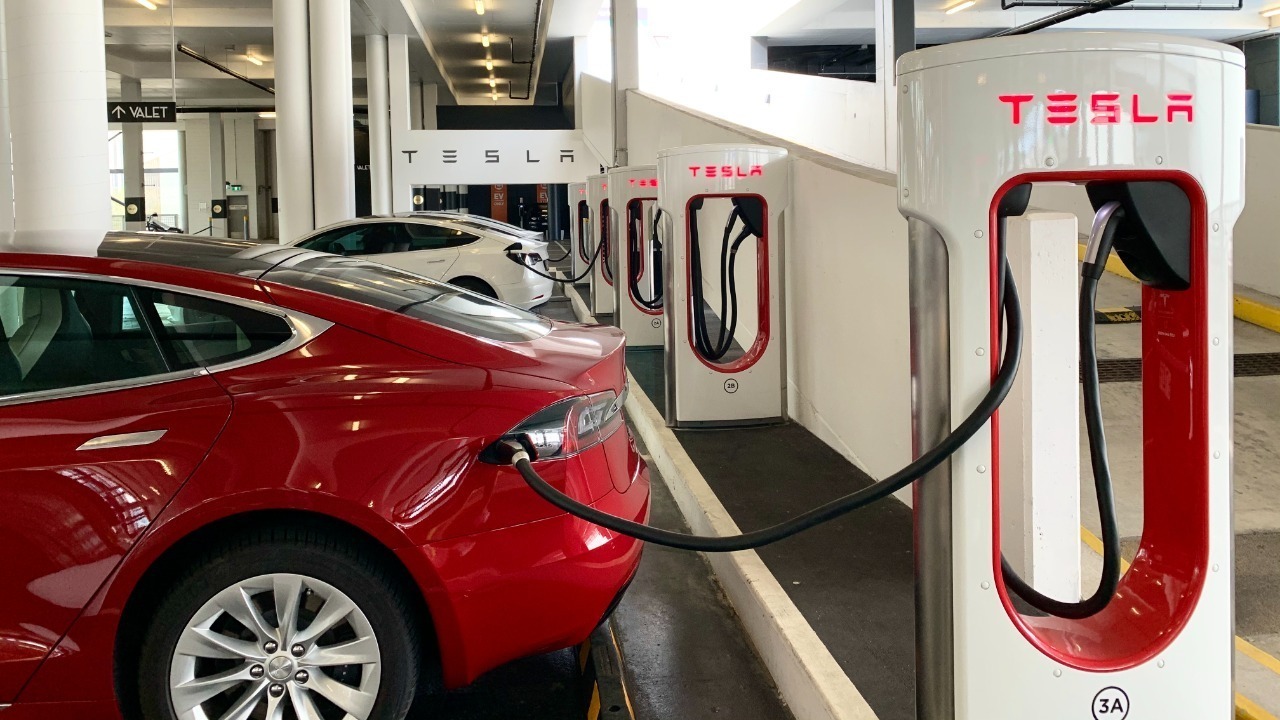
Canada’s decision to reopen its market to Chinese-built electric vehicles is about to hand Tesla a powerful new advantage in North America. By sharply cutting tariffs and creating a sizable import quota, Ottawa is giving the company a low cost supply route into a country where its sales have so far been modest, while also testing how far it can diverge from United States policy on China.
The move slots Tesla into the center of a broader reset in trade relations between Canada and China, one that links electric cars to agricultural exports and pits consumer affordability against industrial strategy. I see it as an early case study in how Western governments will balance climate goals, geopolitical pressure and the rise of Chinese EV manufacturing power.
The deal that reopens Canada’s door to Chinese EVs
At the core of the new arrangement, Canada has agreed to allow up to 49,000 battery electric vehicles built in China to enter its market each year at a sharply reduced tariff rate. Instead of the 100% duty that effectively shut out Chinese-made models, the quota will be subject to a 6.1% tariff, a structure that multiple analyses say is tailored to restart trade without completely abandoning protection for domestic producers, and that explicitly identifies China as the manufacturing base. Reports on the agreement describe it as a bilateral package that also eases restrictions on Canadian agricultural exports, including canola, in exchange for the EV access, underscoring how clean transport has become a bargaining chip in wider trade diplomacy between the two countries.
Several breakdowns of the pact emphasize that the 49,000 vehicle ceiling and 6.1% tariff are not theoretical numbers but binding annual limits that will be monitored as part of a broader framework between Canada and China. Detailed coverage of the talks notes that the EV concessions sit alongside commitments on Chinese access for Canadian farm goods, with one account highlighting how the bilateral agreement introduces new quotas and lower tariffs on Chinese EVs and Canadian agricultural exports, a linkage that analyst Anwesha Pattanai has framed as a pragmatic reset after years of tension between Chinese and Canadian policymakers. That context helps explain why the EV quota is structured so precisely, and why it is already being parsed as a template for other sectors.
Why Tesla is positioned as the early winner
Within that 49,000 vehicle window, Tesla is widely seen as the manufacturer best placed to move quickly. The company already uses its Shanghai complex to supply right hand and left hand drive markets across Europe and Asia, and reporting on the new quota stresses that Tesla had prepared its Chinese production lines for exports to Canada as far back as 2022, even when the 100% tariff made such shipments uneconomic. Analysts now argue that this head start, combined with the 6.1% duty, gives Tesla a cost base that rivals cannot easily match, especially as it can allocate capacity flexibly between Chinese and other global markets.
Several investor focused breakdowns go further, describing Tesla as one of the main beneficiaries of the new import cap and explicitly linking the 49,000 and 6.1% figures to its ability to ship high volume models into Canada at prices that undercut rivals. One analysis of Canada cutting tariffs on China made EVs notes that Tesla’s Chinese built cars can be slotted directly into the quota, while another assessment of the trade deal’s Key Takeaways underlines that Canada will allow up to 49,000 China made EVs annually at a 6.1% tariff, a shift that will benefit Tesla and Geely. I read those converging views as a sign that markets are already pricing in a meaningful Canadian volume ramp for Tesla’s Shanghai output.
How the quota and price rules reshape Canada’s EV market
The structure of the deal matters as much as the headline tariff cut. In addition to the 49,000 unit cap, the agreement includes a price based clause that reserves half of the annual quota for vehicles priced under CAD 35,000, a detail that signals a clear policy tilt toward mass market electrification rather than luxury imports. Analysts who have unpacked the text argue that this CAD 35,000 threshold is designed to push manufacturers to prioritize affordable models, and that it dovetails with Canada’s existing federal incentives, which already favor lower priced EVs. For Tesla, that aligns neatly with the positioning of its entry level variants, which can be configured to sit just under the CAD 35,000 limit when built in SHANGHAI and shipped to Canada.
Market data cited in coverage of the deal shows why Ottawa is willing to take that risk. One breakdown of the new rules notes that Canada’s EV sales have been growing but still represent a relatively small share of the overall new vehicle market, and that the government sees cheaper Chinese built models as a way to accelerate adoption. Another analysis of what the Canada China deal means for EV makers frames the tariff cut as part of a broader shift away from the United States, arguing that by easing tariffs on Chinese EVs Canada is betting that lower prices will benefit consumers and accelerate EV adoption. In that context, the CAD 35,000 clause looks less like a concession to foreign manufacturers and more like a lever to force all players, including Tesla, to compete aggressively on price in Canada.
Rivals from China and Europe will not stand still
Tesla may be the most visible beneficiary, but it is not alone. Reporting on the agreement highlights that Geely and its performance brand Lotus are also poised to capitalize, with one account noting that Lotus expects the deal to cut the price of its Eletre SUV in Canada by 50 percent, a dramatic reduction that could reposition the model in the premium segment. Another analysis of the trade deal’s Key Takeaways points out that Geely is among the manufacturers that stand to gain from the 49,000 unit quota, even if its near term upside is limited by the need to secure certification and build dealer networks. I see that as a reminder that the quota is not a Tesla only lane but a contested space where Chinese and European brands will jostle for share.
Chinese manufacturers beyond Tesla and Geely are also watching closely. Commentators who track the sector note that the bilateral agreement introduces new quotas and lower tariffs on Chinese EVs and Canadian agricultural exports, and that this could eventually open the door for companies like BYD once they navigate regulatory hurdles. At the same time, investor notes on Tesla & Geely Group Stock Set to Rally as First Winners of Canada’s Tariff Cut stress that those two names enjoy an immediate advantage because they already have global export infrastructure in place. That dynamic echoes earlier episodes in the EV industry, such as the way a past Tesla deal helped Nio secure critical funding and, according to Li, benefited the entire industry and Nio in the long term, a reminder captured in coverage that begins with the phrase According to Li and describes how Nio benefited twice from the deal. The lesson is that early movers in trade openings often shape the competitive landscape for years.
A strategic break from US policy and what comes next
Politically, the tariff cut marks a notable divergence from Washington. Detailed coverage of the decision describes how Canada breaks with US policy by slashing 100% tariffs on Chinese EVs to a much lower level, even as the United States maintains a far more restrictive stance. One analysis explicitly frames the move as Canada breaking with the US and slashing 100% tariffs on Chinese EVs, noting that this could reshape the Canadian new vehicle market and signal a willingness to chart a more independent course from the Biden administration’s approach. That choice carries risks, including potential friction with American automakers and policymakers who worry about Chinese overcapacity, but it also reflects Ottawa’s calculation that its smaller market can afford a more flexible stance.
More From TheDailyOverview

Grant Mercer covers market dynamics, business trends, and the economic forces driving growth across industries. His analysis connects macro movements with real-world implications for investors, entrepreneurs, and professionals. Through his work at The Daily Overview, Grant helps readers understand how markets function and where opportunities may emerge.