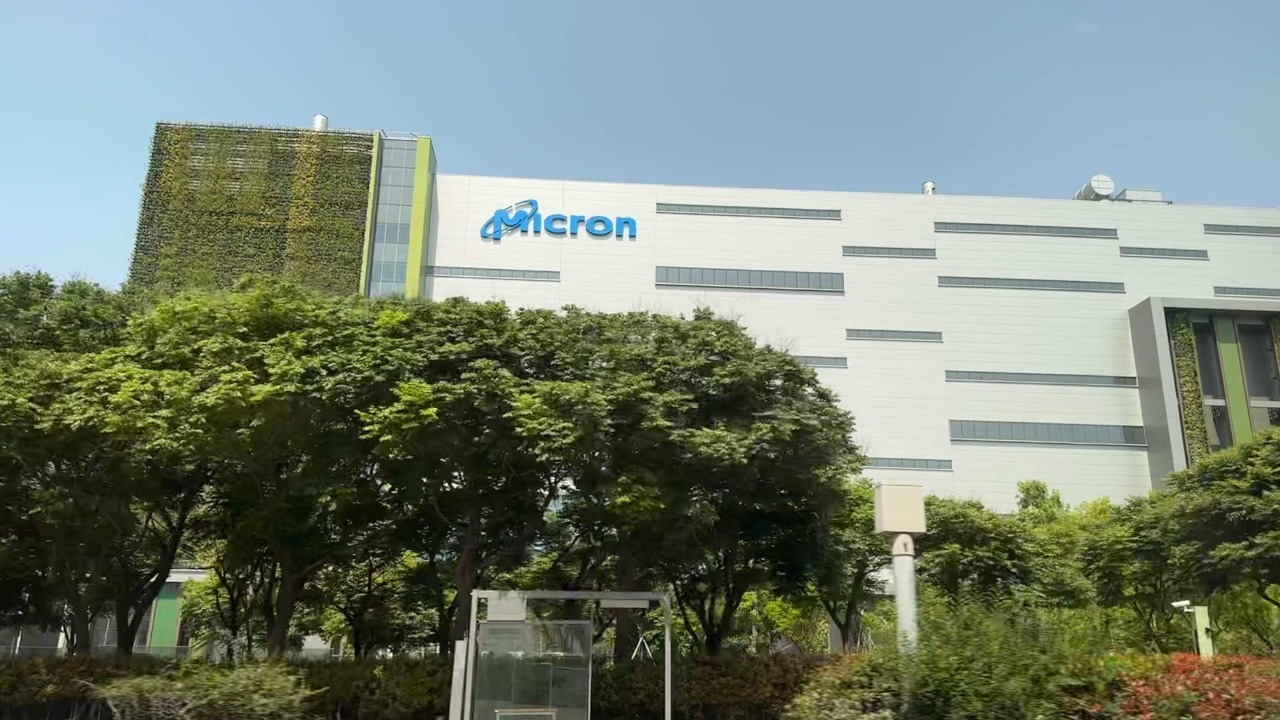
Micron is sounding an alarm that cuts through the usual semiconductor cycle chatter. The company is telling investors and customers that the surge in artificial intelligence workloads is colliding with physical limits in memory manufacturing, creating a supply squeeze it describes as unlike anything it has seen before. If that assessment holds, the crunch will reshape pricing, investment and even which industries get first call on the most advanced chips.
At the center of the warning is a simple imbalance: hyperscale data centers are racing to deploy AI accelerators faster than the industry can add clean rooms and wafer capacity. That gap is already pushing up prices for dynamic RAM and high bandwidth memory, and Micron expects the strain to persist well beyond 2026, with ripple effects that reach from cloud providers to smartphone makers and PC buyers.
Why Micron says this shortage is different
Micron is not just flagging tight supply, it is arguing that AI has fundamentally changed the demand curve for memory. Executives have told investors that the company’s AI related orders for high bandwidth memory used in accelerators are effectively sold out, and that the imbalance between demand and available wafers will extend for periods beyond 2026, a view laid out in detail in Micron guidance. In a separate breakdown of the same outlook, the company stressed that the shortage it is seeing is “truly unprecedented,” with high bandwidth memory for accelerators singled out as the tightest node in the chain, a point underscored in a detailed Bhatia forecast.
The company’s position is backed up by its role in the AI hardware stack. Micron is a key supplier of memory to Nvidia Corp., and reporting by Maggie Eastland notes that Nvidia Corp. relies on Micron Technology for high bandwidth memory that sits beside its accelerators. A related account of the same supply chain, also by Maggie Eastland, underlines that Micron’s high bandwidth memory is now central to the economics of training and running large AI models, which gives its warnings extra weight.
AI data centers are swallowing the world’s memory
The most immediate driver of the crunch is the build out of AI focused data centers. Industry projections cited by Data indicate that data centers will consume 70 percent of memory chips made in 2026, a share that leaves far less headroom for PCs, smartphones and embedded devices. A companion analysis from the same research stream warns that this tilt toward server demand will cause the chip shortage to spread to other segments, a point repeated in a second Data forecast that explicitly links the 70 percent figure to a broader supply shortfall.
Micron’s own commentary lines up with that picture. In a blunt assessment carried in a market note, Micron Technology MU said AI demand is overwhelming supply and that AI has become the industry’s main growth engine, a view captured in a short GMT dispatch. A similar message appears in a separate summary that notes Micron Technology MU is “saying the quiet part out loud,” again stressing that AI centric data center demand is now dictating the entire memory cycle, as highlighted in a follow up Less report.
Prices are already in a hyper-bull phase
The supply squeeze is not theoretical, it is already visible in pricing. According to one detailed market analysis, Prices for memory shot up 50% in the last quarter of 2025 and are projected to increase another 40% to 50% by the end of the first half of 2026, a trajectory laid out in a closely watched Prices for forecast. Another strategist has gone further, arguing that the memory market has entered a “hyper bull” phase, and that if the call is correct Micron’s earnings power will reset higher as contracts roll over, a view summarized under the heading If the scenario.
Micron’s own stock has responded in kind. A brief note by Renato Neves, CFA, points out that Micron Te has flagged an unprecedented memory shortage and that the market has responded accordingly, a reaction captured in a concise Renato Neves, CFA summary. A second version of that same analysis reiterates that Renato Neves, CFA highlighted how investors have quickly priced in Micron’s warning, reinforcing the sense that the shortage is already embedded in market expectations, as seen in the follow on XIACF note.
From smartphones to PCs, everyone else is getting squeezed
As AI servers soak up capacity, consumer hardware makers are starting to feel the pinch. Reporting from Asia notes that On Friday, Chinese media outlet Jiemian reported that major Chinese smartphone makers including Xiaomi Corp., Oppo and Shenzhen Tr are already adjusting their procurement strategies in response to tighter DRAM and NAND markets, a shift detailed in a regional Jiemian dispatch. A separate account of the same development again names Xiaomi Corp, Oppo and Shenzhen Tr as early examples of how handset makers are being forced to navigate the AI driven crunch, reinforcing the idea that the shortage is not confined to data centers, as laid out in a second Chinese focused report.
Micron itself has warned that if data center demand continues to dominate, there will be fewer bits left for devices like smartphones or PCs, a concern spelled out in a technology markets piece that quotes Micron executives on the trade offs, captured in a Technology market brief. A related summary of the same warning, filed under the label Stocks and attributed to Micron and By Maggie Eastland, Bloomberg, repeats that 46 percent type figures and similar metrics are now being watched closely by investors who worry that consumer segments could be structurally deprioritized, as reflected in a second Stocks oriented write up.
Micron’s multibillion dollar scramble to add capacity
To keep up, Micron is racing to expand its manufacturing footprint, but even aggressive spending will take years to translate into shipped wafers. The company has announced a deal to buy a fabrication plant for $1.8 billion as AI demand drives a memory chip supply crunch, a move described in detail by Micron and Sherwood News, with Luk explaining that the purchase is meant to ease a bottleneck that has left supply short and propelled prices higher, as outlined in a Sherwood News report. A second account of the same transaction again stresses that Micron is paying $1.8 billion for the facility, and that Luk frames the deal as a direct response to AI driven shortages that have left inventories depleted, as captured in a follow up Micron piece.
Those moves sit alongside an even more ambitious build out in the United States. New wafer capacity, according to Micron, will take place almost entirely in the US, anchored by Micron’s $100 billion project near Syracuse that is being supported by government incentives and construction phase tax credits, a plan described in a detailed New briefing. A second version of that same report reiterates that Micron is committing $100 billion to the Syracuse area and that the company expects the new wafer capacity to be a cornerstone of its AI era supply strategy, as emphasized in a follow on Micron update.
More From TheDailyOverview

Grant Mercer covers market dynamics, business trends, and the economic forces driving growth across industries. His analysis connects macro movements with real-world implications for investors, entrepreneurs, and professionals. Through his work at The Daily Overview, Grant helps readers understand how markets function and where opportunities may emerge.