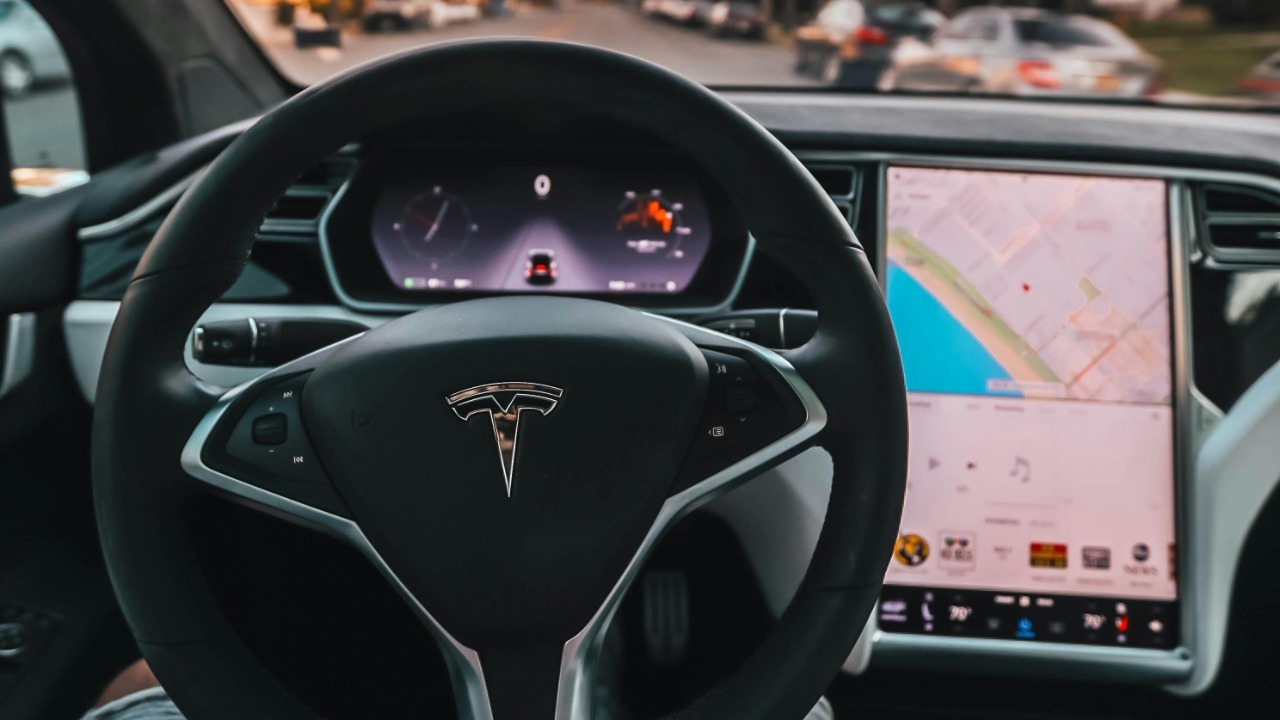
Tesla is stripping key highway automation from new cars in the United States and Canada and shifting those capabilities behind a monthly subscription, turning what used to be a built-in selling point into an ongoing bill. The change affects familiar Autopilot behaviors on multi-lane roads and folds them into the company’s paid Full Self-Driving (Supervised) package, reshaping both how drivers use their cars and how Tesla makes money from them.
Instead of treating advanced driver assistance as a one-time option, Tesla is leaning into a software-as-a-service model that charges for features the vehicle’s hardware can already support. I see this as a pivotal moment for the EV market, because it tests how far drivers will go to rent core safety and convenience tools rather than own them outright.
What Tesla is removing from new cars in the US and Canada
Tesla has stopped including some highway driver-assistance features with new vehicles in the United States and Canada, a shift that hits the familiar Autopilot bundle many buyers assumed was standard. Reporting indicates that Tesla has removed core lane-keeping capability from the default configuration, so new owners no longer get the same semi-automated highway experience out of the box. Instead, the baseline now centers on adaptive cruise behavior that controls speed and following distance but does not steer the car through curves or keep it centered in its lane.
Under the new 2026 pricing structure, the feature known as Autosteer has been removed from the standard package, and new vehicles will now only ship with Traffic-Aware Cruise Control as the default assist. Separate analysis notes that Autopilot is effectively dead in the United States as a standard feature, with Every Tesla now coming only with Traffic-Aware Cruise Control unless the owner pays extra for more advanced automation.
From built-in Autopilot to $99-Per-Month subscriptions
The missing highway features have not vanished, they have been moved into Tesla’s paid Full Self-Driving (Supervised) tier and repackaged as a subscription. Owners who want the car to handle lane centering, automated lane changes, and similar tasks are being nudged toward a $99-Per-Month Full Self-Driving subscription that unlocks those capabilities. Coverage of Tesla Axes Autopilot, Pushes Users to $99-Per-Month FSD Subscription makes clear that the $99 price point is central to the new strategy, with the recurring fee buying access to features such as lane changes and parking that used to be bundled differently.
At the same time, Tesla is ending the option to permanently own its most advanced driver-assistance package and is instead forcing a $99 monthly model. Reporting notes that Tesla just pulled the rug out from under anyone hoping to own their car’s autonomous driving features, explaining that After February 14, 2026, drivers will no longer be able to buy Full Self-Driving outright and will instead be locked into ongoing payments. A separate summary of the same shift reiterates that After February 14, 2026, you will need a subscription to keep those advanced functions active, underscoring how thoroughly the company is embracing recurring revenue.
Full Self-Driving (Supervised) goes subscription-only
What Tesla now calls Full Self-Driving (Supervised) is the centerpiece of this new paywall, and the company is explicit that it is a subscription product. Official support materials explain that With Full Self-Driving (FSD) (Supervised), drivers get access to a suite of advanced driver assistance features designed to provide more automated control on city streets and highways. Separate coverage notes that Tesla will make its Full Self-Driving (Supervised) driver assistance system available only for a subscription starting Feb. 14, with pricing framed around a monthly or annual plan.
That same reporting spells out that Full Self-Driving (Supervised) will cost $99 per month or $999 per year, and that owners who previously could buy the package outright will lose that option as the subscription-only model takes effect in Feb. 2026. Another analysis notes that Meanwhile, Tesla is restructuring access to its more advanced Full Self-Driving system so that, Until mid-February, buyers can still purchase it as a one-time add-on before the $99-per-month subscription becomes the only path. In practice, that means the window to lock in ownership is closing, and the company is steering both new and existing customers toward ongoing payments for the same software.
How much drivers will pay now, and how high prices could go
For drivers, the immediate math is straightforward: $99 each month for Full Self-Driving (Supervised) if they want the car to handle more of the driving task on highways and beyond. One analysis of Tesla Axes Autopilot, Pushes Users to $99-Per-Month FSD Subscription emphasizes that the $99 fee is now the gateway to features such as lane changes and parking that many owners had come to see as part of the basic Tesla experience. Another breakdown of the same shift notes that Tesla Axes Autopilot, Pushes Users to $99-Per-Month FSD Subscription is part of a broader move to monetize software more aggressively, with the recurring charge replacing what used to be a higher one-time purchase price.
There are strong signals that the subscription will not stay at $99 forever. In public comments, Elon Musk said Tesla’s Full Self-Driving subscription could soon cost more than $100, explicitly stating that the $99 subscription price would rise as the software improves. A separate summary of the same remarks reiterates that $100 is not a ceiling, and that $99 is a starting point rather than a long-term guarantee. For owners, that means budgeting not just for a new monthly bill but for the likelihood that it will increase year over year as Tesla leans harder on software revenue.
Why Tesla is making the shift, and what it means for safety and regulation
Tesla’s move is not happening in a vacuum, it is part of a broader push to boost autonomous software revenue at a time when growth in its aging electric vehicles may be slowing. Reporting on the company’s strategy notes that the Move is part of a push to boost autonomous software sales, and that much of Tesla’s valuation hangs on that bet. Another summary of the same development underscores that Jan and Tesla are repositioning driver-assistance as a software product rather than a hardware feature, which helps explain why the company is comfortable taking away something many owners saw as a basic entitlement.
There are also regulatory and safety pressures in the background. One analysis points out that Tesla did not announce why it chose to remove Autopilot, but the move comes amid the threat of a potential ban in California and scrutiny of how drivers use the system. Another report on the same theme notes that Tesla Axes Autopilot as regulators question whether branding and design encourage overreliance, even though the company insists drivers must stay attentive. From a safety perspective, critics argue that taking Autosteer out of the standard package effectively paywalls a basic safety feature behind an FSD subscription, a concern echoed in coverage that says Under the new structure, cars costing half as much as a Tesla still include similar lane-keeping tech at no extra charge.
More From TheDailyOverview
*This article was researched with the help of AI, with human editors creating the final content.

Silas Redman writes about the structure of modern banking, financial regulations, and the rules that govern money movement. His work examines how institutions, policies, and compliance frameworks affect individuals and businesses alike. At The Daily Overview, Silas aims to help readers better understand the systems operating behind everyday financial decisions.

