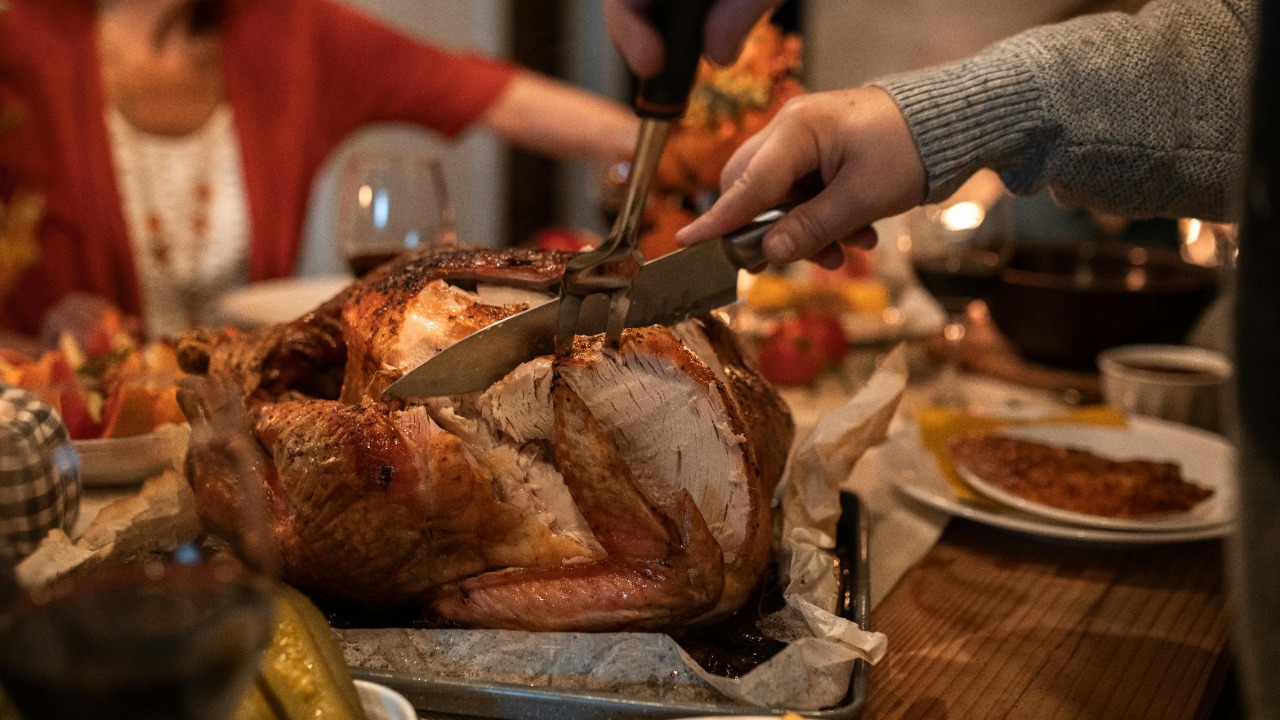
After several years of sticker shock at the grocery store, the cost of putting a traditional Thanksgiving spread on the table is finally easing. A typical holiday meal is still more expensive than it was before the pandemic, but the latest data shows a second straight year of relief for household budgets as food inflation cools and supply chains stabilize.
I see that shift showing up not just in headline price indexes, but in the specific items that anchor the holiday, from whole turkeys to canned pumpkin and dinner rolls. The overall trend points to a holiday that is a bit less financially stressful, even if families are still making careful tradeoffs to keep the bill in check.
Turkey prices retreat as supply rebounds
The centerpiece of the meal is finally getting cheaper again as producers rebuild flocks and wholesale markets normalize after the worst of the avian flu disruptions. Retail data shows that the average price of a whole frozen turkey has fallen compared with last Thanksgiving, reversing the sharp run-up that followed widespread bird losses and higher feed costs. That pullback is helping to drag down the total cost of a classic dinner for ten, even as some side dishes remain elevated.
Industry analysts point to a combination of larger bird inventories and more stable transportation costs as key reasons for the decline in turkey prices, with supermarket chains also leaning on aggressive promotions to lure shoppers into stores. Those factors have translated into lower per‑pound prices in many regions, particularly for store-brand frozen birds, which are often featured in loyalty-card discounts or bundled with minimum purchase offers. The result is that the single most expensive item on the table is exerting less pressure on the final bill than it did during the peak of the supply crunch, according to recent USDA and retail scanner data.
Side dishes and desserts show mixed but improving trends
While the turkey is leading the way down, the supporting cast of side dishes tells a more complicated story, with some ingredients easing and others still reflecting earlier cost spikes. Prices for staples like potatoes and canned vegetables have moderated as global commodity markets cool and shipping bottlenecks clear, which helps lower the cost of mashed potatoes, green bean casseroles, and similar dishes. At the same time, items that rely heavily on processed inputs, such as prepared stuffing mixes and refrigerated pie crusts, remain relatively high compared with pre‑pandemic norms because labor and packaging expenses have not fully retreated.
Dessert ingredients are following a similar pattern, with sugar and some dairy products off their recent peaks but still elevated enough to keep homemade pies from feeling cheap. Shoppers who reach for branded canned pumpkin, whipped toppings, or specialty baking mixes are likely to see smaller discounts than they enjoyed in earlier years, even as private-label alternatives become more competitive. Grocery surveys show that many households are responding by swapping in store brands, trimming the number of dishes, or relying on promotions highlighted in weekly circulars, a shift that aligns with broader consumer price index trends showing slower food inflation but not a full return to earlier price levels.
Food inflation cools, but budgets still feel stretched
The broader backdrop to this year’s more affordable Thanksgiving is a clear deceleration in food inflation, which had been one of the most persistent pain points for households. Government data indicates that the pace of price increases for groceries has slowed markedly compared with the surges seen in 2022 and early 2023, reflecting lower energy costs, improved supply chains, and a pullback in some agricultural commodities. That cooling trend is now visible in the cost of a representative Thanksgiving basket, which has declined for a second consecutive year after hitting a record high during the worst of the inflation spike.
Even with that progress, I find that many families still experience the holiday shop as expensive because prices remain well above where they stood before the pandemic disruptions. Wage gains have helped offset some of the pressure, but not evenly across income groups, and higher costs for housing, utilities, and nonfood essentials continue to squeeze discretionary spending. Surveys of holiday shoppers show that a significant share plan to cap guest lists, simplify menus, or combine gatherings to share costs, a pattern that is consistent with recent Federal Reserve assessments of household financial stress and consumer spending behavior.
Retailers compete with promotions and loyalty perks
Supermarkets and big-box chains are leaning into the softer inflation backdrop by marketing Thanksgiving as a value opportunity, using aggressive promotions to win traffic in a highly competitive environment. I see retailers advertising complete holiday meal bundles at set price points, offering discounted turkeys with qualifying purchases, and expanding digital coupons tied to loyalty programs. Those tactics are designed to convince shoppers that they can host a full celebration without blowing their budget, even if individual shelf prices remain higher than they remember from earlier years.
Digital tools are playing a larger role in that strategy, with chains pushing app-based deals, personalized offers, and online ordering windows that highlight limited-time discounts on key holiday items. Retail sales data suggests that these promotions are resonating, particularly among budget-conscious households that are willing to switch stores or brands to capture savings. Analysts note that the competitive pressure is strongest in the weeks leading up to Thanksgiving, when grocers are willing to sacrifice margins on turkeys and staples in order to lock in customers for the rest of the holiday season, a trend reflected in recent retail trade and earnings reports.
How households are adapting their holiday traditions
Even as the headline cost of a Thanksgiving meal edges lower, I see households quietly reshaping their traditions to fit tighter financial realities. Some hosts are shifting from fresh to frozen turkeys, choosing smaller birds, or embracing potluck-style gatherings where guests contribute side dishes or desserts. Others are trimming back on appetizers and specialty beverages, focusing instead on a core menu that delivers the familiar flavors of the holiday without the extra expense of elaborate add‑ons.
These adjustments mirror broader consumer behavior in a high-cost environment, where people are more deliberate about where they splurge and where they save. Surveys of holiday plans show increased interest in home cooking over restaurant dining, greater reliance on discount grocers, and a willingness to experiment with lower-cost ingredients that still feel festive. Those choices, combined with the easing in key food prices documented in recent food price outlook projections, suggest that this year’s Thanksgiving will be a bit kinder to household budgets, even if the era of ultra-cheap holiday feasts has not fully returned.
More From TheDailyOverview
- Dave Ramsey says these two simple questions show whether you’re rich or poor
- Retired But Want To Work? Try These 18 Jobs for Seniors That Pay Weekly
- IRS raises capital gains thresholds for 2026 and what’s new
- 12 ways to make $5,000 fast that actually work

Cole Whitaker focuses on the fundamentals of money management, helping readers make smarter decisions around income, spending, saving, and long-term financial stability. His writing emphasizes clarity, discipline, and practical systems that work in real life. At The Daily Overview, Cole breaks down personal finance topics into straightforward guidance readers can apply immediately.

