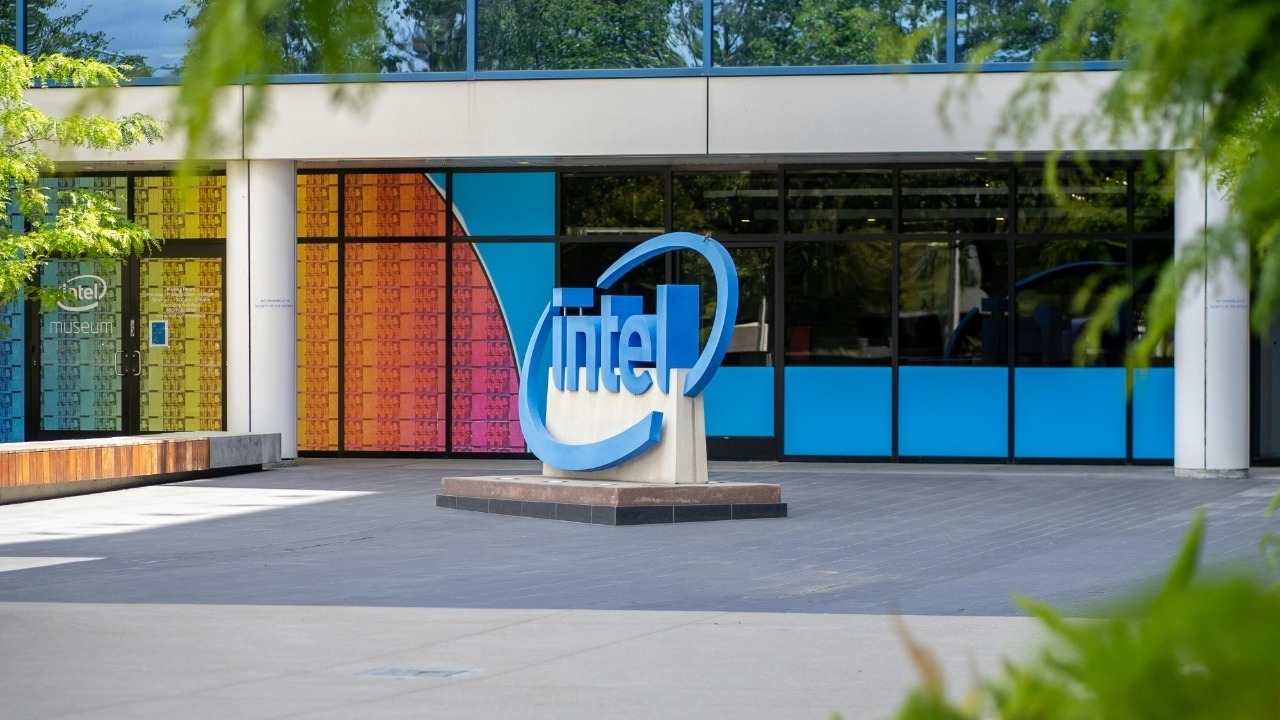
Nvidia’s surge to the center of the artificial intelligence boom has turned graphics processors into the hottest commodity in technology, but the most strategic winner is not another GPU designer. As demand for advanced chips overwhelms global manufacturing capacity, the real leverage is shifting to the companies that can actually build this hardware at scale. The underdog that spent years on the sidelines of the AI race is suddenly positioned to turn Nvidia’s success into its own.
Instead of competing head-on in accelerators, this player is quietly becoming indispensable infrastructure, selling the tools and factory space that every AI hopeful now needs. That shift is reshaping power dynamics across the semiconductor stack and forcing investors to rethink what it means to “own” the AI trade.
Nvidia’s insatiable demand rewrites the chip hierarchy
The starting point for this reshuffle is the sheer scale of demand for Nvidia’s AI chips, which has reordered the pecking order among the world’s most important manufacturers. The company’s chief executive, Jan Huang, has said the GPU specialist is now the largest customer of Taiwan Semiconductor Manufacturing Company, or TSMC, displacing Apple as the top buyer of cutting edge production. That detail matters because it shows how quickly the center of gravity has moved from smartphones to data center accelerators, and it gives Nvidia enormous influence over how much capacity the industry can devote to AI versus everything else.
That influence is a double edged sword. On one hand, the surge in demand for Nvidia GPUs has locked in years of orders for TSMC and signaled to rivals that they must secure their own manufacturing slots early or risk being shut out. On the other hand, it has exposed how fragile the supply chain is when so much of the world’s AI capacity depends on a single foundry. That bottleneck is exactly what opens the door for a new winner that can offer an alternative path to market for chip designers that cannot, or will not, rely solely on TSMC.
Intel’s foundry pivot turns a former AI laggard into a gatekeeper
For most of the early AI wave, Intel was treated as an afterthought, a legacy CPU vendor that had missed the GPU revolution and was struggling to keep up. The company’s own accelerators failed to gain the kind of traction that Nvidia enjoyed, and its manufacturing missteps left it trailing TSMC on leading edge process technology. That is why the market largely wrote Intel out of the AI story, even as it continued to dominate in traditional server processors and PC chips.
That narrative is now colliding with a different reality. Intel has committed to building a full scale contract manufacturing business, pitching itself as a second source for advanced nodes just as designers are scrambling for more capacity. Reporting on Intel describes how its foundry fortunes have shifted as AI chip designers fight for manufacturing capacity, and how Intel stock surged in 2025 on expectations that its foundry business could boom. In other words, the company that was “largely an AI loser so far” is now in a prime position to monetize the very scarcity Nvidia helped create.
The strategic twist is that Intel does not need to win the accelerator benchmark race to benefit from AI. If it can convince customers to bring their designs to its fabs, it can collect manufacturing revenue from GPUs, custom accelerators, and even rival CPUs that compete directly with its own products. That is why the same reporting that notes how Intel has largely also frames the foundry pivot as a potential windfall. In a world where capacity is king, the underdog is the company that can sell the shovels to every prospector, not just the one that finds the biggest nugget.
Micron’s AI memory boom shows how “picks and shovels” pay off
Intel is not the only beneficiary of Nvidia’s rise, and the memory market offers a parallel example of how infrastructure suppliers can outperform the headline names. Micron Technology spent years as a classic cyclical stock, whipsawed by booms and busts in PC and smartphone demand. That perception is changing as AI workloads shift the focus to high bandwidth memory and fast storage, products that sit squarely in Micron’s wheelhouse. Investors who once treated Micron as an afterthought are now watching it move front and center in AI portfolios.
One account of Micron Technology describes how its shares surged sharply in the AI trade, with Elmer ID flagging the stock as underrated and urging followers to Join Inne as it ripped higher. Another update from Jan shows Micron with Stock up 40%+, Revenue at $8B+, and roughly 80% year over year growth, with AI memory sold out into 20… and beyond. Those numbers underscore how quickly AI demand can transform a supposedly cyclical supplier into a structural growth story, and they mirror the opportunity Intel is chasing on the manufacturing side.
Market performance hints at where the next AI leaders are emerging
Price action across the sector reinforces the idea that the biggest long term winners may be the companies that supply essential components rather than the most visible brands. One snapshot of Micron’s recent run notes that the stock has surged roughly 217 percent, making it one of the standout performers in the semiconductor space as AI-driven memory demand accelerates. That kind of move is not just a momentum story, it is a signal that investors are willing to pay up for businesses that sit at critical choke points in the AI stack.
The same dynamic shows up in long term compounding examples. A breakdown framed as a POV where You put $5 a day into both Western Digital, ticker WDC, and Micron, ticker MU, starting in 1984, highlights how steady exposure to storage and memory can build substantial wealth over decades. The segment also notes how Nvidia’s market cap soared to levels where a single quarter’s results are less important than the broader AI narrative. In that context, the underappreciated winners are the suppliers whose products are embedded in every AI server, regardless of which brand logo sits on the front of the rack.
How investors can position around the new AI supply chain power brokers
For investors trying to navigate this landscape, the lesson is not to abandon Nvidia but to recognize that the AI value chain is broader than one ticker. Memory, manufacturing, and connectivity all become leverage points as workloads scale, and companies that control those bottlenecks can compound value even if they never ship a flagship accelerator. Micron, for example, develops high-bandwidth memory, or HBM, that is heavily in demand for AI training and inference, and it trades on the NASDAQ under the symbol MU. A recent analysis of Micron and another AI stock frames both as potential buys in 2026 that could be better picks than chasing the most crowded trades.
At the macro level, the broader market context also matters. One update on futures trading notes that the Dow was higher ahead of State Street earnings, with expectations for 9 percent EPS growth at STT, while also highlighting that Micron has surged percent and become one of the top performers in the semiconductor group. I read that as confirmation that the market is already starting to reward the “picks and shovels” of AI, from foundries like Intel that monetize capacity constraints to memory specialists that feed every GPU cluster. The secret winner in Nvidia’s AI chip frenzy is not a single stock, it is the entire layer of underdogs that quietly control the resources everyone else needs.
More From TheDailyOverview
*This article was researched with the help of AI, with human editors creating the final content.

Grant Mercer covers market dynamics, business trends, and the economic forces driving growth across industries. His analysis connects macro movements with real-world implications for investors, entrepreneurs, and professionals. Through his work at The Daily Overview, Grant helps readers understand how markets function and where opportunities may emerge.

