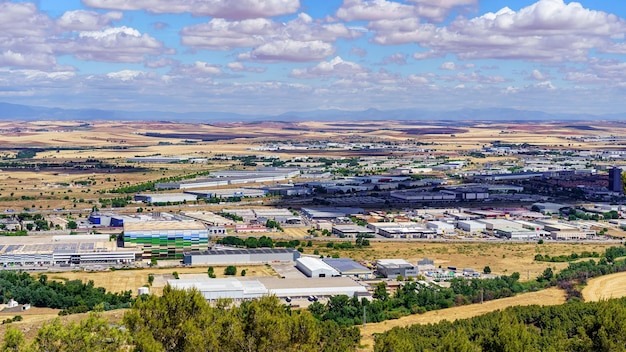
Four years after Intel announced a vast chip campus in rural Licking County, Ohio, the landscape and expectations around it have been upended. Fields have been scraped, roads widened and property values jolted, while the core project itself has slid further into the future. For neighbors, the heartbreak has less to do with a single dramatic exodus and more with a grinding uncertainty that has pushed some to sell, others to stay, and nearly everyone to rethink what home means beside a megaproject that keeps moving the goalposts.
The promise that reshaped Licking County overnight
When Intel unveiled its plan for a massive semiconductor complex in Licking County, Ohio, the project was sold as a once-in-a-generation industrial win that would turn quiet farmland into a global manufacturing hub. The site has, in fact, been transformed into a major industrial zone, with heavy construction and infrastructure work remaking what had been a largely rural stretch of the county, even as Intel’s plan to fully build out the campus has been delayed until at least 2030. That gap between physical disruption and delayed payoff is at the heart of the tension now radiating through nearby neighborhoods.
Instead of a clean arc from announcement to ribbon-cutting, residents have watched the project timeline slip while the bulldozers keep moving. The company has reaffirmed a 28 billion dollar expansion in Ohio, even as Leadership changes and rounds of workforce reductions have slowed momentum and pushed the schedule back. For people living around the site, that means the noise, traffic and speculation are very real, while the jobs and long-term stability remain largely theoretical.
Speculation, sticker shock and the quiet calculus to move
The first shock wave hit local real estate. When Intel first announced the project in 2022, The Initial Impact on nearby land was a frenzy of Land Speculation and Price Surges that rippled through central Ohio, as investors and homeowners tried to position themselves for the expected boom. Analysts now note that When Intel pushed its Columbus-area facility timeline to 2030, it cooled some of that rush mentality but left many families who had already bought or sold in a far more complicated position. Some owners who sold early locked in windfalls, while others who stretched to buy at peak prices are now staring at a longer wait for the jobs and amenities they were counting on.
That uneven pattern is visible well beyond the immediate footprint of the campus. Local officials in Richland County, for example, are already bracing for spillover demand, with leaders there anticipating a need for more housing as Intel‘s central Ohio facility reshapes the regional market. For some households near Licking County, the decision to leave has been a quiet, financial calculus rather than a dramatic flight, a choice driven by rising taxes, changing traffic patterns and the sense that the neighborhood they bought into no longer exists in the same way.
Communities split between opportunity and loss
Local leaders have tried to frame the project as a generational opportunity, but even boosters acknowledge that the benefits and burdens are not evenly shared. One regional economic development voice put it bluntly, saying that, Between careful planning and experience with large business parks, a facility of this scale inevitably creates happy and. That split is visible in school board meetings, zoning hearings and kitchen-table conversations, where some residents see a path to better jobs and tax revenue while others see only the loss of fields, views and a slower pace of life.
Across central Ohio suburbs, planners are racing to adapt as Intel’s expansion redraws commuting patterns, school enrollment projections and infrastructure needs. Analysts tracking the Impact on Homeowners and Small Investors note that the surge in demand near major employment hubs has already begun to reshape who can afford to live where. For some longtime neighbors, that has meant cash offers and pressure to sell; for others, it has meant watching friends and relatives move away while they stay put, hoping the eventual payoff will justify the upheaval.
Delays, uncertainty and the emotional toll of waiting
The project’s shifting timeline has deepened that sense of limbo. Intel is once again pushing back its project schedule for two semiconductor plants in New Albany, Ohio, with the latest adjustment moving completion to 2031 and stretching out the period when construction dominates daily life. The Dive Brief on that delay notes that thousands of jobs are still expected over the course of the build, but for neighbors, the more immediate reality is years of trucks, detours and construction lights with no clear end in sight. Each new revision to the schedule forces families to revisit decisions about whether to renovate, sell or simply endure.
That grinding uncertainty is part of what has made the past four years feel so bruising for people living closest to the site. A social media post from a local outlet captured the mood by highlighting how Intel neighbors have been wrestling with years of change and heartbreak, even as other local news in the same feed, including comments from Ohio State AD Ross Bjork about low Schottenste attendance, underscored how quickly attention can shift. The phrase “pull up stakes” in that context reflects individual choices and frustrations, not a documented mass exodus, and the available reporting does not support claims of residents fleeing en masse. Unverified based on available sources.
Environmental memories and fears of history repeating
For some neighbors, the anxiety is not only about traffic and taxes but also about what heavy industry might mean for air and water. Chip-making is a notoriously water intensive and chemically complex process, and environmental advocates in Ohio have warned that the full cost to current sources of drinking water has yet to be calculated. One detailed analysis of What the project might mean for people and the environment points out that semiconductor facilities can involve toxins linked to birth defects and sometimes death, raising questions about how regulators and the company will monitor and mitigate those risks.
Those concerns are not abstract. In New Mexico, Intel has perched above the western bluff overlooking Corrales for about 40 years, and During those decades some residents living to the east have reported health problems they attribute to Intel‘s air emissions. For Ohio neighbors watching the Licking County site take shape, that history feeds a sense of unease: even if strict safeguards are promised, the lived experience of another community that has hosted a large chip plant for 40 years is a reminder that environmental impacts can linger long after the construction cranes are gone.
More From TheDailyOverview
*This article was researched with the help of AI, with human editors creating the final content.

Elias Broderick specializes in residential and commercial real estate, with a focus on market cycles, property fundamentals, and investment strategy. His writing translates complex housing and development trends into clear insights for both new and experienced investors. At The Daily Overview, Elias explores how real estate fits into long-term wealth planning.