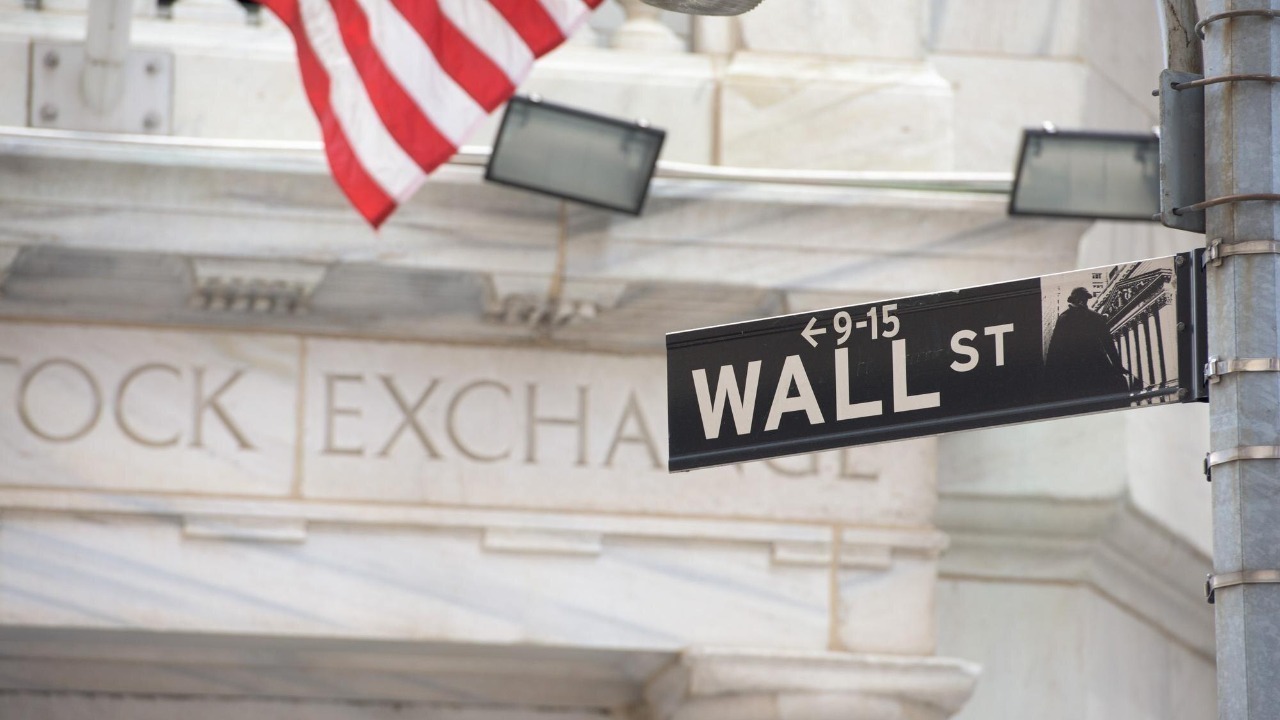
Wall Street is fixated on when the Federal Reserve will finally cut interest rates, but the market’s real vulnerability sits deeper inside the institution itself. A central bank that is divided, politically pressured and wrestling with its own balance sheet is far harder for investors to price than a simple “higher for longer” path. The stock market’s serious Fed problem is not just about the level of rates, it is about whether the Fed can still deliver a coherent, credible policy signal at all.
That tension is already bleeding into day-to-day trading, as investors try to handicap not only inflation and growth, but also the next move in the power struggle around the central bank. With President Donald Trump publicly jousting with Chair Jerome Powell, and policymakers split over how quickly to reverse past tightening, the Fed risk premium is rising in ways that standard valuation models do not capture.
The historic split inside the Fed
The most immediate challenge for equities is that the Fed itself is no longer speaking with one voice. I am not talking about the usual hawks-versus-doves debate, but what one analysis describes as a historic level of dissent inside America’s foundational financial institution, where policymakers are openly divided over how to balance inflation control against financial stability and growth. That fracture matters because the job of the central bank is to set clear expectations, and when officials cannot agree on the path of rates or the pace of balance sheet runoff, markets lose the anchor they rely on for pricing risk, as highlighted in recent commentary.
Putting aside the news-making headlines between Trump and Powell, the deeper worry is a Fed that cannot quickly converge on a strategy if the economy turns. We are witnessing what another analysis calls a historic level of dissent at America’s foundational financial institution, with some officials warning about cutting too soon and others arguing that keeping policy tight risks leaving the Fed behind the proverbial curve, a split captured in separate analysis.
A credibility gap that markets cannot ignore
When a central bank’s internal divisions spill into public view, the next casualty is credibility, and that is where the stock market’s Fed problem becomes more structural. Mohamed A. El-Erian has argued that there are good reasons to worry about the Fed’s credibility, noting that he cannot recall another period when so many former Fed officials were so critical of the institution’s economic projections and policy communication, a concern he laid out in detail in his assessment. When investors stop taking the Fed’s forecasts at face value, they demand a higher risk premium for owning stocks that depend on those forecasts.
That erosion of trust is not happening in a vacuum. The broader fight over the Fed has become a political spectacle, with critics asking, in the words of one pointed essay, Why Do Populist and warning that political pressure for cheap money can collide with the central bank’s inflation mandate. The same piece invokes Mick Jagger’s line, “You can’t always get what you want,” to underline that political leaders and markets may both be demanding more from the Fed than it can safely deliver. For equities, that means every policy meeting now carries not just economic risk, but reputational risk for the institution that underpins the entire pricing of financial assets.
The balance-sheet trilemma and hidden plumbing risks
Beyond rates and rhetoric, the Fed is wrestling with a technical problem that could matter just as much for stocks: how big its own balance sheet should be. In a recent note, Fed staff described a “central bank balance-sheet trilemma,” arguing that a large balance sheet allows the private sector to absorb liquidity shocks using a large cushion of safe and liquid assets, but that this comes at the cost of a less active inter-bank market and more direct central bank footprint in finance, a trade-off spelled out in the Fed’s own research. For equity investors, that means the Fed’s attempt to shrink its holdings could expose fragilities in money markets that have been masked by years of abundant reserves.
There are already signs that the plumbing is straining. One detailed look at short-term funding markets warned that the Fed is running into a wall of its own making, pointing to the spread between key overnight rates and the Fed’s own facilities, and noting that when it widens, it means banks prefer lending to each other at worse rates than parking money at the Fed, which signals that someone needs cash badly enough to pay up, a dynamic described in funding analysis. If that stress flares into a full-blown liquidity squeeze, stocks that look cheap on earnings could suddenly be repriced on the availability of dollar funding instead.
How the Fed overhang is reshaping day-to-day trading
The Fed’s internal and technical problems are already visible in the tape. At the end of a volatile week, US stocks were little changed on Friday, with the Dow, S&P 500 and Nasdaq all slipping even as chip stocks rose, as traders weighed strong bank earnings against growing uncertainty over the next Fed chair, a tension captured in live market coverage. That kind of crosscurrent, where solid micro data collides with macro policy angst, is becoming more common as investors try to discount not just earnings but also the risk of a policy mistake.
At the same time, some strategists argue that 2026 still favors bulls, but selectively, with a focus on sectors and companies that can weather policy volatility and funding swings. One detailed outlook suggests that while broad indexes may grind sideways under the weight of Fed uncertainty, areas like high quality technology, cash-generative industrials and parts of financials could outperform if they are less sensitive to marginal changes in the policy rate, a view laid out in a recent strategy piece. For traders, that means the Fed problem is less about fleeing equities altogether and more about tilting toward balance-sheet strength and pricing power that can outlast a choppy policy backdrop.
What investors are getting wrong about the Fed risk
Many investors still frame the Fed risk in binary terms, as a question of whether the next move is a cut or a pause, but the reporting suggests the real issue is institutional reliability. One detailed analysis argues that the stock market has a serious Federal Reserve problem and it is not what most people think, pointing instead to the combination of internal dissent, political pressure and communication missteps that leave markets guessing about the reaction function, a point underscored in recent market commentary. When the same data can plausibly justify very different policy paths depending on which faction inside the Fed is ascendant, the distribution of outcomes for stocks widens dramatically.
That is why I see the current environment as less about timing the “pivot” and more about stress-testing portfolios against a range of Fed scenarios, from a cautious central bank that risks being behind the curve to a politically pressured one that cuts too aggressively. Analysts and services that specialize in parsing Fed signals, from Fed-focused research to platforms that compare outlets like Motley Fool and TheStreet.com, are increasingly valuable not because they can predict the next meeting, but because they help investors map how different Fed paths would ripple through sectors and valuations.
More From The Daily Overview

Grant Mercer covers market dynamics, business trends, and the economic forces driving growth across industries. His analysis connects macro movements with real-world implications for investors, entrepreneurs, and professionals. Through his work at The Daily Overview, Grant helps readers understand how markets function and where opportunities may emerge.

