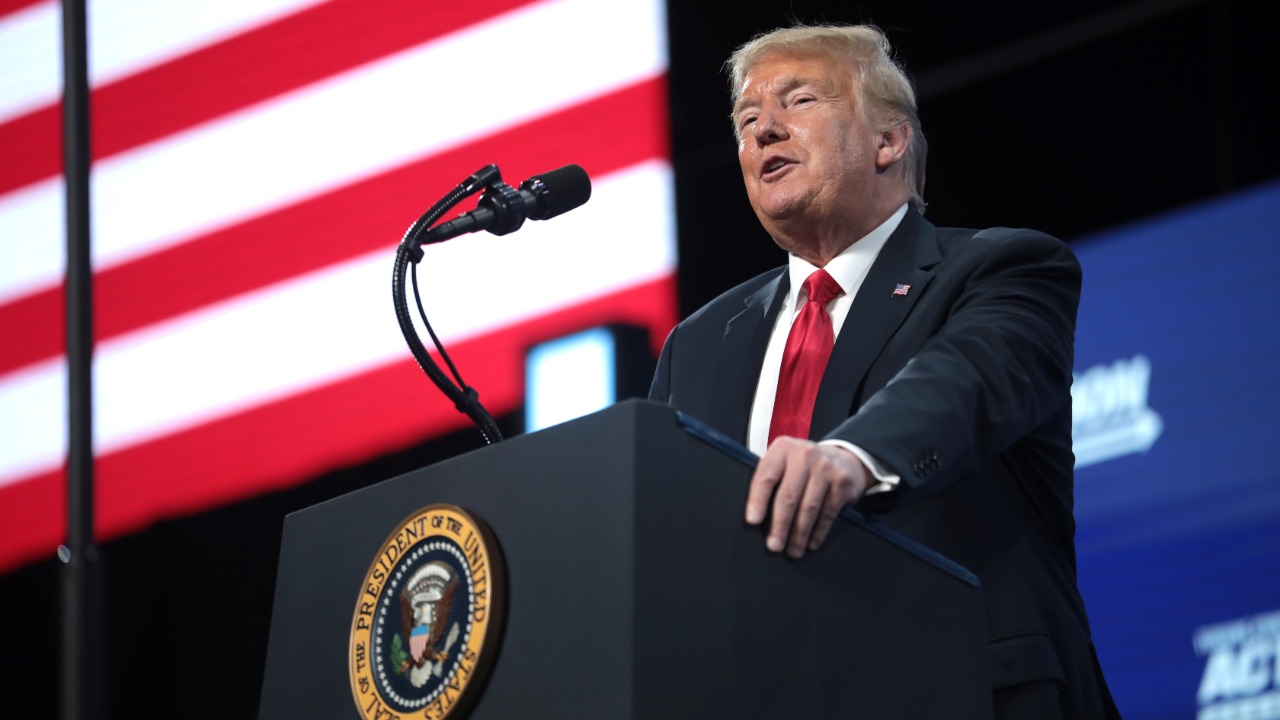
President Donald Trump has ordered a sweeping halt to some of the harshest collection tools used against borrowers who have fallen into default on federal student loans. The administration is freezing wage garnishment, tax refund seizures, and other involuntary collections, giving millions of struggling borrowers a temporary reprieve as the government rethinks how it pursues overdue debt. The move marks one of the most consequential shifts in student loan enforcement in years, with direct implications for household budgets and the upcoming tax season.
Instead of allowing paychecks and refunds to be siphoned off automatically, the federal government is pausing those actions while it reviews what officials describe as a “broken” system for collecting on defaulted loans. For borrowers who have watched their wages docked or their refunds vanish with little warning, the change could mean hundreds or even thousands of dollars staying in their pockets over the coming months.
What exactly the Trump freeze covers
The core of the policy is a broad suspension of forced collections on defaulted federal student loans, including the two main tools the government relies on when borrowers stop paying. The Trump administration has said it will temporarily delay actions like Administrative Wage Garnishment and the Treasury Offset Program, which are used to take money directly from paychecks and intercept federal payments such as tax refunds to cover overdue balances. In a social media statement, The Department explicitly cited Administrative Wage Garnishment and the Treasury Offset Pro as collection tactics that are being put on hold.
Advocates who track defaulted borrowers say the change is sweeping enough that people should be protected from losing their tax refunds during the upcoming filing season as a result of student debt. One borrower assistance group noted that the government is pausing collections on defaulted federal student loan debt so that no tax refund seizure or wage garnishment will move forward for now, a shift it described as Big News for households that had braced for offsets. That same analysis stressed that the Government Pauses Collections for Student Loan Debt so that No Tax Refund Seizure and Wage Garnishment for Now will be in effect while new options are built out.
How the Education Department is implementing the pause
The operational details are being driven by the Education Department, which has told servicers and collection agencies to stop initiating new garnishments and to suspend many existing ones. The Education Department has publicly framed the decision as a pause in student loan wage garnishments, explaining that it is instructing employers and contractors to halt deductions that had been flowing automatically from borrowers’ paychecks to cover defaulted balances. In one account of the shift, the Education Department said borrowers who had been in default would instead be contacted about options to get back on track with their loan servicer.
Officials inside the agency have been blunt about why they are changing course, telling reporters that Officials say they are making changes to the “broken” student loan system so that borrowers in default have a clearer path to pay back their loans. One report noted that the Education Department delays plan to garnish wages of those with defaulted student loans and highlighted a segment labeled 3:39 that underscored how quickly garnishment can escalate once a borrower falls behind. I read that as a sign the agency wants to slow the conveyor belt from delinquency to default and forced collection.
Tax season, “largest refund” politics, and who benefits
The timing of the freeze is not accidental, coming just as tax filing ramps up and as Trump has been touting what he calls the “largest tax refund season of all time.” Earlier coverage warned that student loan borrowers in default might miss out on that windfall because their refunds could be intercepted to cover overdue balances, with one analysis noting that Student loan borrowers in default may miss out on Trump’s “largest tax refund season of all time” because the Trump administration is predicting big refunds while also preparing to collect from those who are behind. By pausing the Treasury Offset Program, the administration is now effectively shielding those refunds for defaulted borrowers, at least for this season.
Borrower advocates say that protection is especially significant for low income families who rely on the Earned Income Tax Credit and Child Tax Credit, since those benefits are often swept up in offsets. One group that works directly with defaulted borrowers stressed that the announcement means borrowers should be protected from losing their tax refunds this tax season as a result of student debt and that new options will be available on July 1, 2026, as part of a broader overhaul of default resolution. In its own summary, that organization described how The Government Pauses Collections for Student Loan Debt so that tax refunds remain available while new repayment pathways are built.
Inside the Trump administration’s strategy
Politically, the move reflects a notable choice by Trump to lean into relief for defaulted borrowers even as his administration continues to promote aggressive enforcement in other areas of federal policy. The Trump administration has formally acknowledged that it is delaying forced collections from people who defaulted on their student loans, with one live briefing noting that The Trump administration said Friday that it would temporarily delay those efforts. Another detailed account explained that Trump administration officials are suspending wage and tax refund seizure for defaulted student loans even though that means the government could miss out on billions of dollars in near term recoveries, a tradeoff highlighted in Higher Education coverage.
At the same time, the White House is framing the move as a continuation rather than a reversal of prior relief efforts. A fiscal watchdog group noted that Today, the White House announced an indefinite pause of the collection of defaulted federal student loan debt, including through tools like wage garnishment and tax refund offsets, and argued that the Trump administration continues Biden era student debt cancellation with this latest pause on collections. That analysis warned that while the pause protects borrowers in the short term, it could also lead loan balances to balloon if interest continues to accrue, a concern spelled out in the White House focused review. I see that tension as central to the politics of this decision, which offers immediate breathing room while raising questions about long term costs.
What changes for borrowers in default right now
For borrowers already in default, the most immediate change is that the automatic drain on their income should stop, at least temporarily. The U.S. Department of Education has said it will delay implementing involuntary collections on federal student loans as the 2026 tax season approaches, a shift that affects wage garnishments, tax refund seizures, and even some Social Security offsets. One personal finance column explained that the Department of Education is pausing plans to garnish wages and seize refunds so that borrowers have time to understand new options before money is taken. A separate advocacy summary emphasized that the announcement means borrowers should be protected from losing their tax refunds this tax season as a result of student debt and that new relief will be available on July 1, 2026, as described in a Print statement that laid out the timeline.
The pause also reaches older Americans and others whose federal benefits were at risk. A local news post captured the frustration of critics with the line “Another 🤡 🌮,” but went on to note that the U.S. Department of Education is pausing its plan to garnish people’s Social Security benefits if they have defaulted student loans, a change that could be life changing for retirees on fixed incomes. That same post, which referred to Another 🤡 🌮, underscored that the Department of Education is delaying its plans to withhold pay and Social Security checks from borrowers in default. I read that as a reminder that the freeze is not just about younger graduates, but also about older borrowers who have carried student debt for decades.
More From The Daily Overview

Julian Harrow specializes in taxation, IRS rules, and compliance strategy. His work helps readers navigate complex tax codes, deadlines, and reporting requirements while identifying opportunities for efficiency and risk reduction. At The Daily Overview, Julian breaks down tax-related topics with precision and clarity, making a traditionally dense subject easier to understand.

