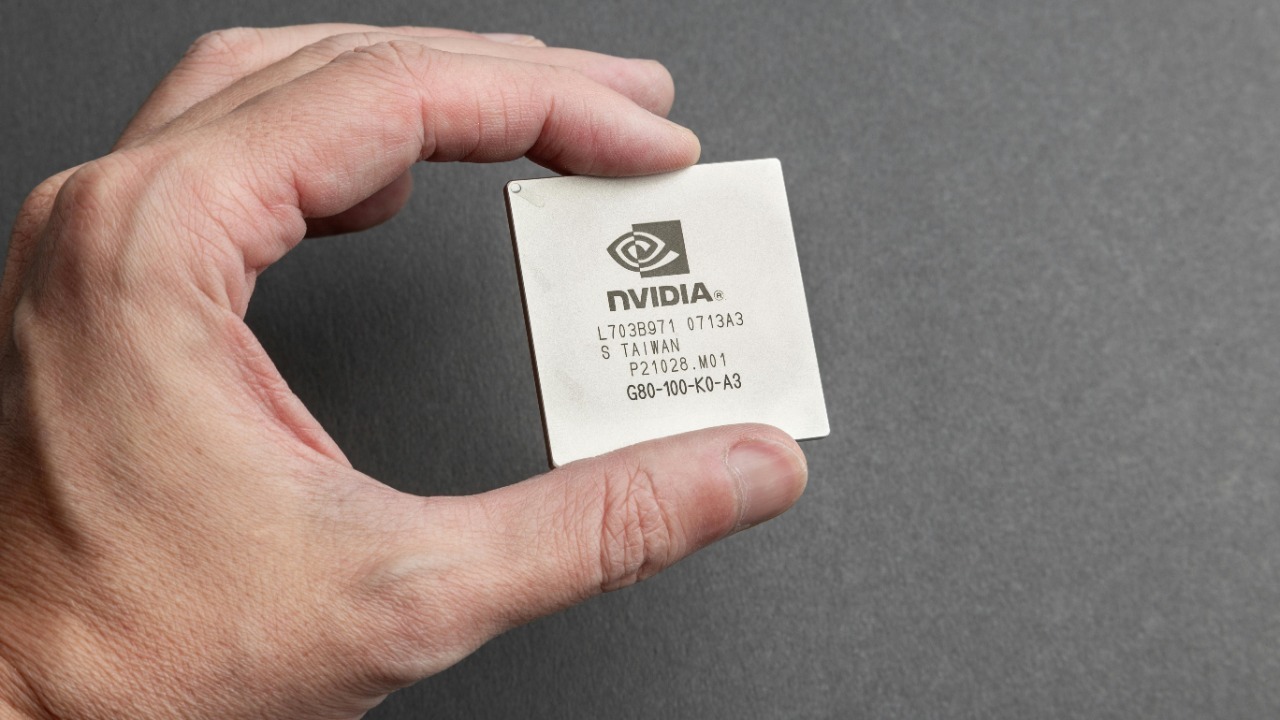
Investors spent 2025 fixated on Nvidia, but one red hot chip stock quietly delivered even stronger performance and now faces a potential catalyst on Jan. 28 that could reset expectations again. The story is not just about graphics processors, it is about the less glamorous infrastructure that makes artificial intelligence possible, from memory to networking to the glass and fiber that move data at scale. As I weigh the numbers and the strategic positioning, I see a setup where a single earnings day could either validate a powerful thesis or expose how much optimism is already priced in.
How Nvidia set the bar, and why “crushing” it matters
Nvidia has been the reference point for AI enthusiasm, with its graphics processing units at the heart of the data center buildout that is reshaping cloud computing. Demand continues to outstrip supply for the data center chips and networking equipment used in artificial intelligence, and that imbalance has helped push Nvidia stock up 31% in 2025. When a company with that kind of momentum is treated as the benchmark, any semiconductor name that outperforms it on a total return basis deserves a closer look, because it suggests investors are starting to recognize value deeper in the AI supply chain.
At the same time, the broader chip sector has not moved in lockstep, which makes the outperformance of select names even more striking. Advanced Micro Devices, for example, saw its own AI narrative accelerate as it pushed new accelerators into the data center market, and AMD stock rose 77.3% in 2025, nearly doubling the S&P 500’s return and outpacing Nvidia. When a stock beats both Nvidia and the index by that margin, it signals that investors are rewarding not just current earnings power but also the potential to capture incremental AI workloads that are still shifting away from legacy architectures.
The “super semiconductor” behind the Jan. 28 spotlight
Against that backdrop, the label of a “super semiconductor” stock that crushed Nvidia in 2025 has increasingly been applied to a company that does not actually design GPUs at all. Corning, listed as Corning on the NYSE under the ticker GLW, is best known to consumers for smartphone glass, but its more critical role today is in the plumbing of AI: the fiber optic cables and advanced glass that connect and cool the servers running large models. In 2025, that positioning helped its shares outperform Nvidia’s, as investors began to appreciate that every new rack of accelerators requires more bandwidth, lower latency, and better thermal management, all of which play directly into Corning’s strengths.
What makes Jan. 28 so important is that it is expected to be a key moment for investors to reassess how durable that advantage really is. Corning is a top supplier of fiber optic cables for data centers, which transmit information better than copper, and AI development requires a substantial increase in data center capacity that in turn drives demand for those cables and for the specialty glass used in advanced packaging and displays. The combination of that structural demand and the company’s established manufacturing base has been framed as an unprecedented opportunity for the company, and the upcoming report on Jan. 28 could either confirm that the AI-driven order book is accelerating or reveal that expectations have run ahead of near term reality.
Why AI infrastructure demand is Corning’s real growth engine
From my perspective, the most compelling part of the Corning story is not its consumer-facing products but its role in the invisible infrastructure that makes AI training and inference economically viable. Data center operators are shifting from copper to fiber because high bandwidth optical links can move more data with lower signal loss and better energy efficiency, which is critical when clusters of accelerators are pushing power and cooling systems to their limits. Corning’s position as a top supplier of those fiber optic cables for data centers means it is directly exposed to the same AI buildout that has fueled Nvidia’s growth, but with a product set that is harder to commoditize and more deeply tied to long term network architecture decisions.
That infrastructure angle also helps explain why some analysts see more room for multiple expansion if the company can show that AI demand is not just a one year spike. Corning stock looks attractive compared with many high profile chip names because its valuation still reflects a mix of legacy businesses and newer growth segments, even as AI and cloud networking become a larger share of revenue. If management can demonstrate on the next call that orders for fiber and related materials are ramping in line with hyperscaler capital spending plans, the market may start to price the shares more like a pure play on AI infrastructure, which could support a better return in its stock according to recent analysis of Corning.
How Corning fits into the broader “super semiconductor” theme
To understand why a glass and fiber specialist can be grouped with chip designers under the “super semiconductor” banner, it helps to look at the full AI stack. At the top are the accelerators from Nvidia and AMD, which grab headlines and command premium margins, but those chips are only as effective as the memory, networking, and interconnects that feed them. Earlier analysis of the sector highlighted how Micron Technology, for example, benefits from supplying high bandwidth memory that pairs with Nvidia’s GPUs, and how that relationship has turned Micron into another supercharged beneficiary of AI demand. The same logic applies to the companies that make the physical links between servers, which is where Corning’s fiber optic portfolio comes into play alongside suppliers like Nvidia’s networking partners and other data center equipment vendors.
In that sense, Corning’s outperformance in 2025 is part of a broader pattern in which investors are rewarding companies that sit at critical chokepoints in the AI economy rather than just the most visible brands. The same dynamic helped lift AMD as it pushed into data center accelerators, and it has supported Micron Technology as cloud providers locked in supply of high bandwidth memory to support future GPU deployments. By focusing on the less glamorous but essential components, from fiber to glass substrates, the market is effectively betting that the AI wave will require a wholesale upgrade of physical infrastructure, not just more powerful chips. Corning’s ability to supply that infrastructure at scale is what has allowed it to be mentioned alongside these other super semiconductor names, even though its products look very different from a GPU or a memory chip.
What I will watch on Jan. 28 and how investors can frame the risk
Heading into Jan. 28, I am watching three things that will determine whether Corning can justify its recent run relative to Nvidia and AMD. First is the trajectory of orders tied directly to AI and cloud data centers, including any commentary on how hyperscalers are planning their fiber deployments over the next several years. Second is the margin profile of those AI related businesses compared with legacy segments, because the long term bull case depends on mix shift toward higher value products that can support sustained earnings growth. Third is management’s view on capital spending and capacity, since AI development requires a substantial increase in data center capacity and that can strain even well run suppliers if they misjudge demand.
More From TheDailyOverview
*This article was researched with the help of AI, with human editors creating the final content.

Grant Mercer covers market dynamics, business trends, and the economic forces driving growth across industries. His analysis connects macro movements with real-world implications for investors, entrepreneurs, and professionals. Through his work at The Daily Overview, Grant helps readers understand how markets function and where opportunities may emerge.

